Locate the source before treating every pot
Small flies near a window do not automatically mean every houseplant has fungus gnats. Adults may gather at light away from the pot where they developed. Inspect containers, propagation trays, damp spilled medium, and other persistently wet organic material. Also consider whether flies may be associated with drains or stored produce instead.
Gently disturb the air just above a suspected pot and watch for insects emerging from its surface. Do not shake the plant vigorously or excavate its roots just to provoke activity. Compare pots individually and label the ones with consistent activity.
Take a clear close-up photograph if identification is uncertain. Adult fungus gnats are small, dark, delicate flies with relatively long legs and antennae. The Colorado State fungus-gnat resource describes the adults and the translucent, dark-headed larvae found in growing media. The flying and immature stages occupy different parts of the problem.
Understand why adult-only control disappoints
The insects you see flying are only one stage of the life cycle. Larvae and pupae remain in the medium, so removing today's adults does not necessarily prevent more from emerging. An apparent return a few days later may reflect that continuing cycle rather than a new invasion from outdoors.
Yellow sticky cards can catch adults and help compare activity among pots. Position them so they do not contact foliage, hair, or places accessible to children and pets. Label a card with the pot and date, then compare catches over similar intervals. A card used for one day should not be compared directly with one left for a week.
The University of California IPM fungus-gnat guide distinguishes adult monitoring from management directed at the growing medium. Sticky traps are useful information, not proof that larvae have been eliminated.
Replace cards when needed and continue checking the source. Catching many adults may help reveal a problem pot, but it does not tell you exactly how many larvae are present or prove that they caused a plant's poor growth.
Examine why the medium stays wet
Check drainage holes and the space inside any decorative outer pot. Water trapped around the nursery pot can keep the medium wet even when the visible surface seems ordinary. Empty unwanted standing water and make sure the container can drain as intended.
Review the watering routine. Are all plants watered on the same day regardless of their individual needs? Has a plant moved to lower light or stopped growing seasonally while receiving the same amount of water? A previously workable schedule may become excessive when conditions change.
Consider pot size and medium condition. A small root system in a much larger pot may not use water from the whole volume quickly. Old or unsuitable medium may also behave differently from a fresh, well-structured container mix. These observations help explain repeated wetness; they do not automatically mean immediate repotting is necessary.
Remove fallen leaves and other wet debris from the surface. Clean spilled medium from trays and benches, and address leaks. A treatment applied to pots will be less useful if a separate damp breeding site remains beside them.
Dry the surface within the plant's limits
Allowing the medium's surface to become less continuously wet can make conditions less favorable for fungus gnats. The University of Maryland fungus-gnat guidance emphasizes moisture management and sanitation. Apply that advice to the plant you actually have, not as a command to leave every pot bone dry.
Seedlings, recent cuttings, and moisture-sensitive plants may not tolerate the drying interval that a mature drought-tolerant houseplant can. Check the root zone and the plant's requirements. Wilting or losing seedlings is not a successful trade for fewer flies.
Water deliberately when needed, allow excess to drain, and reassess before watering again. If bottom watering is appropriate for the plant and setup, it still requires monitoring; leaving a pot permanently in a reservoir is not the same as controlled watering followed by drainage.
Do not seal the pot surface with an improvised thick layer and assume the problem is solved. A covering can obscure moisture checks or interfere with the plant's crown, and larvae may remain below. Correct the conditions you can verify before adding another material.
Decide whether repotting or a larval treatment is justified
Repotting can help when the medium is structurally unsuitable, drainage is compromised, or root problems need examination. It is also a disturbance. A vigorous plant in otherwise appropriate medium does not automatically need all its roots washed because a few gnats are present.
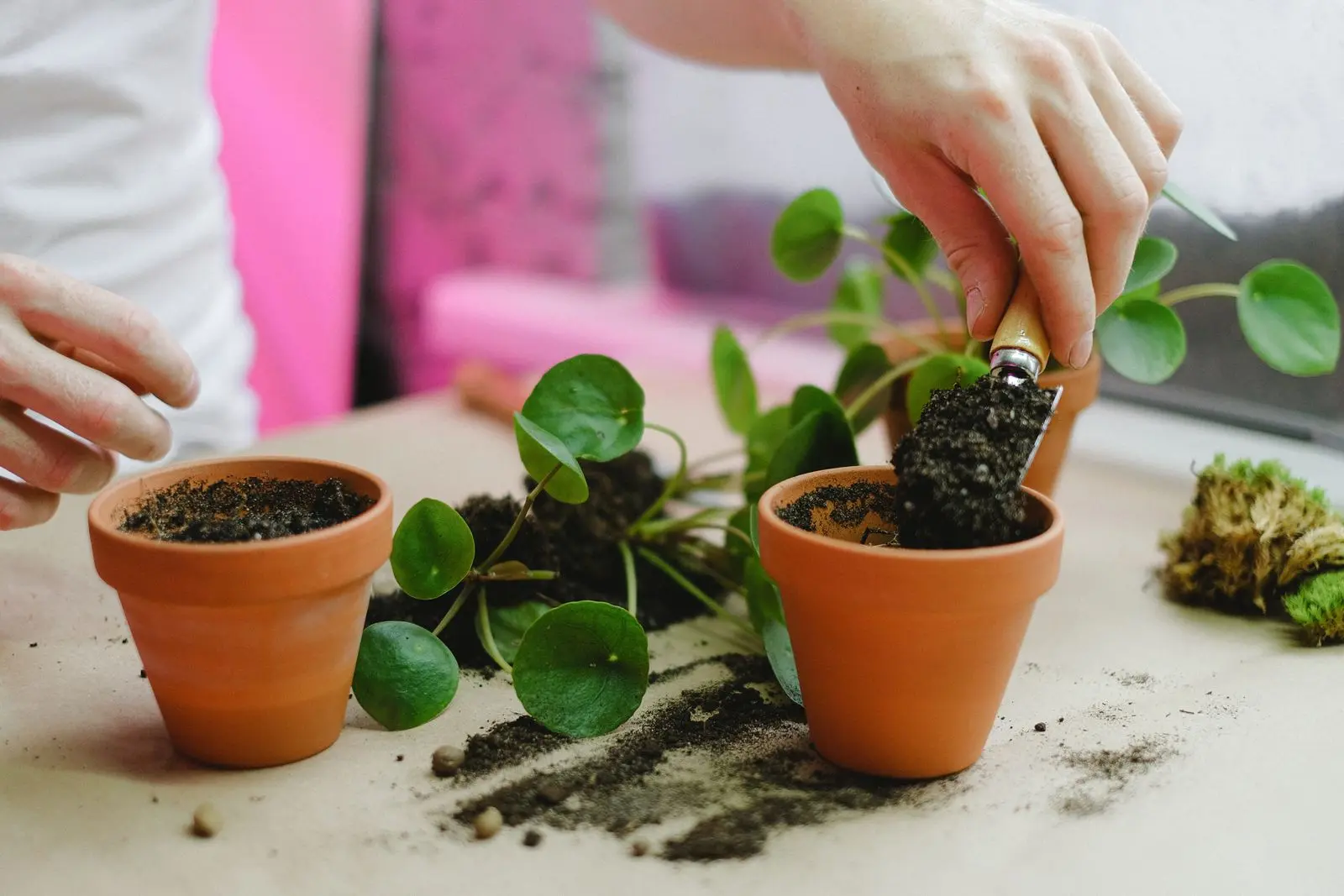
If repotting is warranted, use clean equipment and an appropriate medium, inspect roots carefully, and choose a container that fits the plant. Do not compensate for disturbed roots by leaving the new medium permanently saturated. Dispose of contaminated spilled material thoughtfully rather than spreading it around the indoor growing area.
For a persistent confirmed infestation, a larval treatment may be appropriate. Some products use a biological agent such as Bacillus thuringiensis israelensis, but the formulation and labeled use matter. A product sold for another setting should not be assumed suitable for drenching every houseplant.
Follow the exact label and obtain plant-specific advice where needed. This guide provides no universal dose, homemade peroxide drench, detergent mixture, or schedule. Repeated root-zone applications made without a diagnosis can create additional injury.
Track the cycle instead of expecting an overnight finish
Choose a few comparable monitoring points and record what changes. Note watering dates, trap replacement, visible adult activity, and the condition of new plant growth. A simple record helps distinguish improvement from the normal fluctuations of a life cycle that takes time.
Look for a sustained downward trend rather than a single quiet evening. Continued adult emergence shortly after a change does not necessarily mean that change failed. Conversely, one empty card is not a reason to abandon sensible moisture management.
If the plant keeps declining while gnat activity falls, investigate other causes. Root disease, insufficient light, fertilizer injury, and watering problems can coexist with gnats. The flies may be a clue to persistent wetness rather than the sole explanation for every symptom.
Prevent another hidden breeding site
Inspect new plants and growing supplies before placing them among an established collection. Keep stored medium appropriately closed and dry according to its packaging, clean propagation areas between uses, and avoid leaving abandoned wet pots on the same shelf.
Group plants by care needs where practical, but do not turn that grouping into a rigid shared watering schedule. Check individual pots, especially after seasonal light changes. Keeping a plant's roots healthy is the central goal.
A manageable outcome is a collection with appropriate moisture, clean work areas, and little continuing adult activity. Monitoring tools can support that routine. They should not become a permanent substitute for discovering why one pot stays wet long after the others are ready for water.
Sources & further reading
We favor university extension guidance and original product documentation. Linked sources support the specific facts cited; they do not endorse Garden Gear Atlas.
- University of California IPM: Fungus gnats
- University of Maryland Extension: Fungus gnats
- Colorado State University Extension: Fungus gnats as indoor pests