Choose the meal before the tray
Begin with the amount you want on a plate. A few radish shoots in a sandwich and a loose handful of broccoli greens in a grain bowl are different uses, even when the crops occupy the same shelf. Decide whether you want the greens to supply the dominant flavor or sit beside another ingredient. That choice helps you judge how much of each harvest your household will actually eat.
Utah State describes its broccoli microgreens as mild and its radish examples as spicy. Mississippi State describes broccoli as spicy too, showing why flavor labels are only a starting point. Try your actual seed choice in food before ordering a large bag. Utah crop comparison, Mississippi microgreen varieties
For a first comparison, give each crop its own small container and label the seed lot. Prepare the same simple dish twice, with a similar amount of greens. Record whether you wanted more, less, or none. Avoid judging the winner by which tray looked fuller in a photograph. The useful crop is the one whose harvest suits the meal and whose preparation you are willing to repeat.
Read the young plant instead of waiting for a root or head
At the microgreen stage, you are choosing stems and young leaves. Waiting for a swollen radish root or a broccoli flower head changes the project entirely. A crowded shallow tray is arranged for an early cut, so it should not be evaluated by the rules used for outdoor radishes or mature broccoli. Keep the packet's microgreen instructions separate from any days-to-maturity figure describing the adult vegetable.
The first leaves are cotyledons, followed by true leaves with a more adult shape. Maryland illustrates this sequence and describes cutting above the medium; it treats the early cabbage-family harvest as a one-time cut. Maryland harvest stages
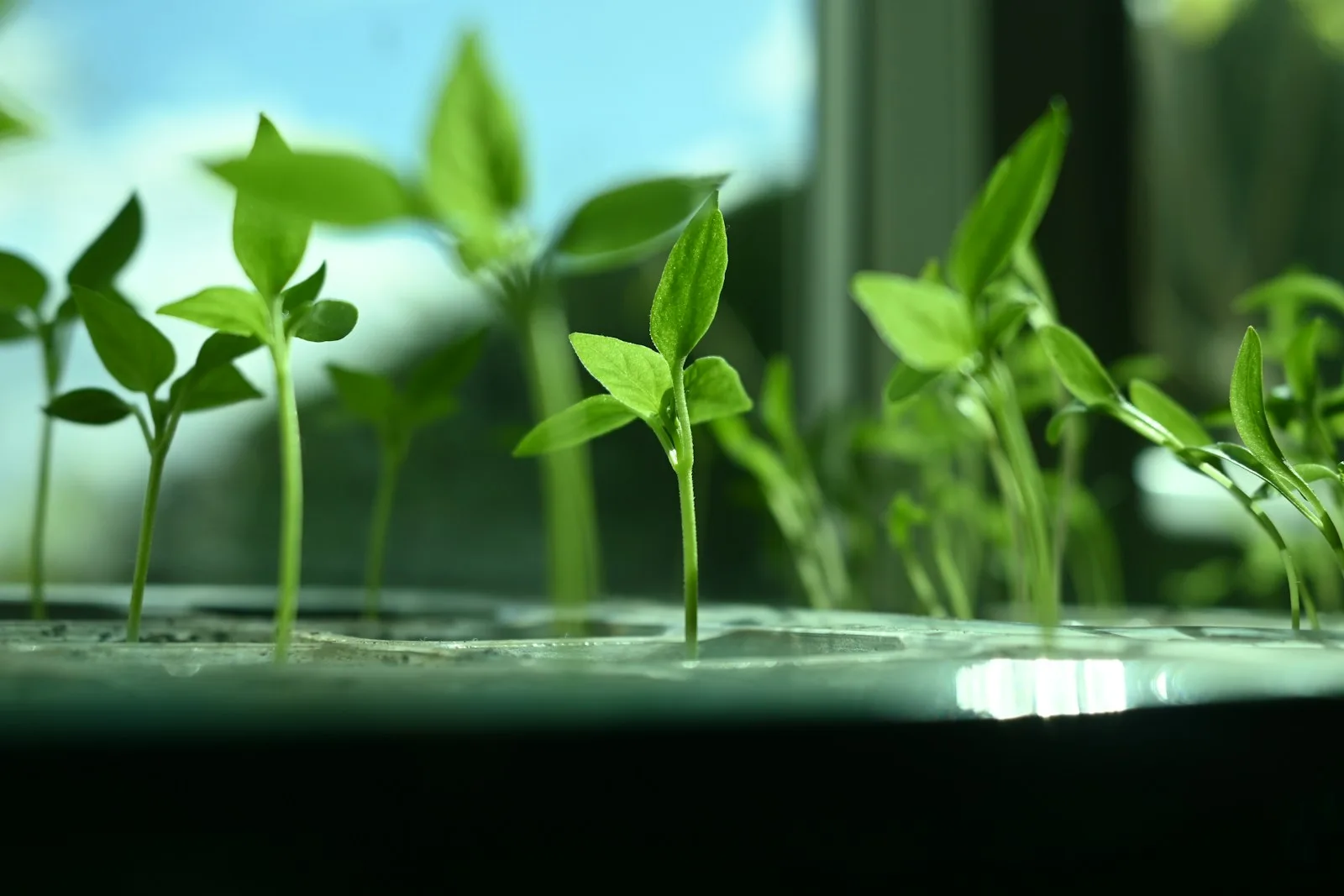
Look at a few plants along the tray edge where you can see the whole stem. Find the medium surface, open seed leaves and developing center. Imagine moving the blade below the leaves without touching the growing material. That small space is your cutting path. Check several places rather than accepting the tallest plant as representative. If tall plants hide much smaller seedlings, ask whether sowing was uneven or whether you are trying to harvest too much of a mixed-age stand at once.
Give each crop its own seed measurement
Keep separate sowing notes for radish and broccoli even if both are going into identical trays. Measure the internal planted area, weigh the seed and write down the supplier's recommended rate for that crop. A common tray footprint makes comparison easier; an identical spoonful of unlike seeds does not make the populations equivalent. Record seed mass before any preparation so the entry is reproducible.
Utah State's method uses 28 grams of broccoli seed and 42 grams of radish seed per 1020 tray. It also gives radish a shorter covered period than broccoli. These are settings within that method, not universal rates or cover-removal deadlines. The comparison shows why one measured recipe should not automatically govern both crops. Utah crop-specific settings
Divide the measured seed into several portions and distribute each portion across the whole surface from a different direction. This is a practical way to avoid spending most of the seed in the first corner. Inspect the surface before finishing. Do not add another handful simply because the dark mix is still visible, and do not use the neighboring crop's appearance as a density target.
After emergence, photograph the stand from above. Mark where there are bare strips or piled seedlings. If the pattern matches your sowing passes, improve distribution first. If the stand is even but the canopy is difficult to separate at cutting, trial less seed next time. Keep the other settings stable so that a better harvest can be linked to a particular change.
Compare cutting access as carefully as growth speed
A crop can be quick to fill the tray yet awkward to harvest. Evaluate how the stems present themselves to the scissors: is there an accessible band below the leaves, do stems lean across one another, and can you lift a small bunch without pulling up roots? Those observations matter more than maximizing stem length. You are trying to produce an easy, clean harvest of the part you intend to eat.
Work from an exposed edge in narrow strips. Hold only enough foliage to see the stems beneath it, cut above the growing surface and move the cut portion straight into the prepared container. Reposition the tray instead of reaching through uncut greens. A clear, stable work surface is especially helpful if the tray rim restricts the angle of your hand.
If the blade cannot reach without scraping the rim or medium, change the next tray's setup. A shallower planting container may solve an access problem that extra growing time will not. If stems lean toward one side, use the light and lodging guide to examine the growing conditions. Buying a sharper tool alone will not untangle an inaccessible stand.
Use dates to arrange observations, then decide by stage
Set a first inspection date from the supplier's crop directions, and put the tray somewhere you will actually examine it. Note emergence, cover removal, opened seed leaves and the first day you can make a satisfactory cut. These entries describe what happened in your room. They are more useful for the next sowing than a label that says only “fast.”
Compare the two crops at the harvest stage you chose for each, rather than forcing them to finish together. If radish reaches your preferred stage first, harvest it first. If broccoli looks ready earlier under your conditions, use that observation. Holding a ready tray just to complete a side-by-side photograph makes the comparison less relevant to ordinary meals.
Once you have observed a successful crop, use its own elapsed days in the tray batch planner. Enter separate runs when radish and broccoli need different durations or sowing weights. The tool arranges dates and supplies from your numbers; it cannot tell whether either crop has developed normally. Recheck the observation after moving shelves, changing seed lots or using a different season's window light.
Keep flavor decisions separate from food-safety decisions
Flavor and ease of cutting help choose a crop. They cannot certify a tray for eating. Nevada identifies contaminated inputs, equipment and handling as possible routes of microgreen contamination, and cautions that postharvest washing does not reliably remove that risk. Nevada microgreen produce safety
Do your growing assessment before bringing the harvest bowl to the tray. If you find visible mold, slime or decaying stems, set the batch aside from edible harvest and discard it. Do not run a taste comparison on a questionable crop, and do not mix apparently better portions into another tray's harvest. Record the failure separately from “disliked flavor,” because the decisions for the next batch are different.
For an ordinary sound crop, arrange the clean-harvest routine before cutting. Keep potting tasks and their tools away from the harvest surface, and follow the crop and hygienic setup guide for handling and storage. Use only seed sold for the intended edible purpose. A successful appearance comparison is still a gardening observation, not a food-safety test.
Buy for the crop you will repeat
Choose the repeat crop using three entries from the trial: how much you ate, how long a tray occupied the shelf and how much work the cut required. If you like both crops, they need not receive equal space. You might grow a smaller radish batch for occasional garnish and schedule broccoli more often. If you liked the flavor but disliked harvesting, fix access before increasing production.
For loose-medium growing, compare the draining tray, fine-stem snips and seed-starting mix below with the equipment you already use. Pair the planting tray with a compatible catch tray, and confirm fit and lifting access before buying a multipack. Use the tray and medium comparison if you have not settled that system.
Buy enough seed to repeat the successful measurement across a modest sequence, then assess again. Keep separate seed totals for radish and broccoli. A mixed storage jar would erase the crop identity and lot record that made the comparison useful, and a large bargain bag does not create more appetite or shelf space.
Sources & further reading
We favor university extension guidance and original product documentation. Linked sources support the specific facts cited; they do not endorse Garden Gear Atlas.
- Utah State University: Grow Your Own Microgreens
- Mississippi State University: Microgreen Varieties for the Mississippi Gardener
- University of Maryland Extension: Growing Microgreens and Baby Greens Indoors
- University of Nevada, Reno: Microgreens and Produce Safety