Keep the garden-hybrid scope on the label
Gladiolus is a large genus, while the familiar summer cut flower represents garden hybrids developed from several species. The flat underground storage structure is a corm, a modified stem. Missouri Extension explains that a new corm develops above the old one as the plant grows. Missouri Extension: Summer flowering gladiolus
Keep the named hybrid and its flowering-season description with the order. The common name gladiolus does not establish whether a plant belongs to the usual spring-planted summer display, an earlier garden group or a specialist species with another growing cycle. It also does not establish fragrance, height or winter survival.
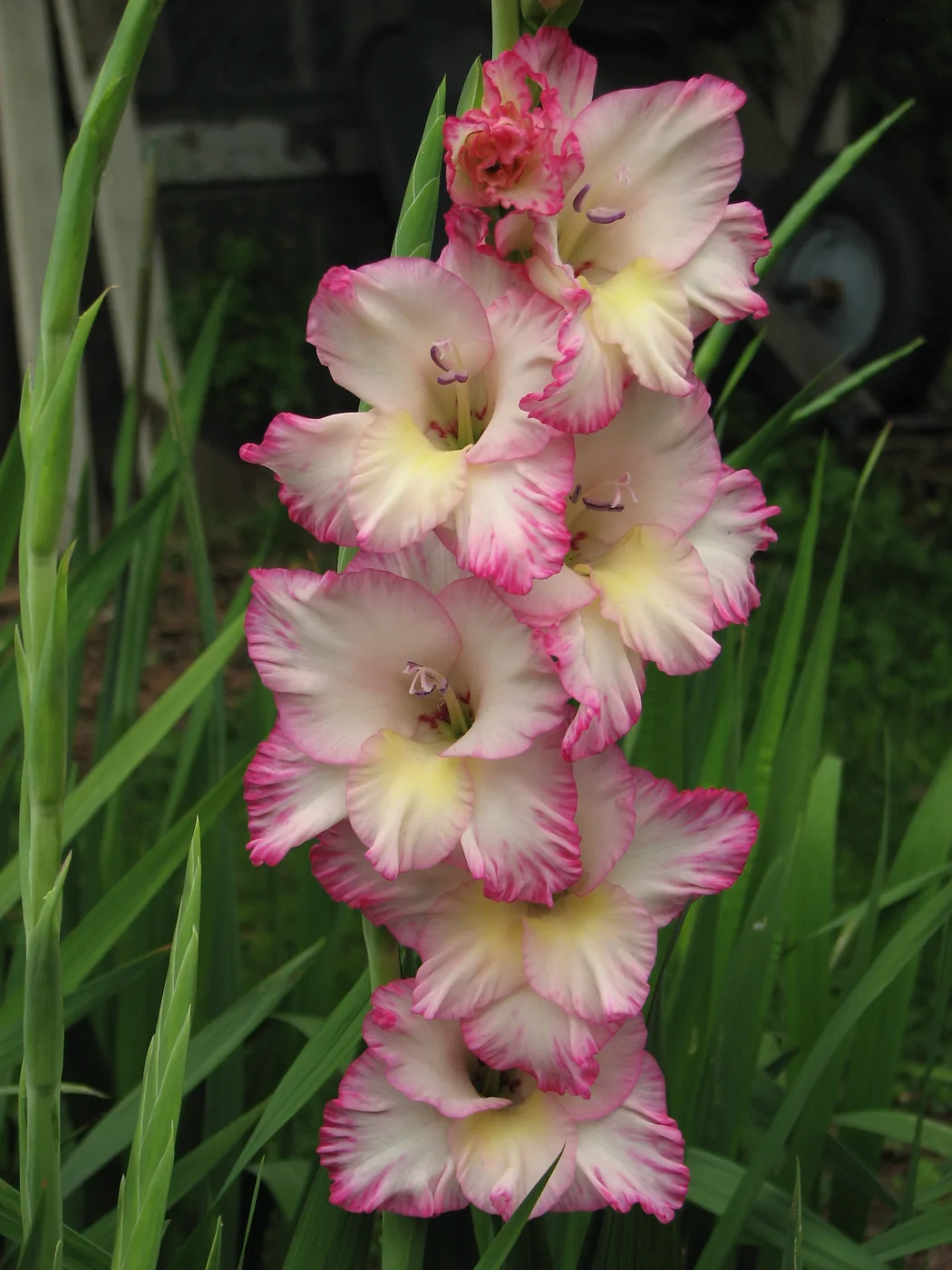
For an inherited planting, photograph the leaves, whole spike and timing before assigning a name. Use a broad label when identification is uncertain. A garden-hybrid photograph can illustrate the general type but should not be presented as proof of a particular cultivar. Buy known stock if a precise color or height is essential to the intended design.
Design around the spike rather than one floret
Consider where the entire flowering stem will stand. A close photograph emphasizes the ruffled flower, but a gladiolus display depends on the tall line of the spike and the space around it. In a border, check the view from the path and the likely height of neighbors. In a cutting patch, check how you will reach the stem without stepping over developing leaves.
Choose a height you can support and a flower scale that fits your vase. Very large florets may be unnecessary for a small table arrangement. A compact selection is a different design option, not evidence of a poor corm. Keep flower-size class separate from corm size when reading a catalog.
If the garden must look full throughout summer, avoid expecting a single gladiolus group to provide permanent mass. Combine its temporary upright role with other plants that suit the same site, leaving the gladiolus stems accessible for inspection and cutting. Plan what remains visible after each spike is removed.
Inspect corm quality before counting future flowers
Choose firm, sound corms and keep visibly deteriorated material separate from the planting batch. Inspect the base and any damaged areas, without stripping every healthy corm bare. A bag’s total count is only a purchase quantity; it is not a guaranteed number of flowering stems.
Iowa State recommends corms at least 1½ inches in diameter for dependable showy spikes. Smaller material may be suitable for growing on, but should not silently replace a flowering-size order for an important first-season display. Iowa State: Planting and caring for tender perennials
Sort purchases by cultivar and size grade before scheduling plantings. Tiny cormels saved for propagation belong in a separately labeled area with different expectations. If a supplier describes material only as large, ask what measurement or grade that means. Keep diameter separate from circumference, especially when comparing sellers using different units or grading systems.
Allocate the full row before starting a succession
Several planting dates require space for several overlapping stages: recently planted corms, leafy plants, flowering spikes and foliage retained after cutting. Draw those stages as separate batches on the bed plan. Cutting a spike does not immediately free the root position if you intend to keep the corm beneath it.
Make paths wide enough for your actual movements with a bucket. Leave room to turn and to inspect the lowest leaves. If the bed can only be reached from one side, reduce its planted width rather than assuming you will lean across later. Install the planned support where it can serve all batches without blocking the next planting area.
The linked succession guide develops batch timing in more detail. For a first attempt, a few manageable, clearly marked batches provide better feedback than a long schedule of small plantings that cannot be distinguished once they emerge. A record is useful only if it remains connected to a recognizable part of the bed.
Use local spring conditions for the first planting
Iowa State’s outdoor approach waits until frost danger has passed. It recommends large corms around 4–6 inches deep, with roughly 6 inches between plants, and emphasizes sun and drainage. Treat this as a home-garden reference alongside the supplier’s instructions for your material. Iowa State: Gladiolus planting depth
Do not copy a regional calendar date into a different climate. A wet bed may be unworkable even after the nominal last frost, while a warm region may use a much earlier outdoor season. If you cannot prepare the ground without smearing or compacting it, inspect the site and schedule rather than planting to keep a written appointment.
Keep a planted-depth note that states how it was measured. Pot-grown starts, small corms and large outdoor corms are not interchangeable depth examples. When using a raised bed or container, check the actual rooting depth below the planted corm and the intended outlet for excess water.
Support straight growth while it is still accessible
Tall spikes need an arrangement that resists wind without forcing the stems against abrasive edges. Put supports in place early enough that the plants can grow within them. Individual stakes can suit a few border plants, while a row support may be easier to inspect for a cutting batch. Soft ties are connectors, so start with a stable structure.
Leave space for leaves and check attachment points as the plant grows. If a spike is already leaning, avoid snapping it upright in one movement. Identify whether the support is loose, the stem is bent or the whole plant has shifted. Repairing the failed part is more useful than tightening every tie.
Watering equipment also needs to remain reachable beneath the leaves. Check moisture where the corms and roots occupy the soil, and compare that with the actual delivery pattern. A wet path does not prove the row was watered, and a damp surface does not justify another full application.
Cut for the vase while keeping the plant’s next job possible
For ordinary indoor use, Iowa State suggests cutting when the lowest floret opens and leaving at least three or four leaves on the plant. That leaf allowance matters if you want the new corm to develop for reuse. Iowa State: When to cut gladiolus
Decide your required stem length before cutting, then check what foliage would remain. If the arrangement demands a length that removes nearly all the leaves, change the arrangement or acknowledge that this plant is being used for a one-season harvest. The two goals should not be treated as automatically compatible.
Bring a clean water container to the harvest area so stems do not wait in a dry pile while you finish the row. Keep cultivar and planting-batch notes when comparing flowering quality. For flowers left outdoors, remove individual faded florets as desired for appearance without stripping the whole leaf fan because the display is declining.
Separate fading flowers from a failing planting
Observe whether a problem affects one floret, a whole spike, one planting batch or the entire bed. Damaged buds, yellow leaves and missing emergence are different clues. Inspect sheltered parts of the flowers as well as exposed leaves, and photograph the damage while it is fresh. A broad pesticide purchase before identification can leave the actual cause unresolved.
At the end of the season, keep labels with any corms selected for storage. Record which batches flowered acceptably and which produced only foliage. The existing winter-storage guide covers preparation and conditions; these notes help decide which material deserves that effort.
Compare successive years by the number of useful spikes and the work required, not simply by the number of corms in a box. If saving many small corms creates more propagation work than flowers, reduce that stock and purchase an appropriate flowering grade. If outdoor survival is reliable locally, still keep the identity and site record so success is not generalized to every gladiolus type.
Sources and scope
Research-based guidance informed by institutional references. Cultivar, region and growing conditions can change the advice. Product inclusion does not imply hands-on testing of every model.