Understand the plant beneath the harvest
Potato belongs to the nightshade family, unlike sweet potato. It is biologically perennial but is cultivated as an annual crop whose underground tubers are lifted at harvest. Those tubers are swollen stems produced on underground stolons, not roots. Aboveground flowers may be followed by small berries; the berries, leaves and stems are not edible potatoes. NC State Extension explains potato identity and toxic plant parts.
Select a cultivar for both your kitchen and your growing window. Waxy potatoes tend to hold their shape when boiled, while floury types are useful for baking and mashing. Skin color alone does not settle that distinction. An early crop for small new potatoes is a different goal from mature tubers intended for winter storage. Minnesota Extension compares cooking qualities. Keep the cultivar name with stored batches so a good result can be repeated, and choose regional recommendations before assuming a familiar supermarket baking potato will suit your garden.
Begin with healthy seed tubers
Seed potatoes are tubers grown for planting; most home potato crops do not begin with packets of botanical seed. Purchase certified planting stock from a reputable supplier. Food potatoes can carry disease without obvious symptoms and may have been treated to discourage sprouting. Saving a few from a poorly diagnosed crop can also carry trouble into the next season. Minnesota Extension explains why planting stock matters.
Small seed tubers can be planted whole. Larger ones may be divided with a clean knife, leaving viable eyes and enough stored tissue on each piece; follow the supplier's preparation instructions. Let cut surfaces heal as directed before planting, and protect emerging sprouts from being knocked off. Arrange the seed pieces before covering so you can check spacing and label each cultivar. A firm, well-prepared seed piece in suitable soil is a better start than a tiny scrap planted early into cold mud. Do not confuse the skin-healing period before planting with curing a mature crop for storage.
Plan for cool tuber development and steady growth
Choose full sun and soil that drains after rain. Potatoes can reach about three feet aboveground, yet the important growing space also includes the tuber zone and the soil needed for hilling. Soil pH advice deserves context: Maryland gives 6.0–6.5 for general growth, with more acidic conditions considered where common scab is persistent. Do not acidify a whole mixed vegetable bed without a test-based recommendation. Maryland Extension sets out potato growing requirements.
Plant when soil is workable and warming; calendar dates from another state are not transferable. Utah uses at least 50°F soil as a planting reference. Keep moisture available as tubers develop, avoiding prolonged drought followed by excessive irrigation. Nitrogen should support a healthy canopy without producing excessive foliage at the expense of tuber development. Reduce watering as a healthy crop naturally matures, rather than keeping a dying canopy continually wet. Utah State Extension explains planting, water and fertility.
Hill to cover tubers, and keep container expectations realistic
As plants grow, bring loose soil or suitable mulch around their bases to keep developing tubers shielded from light. Check again after heavy rain or settling exposes the hill. Hilling has a clear protective purpose; it is not evidence that an endlessly taller tower will produce potatoes throughout its full height. Maryland notes that tubers form near the original seed piece and that potato towers usually disappoint. Read its explanation of underground growth.
Containers can make harvest accessible and provide a separate growing medium, but usable volume, drainage and even watering are essential. Very tall containers are difficult to moisten uniformly: the upper medium can become dry while the bottom remains wet. A container's exterior height is not automatically productive root space. University of New Hampshire Extension discusses these container limitations. Use the container-potato guide to compare a specific setup. Reserve enough room for growing medium and covering tubers; do not count a nearly empty bag at its advertised capacity.
Choose new potatoes or mature storage potatoes
New potatoes are young tubers with delicate skins, rather than a special potato species. Take a small exploratory harvest only when tubers have developed, then use them promptly. For storage, wait until the crop has matured and the skins have set. Avoid assuming that every yellowing plant is ready: premature disease or drought can also stop growth. NC State Extension distinguishes young and mature harvests.
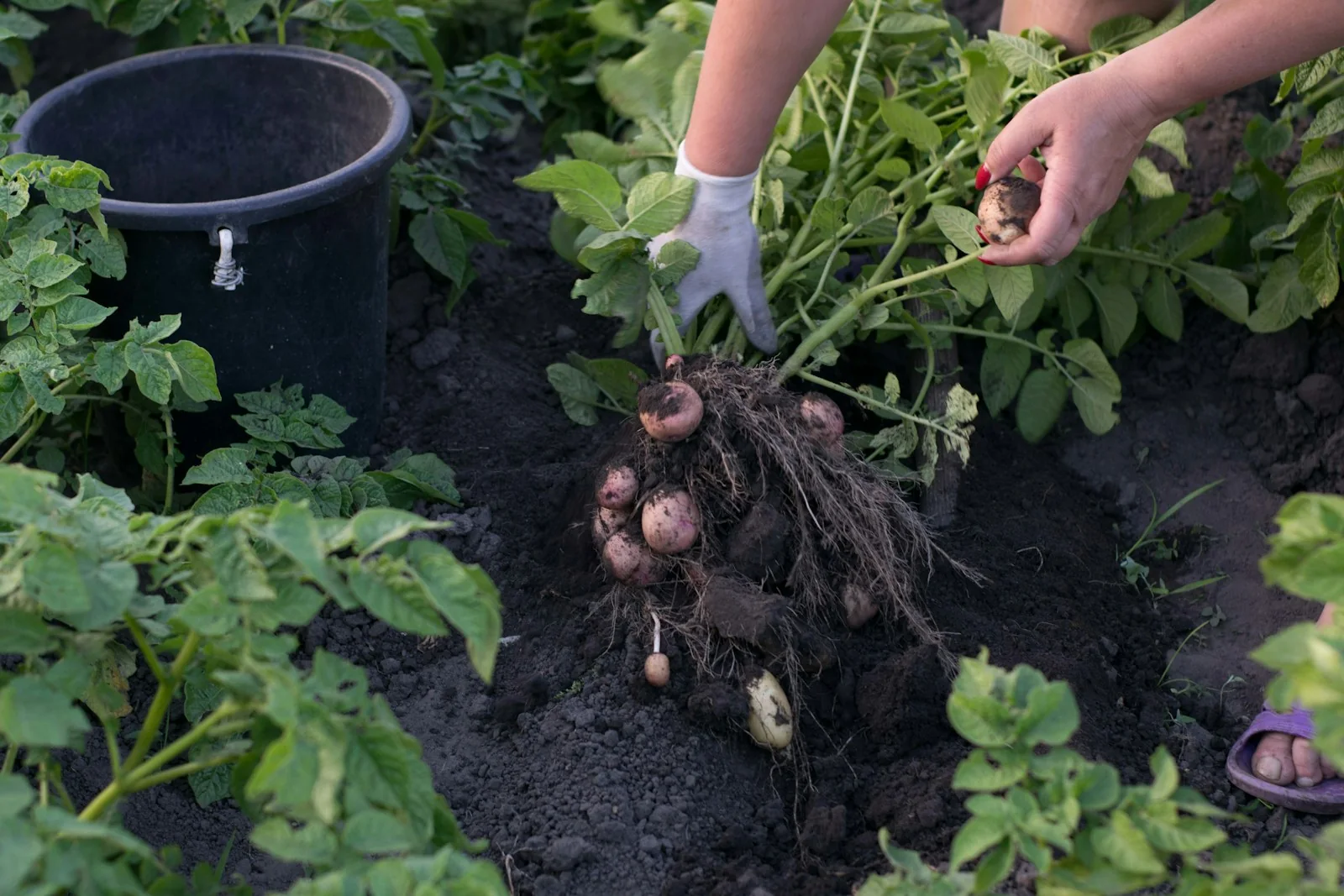
Lift from outside the expected tuber cluster so a fork or spade does not pierce the crop. In containers, a tarp can catch the medium and make sorting easier. Separate cut, bruised or damaged potatoes from sound storage candidates. Allow mature tubers to cure in suitable conditions, then store them cool, dark and ventilated. Utah State's harvest and storage guidance explains this sequence. Inspect stored batches regularly. A storage plan should fit the space you actually have; a warm bright kitchen does not provide the same conditions as a proper cool, dark store.
Read leaf damage and tuber damage separately
Large missing leaf areas may indicate chewing insects; inspect for striped Colorado potato beetles, reddish larvae and eggs underneath leaves. Brown, water-soaked lesions spreading rapidly in cool wet weather raise a different concern, including late blight. Keep photographs of both leaf surfaces and the whole plant, and obtain a local diagnosis promptly when decline is rapid. NC State lists important potato pests and diseases.
Corky tan or brown patches on otherwise firm tubers fit common scab, a bacterial disease whose superficial lesions differ from wet, spreading rot. Disease history, planting stock, soil conditions and moisture during tuber formation inform next season's response. Maryland Extension describes common scab. Greening instead indicates light exposure and can accompany elevated glycoalkaloids; keep greened, sprouting or suspect tubers out of the eating batch. The small-bed rotation guide helps avoid simply exchanging potatoes and tomatoes in the same family sequence. Record the actual diagnosis before buying a resistant cultivar or moving potentially contaminated soil.
Sources and scope
Research-based guidance informed by institutional references. Cultivar, region and growing conditions can change the advice. Product inclusion does not imply hands-on testing of every model.
- NC State Extension: Potato identity and toxic parts
- University of Minnesota Extension: Growing potatoes
- University of Maryland Extension: Growing potatoes
- Utah State University Extension: Potatoes in the garden
- University of New Hampshire Extension: Potatoes in containers
- University of Maryland Extension: Common scab