Identify the jasmine behind the common name
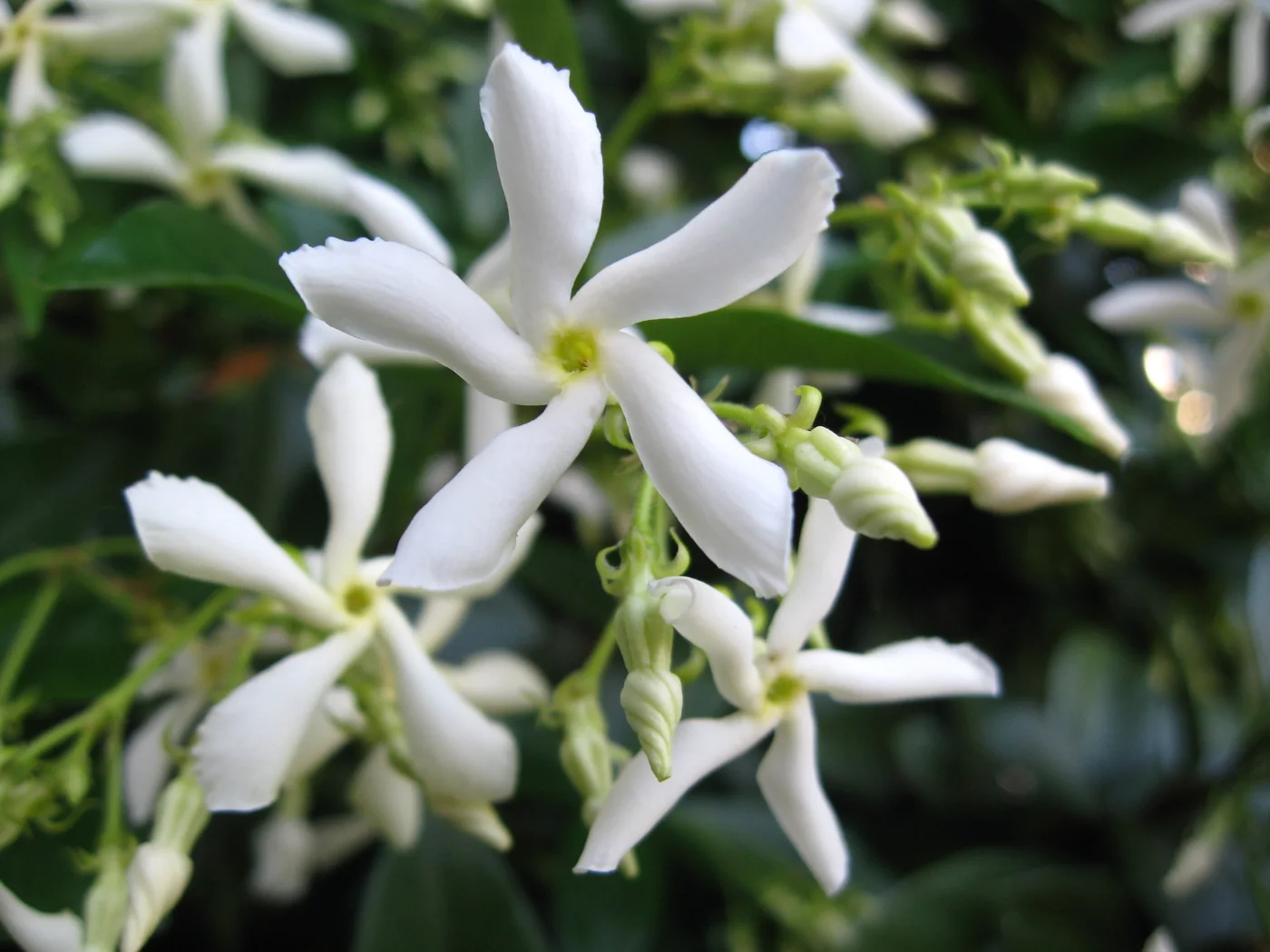
Star jasmine belongs to Trachelospermum in the dogbane family, rather than to the true jasmine genus Jasminum. It has glossy opposite leaves and fragrant, pale flowers with a small pinwheel appearance. Its origins are in Asia, so it is not an eastern U.S. native substitute for every native flowering vine. NC State Extension: Star jasmine
Keep Trachelospermum jasminoides distinct from Trachelospermum asiaticum and from plants sold as winter jasmine or Carolina jessamine. Read the botanical name and any cultivar name on the label. Advice for one of those plants does not establish the cold tolerance, flowering habit or maintenance needs of the others.
Buy for the whole plant you want to maintain. A photograph of abundant white flowers can hide the size of the framework carrying them. Ask to see a mature planting in a similar climate and record whether it is in the ground or a container. Those two settings can demand very different winter work.
Choose where the fragrance will be useful
Stand at the seat or doorway where you expect to notice the flowers and look at the available growing space. Allow for an occupied chair, a fully opened door and the route people use while carrying things. A fragrant plant is easier to enjoy when the planting leaves that space comfortable.
Study the position at different times of day. Include direct light, reflected heat, wind and any roof shelter in the description. A sheltered courtyard and an exposed railing can share the same postcode while offering very different conditions. Do not transfer a neighbor’s result without asking where their plant actually grows.
If a winter screen is essential, ask how this exact planting looks after the coldest local winters. Evergreen describes the normal habit under suitable conditions; it does not promise undamaged foliage after every weather event. The paired cold-damage and container-choice guide helps separate ornamental expectations from survival.
Decide between permanent ground and a movable pot
Ground planting makes sense when the climate and rooting site suit the plant and the support can remain for years. Confirm that you can inspect the base, water it during establishment and maintain the framework after growth covers it. Leave access to any building or fence fittings that will eventually need attention.
A container is useful when it supplies a growing place that the garden lacks or makes winter protection practical. Test that second claim before planting: measure the indoor destination, doorway and turns with both pot and support in mind. The planned winter move must work with a wet, planted container, not just an empty one.
For either choice, put excess water somewhere it can escape. Illinois Extension stresses drainage and removal of standing water from ordinary saucers or outer pots. The container-drainage guide follows that water route through the entire setup. A decorative cover is manageable only when you can inspect and empty it. Illinois Extension: Container drainage options
Let the support travel with the plant when needed
Draw the intended outline and decide how you will keep it within reach. On a permanent planting, inspect the underlying frame and its fixings before attaching stems. On a portable planting, keep the climbing structure part of the portable unit. Otherwise autumn removal can turn into an unplanned pruning job.
Untie nursery growth carefully and choose a few directions for the flexible stems. Keep a small open route to the pot surface or plant base. Position new shoots before they become a dense tangle, and inspect every tie rather than assuming a soft material will always remain loose.
Choosing a support by climbing method helps compare twining stems with other vine attachments. If the container will be on an exposed balcony, also assess the effect of the tall framework on the whole arrangement. A broad pot alone cannot establish that every tall supported planting will be stable.
Make establishment water observable
After planting, check the root ball as well as the surrounding growing medium. Write down whether each is moist or dry and whether water is escaping normally. This distinguishes a dry nursery core from a generally wet bed, and a shrinking potting mix from a pot that needs an entirely different watering routine.
Choose a checking routine you can continue through hot weather and absences. Watering containers in hot weather is useful when a small supported vine starts occupying much more leaf space than it did at purchase. Check the actual container before extending irrigation runtime or adding another emitter.
Keep fertilizer decisions separate from an unexplained leaf symptom. Look up any feed already included in the growing mix and retain the product label. If growth disappoints, first document moisture, light and recent weather. A stronger feeding program cannot show you which of those conditions is responsible.
Plan winter around light, roots and exposure
Illinois Extension emphasizes protecting the container soil mass and continuing moisture attention for broadleaf evergreens in winter. Use that as a reason to inspect the pot, not as a claim that wrapping it makes the vine hardy everywhere. The exposed shoots and the root container are separate parts of the decision. Illinois Extension: Overwintering plants in containers
A plant brought indoors needs a workable growing position. Check the available light and the conditions close to the foliage, including drafts and nearby heat. Do not allocate a dark storage corner solely because it stays above freezing. Plan how to water, drain and inspect the plant without dismantling the room.
Treat seasonal relocation as a repeatable job: access cleared, support manageable, foliage inspected and a place already prepared. Overwintering containers by plant type puts this decision alongside other winter arrangements. Use species-specific requirements before borrowing a storage method intended for dormant bulbs or deciduous plants.
Separate ordinary shaping from winter recovery
NC State advises size pruning after flowering. Cut for a defined conflict with the available space and clean sticky sap from tools afterward. Treat damaged growth separately from the usual shaping routine; a difficult winter can change what needs cutting and when its condition becomes clear. NC State Extension: Star jasmine
RHS reports that star jasmine leaves can redden, develop spots or fall during cold snaps. Observe the condition of shoots and the return of growth before deciding the entire plant is lost. A single leaf photograph cannot distinguish all cold, moisture and root problems. RHS: Growing star jasmine
Keep a photograph of the framework before winter and another from the same position during spring growth. Mark which stems resume growth and which remain uncertain. Decide whether the vine still provides the display you chose it for, then make the next season’s siting or container decision from that record.
Sources and scope
Research-based guidance informed by institutional references. Cultivar, region and growing conditions can change the advice. Product inclusion does not imply hands-on testing of every model.