Confirm the bumps belong to the leaf
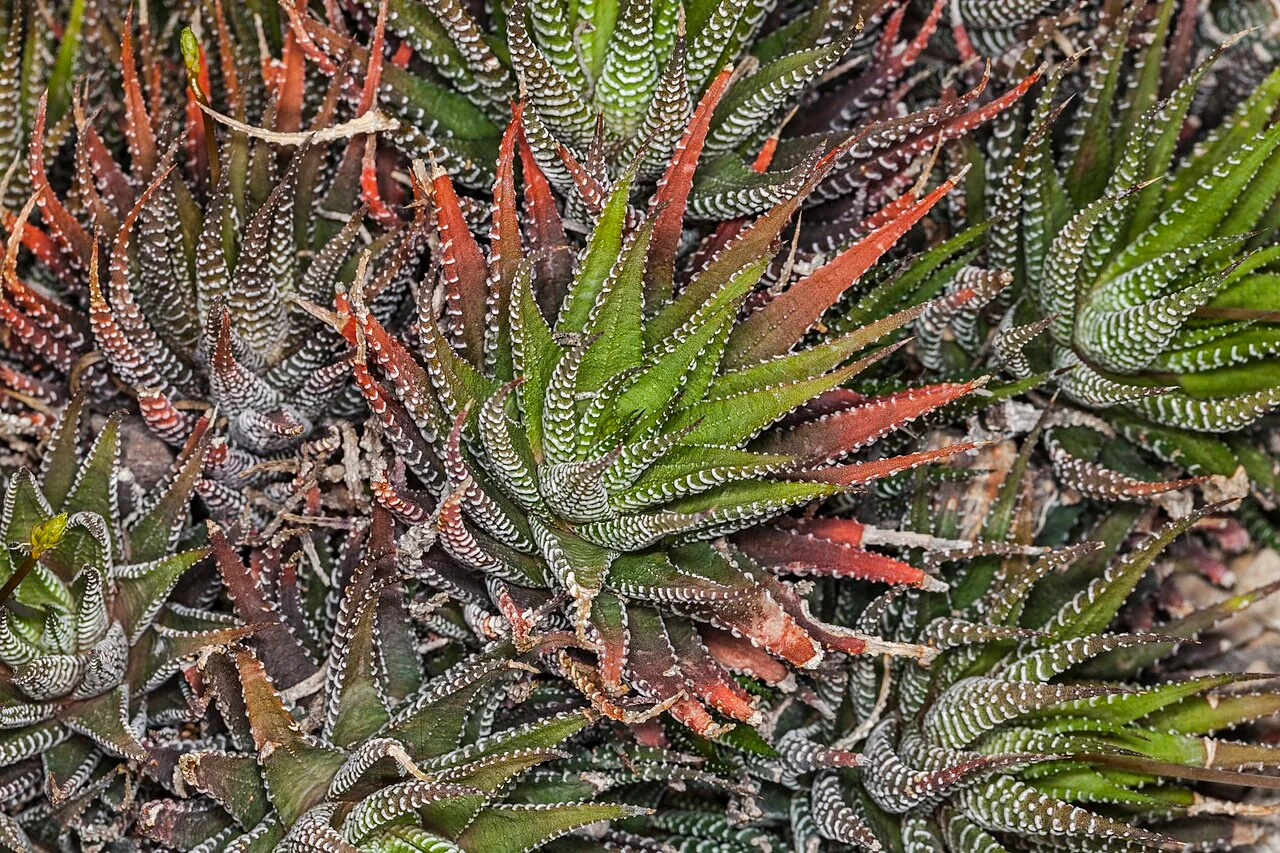
Haworthiopsis attenuata is the zebra-striped succulent commonly sold under its older name Haworthia attenuata. NC State distinguishes it from H. fasciata by the raised bumps on both leaf surfaces; H. fasciata has a smooth inner or upper surface. NC State: Haworthiopsis attenuata Both names can appear on confusing retail labels, so retain the scientific name and photographs of the actual plant.
Look at an accessible outer leaf without forcing the center open. The regular white pattern is part of the leaf; unfamiliar cottony material lodged between leaves deserves separate inspection. If a label simply says zebra plant, do not assume it identifies this species. A plant bought for its striped rosette should also have a firm, inspectable base and no hidden standing water. Ask the seller about the pot and medium as well as the name, because those details affect the first care decisions at home.
Use its small size thoughtfully
SANBI describes H. attenuata as a clustering perennial with rosettes up to fifteen centimeters across and white flowers marked with green veins on taller slender stalks. Its South African flowering season is summer; that calendar should not be transferred unchanged to an indoor plant in another hemisphere. SANBI PlantZAfrica: Haworthiopsis attenuata Decide whether your display will be one rosette, a cluster or separate labeled pots. A developing flower stalk needs clearance above the foliage but is not evidence that the main rosette has stretched. Retain the stalk while it is sound if you enjoy observing the flowers, and keep it clear of curtains or frequently handled objects.
Give the container a stable surface and room for your fingers around the rim. Desk placement is most useful when you can both enjoy and inspect the plant; a deep cubby may provide neither suitable light nor convenient access. A compact plant can disappear behind a monitor or a stack of books. Build the position around the actual rosette, including the ability to remove it from its display for inspection. The small footprint is an advantage only while the plant remains reachable.
Choose filtered brightness before stronger sun
NC State recommends bright indirect light for H. attenuata and warns that direct sun can scorch it. NC State: Haworthiopsis attenuata It does not need the same treatment as every pale, sun-demanding rosette sold on the same succulent bench. An exposed south or west window may require a more protected position, while a shaded room may provide too little light even if it feels pleasantly bright to you.
Observe where direct sun falls and whether neighboring plants shade the rosette. If you change placement, photograph the plant so you can compare new leaves and overall form later. Avoid making several simultaneous adjustments merely because color changes worry you. The useful question is whether the plant remains firm and produces appropriate new growth in the chosen conditions. If you introduce a lamp, make its mounting and coverage deliberate. Placing the pot wherever there is a spare gap under another plant’s light can create an uneven experiment.
Give the roots a container they can use
Inspect the roots before choosing a wider or deeper container. The display’s shallow-looking outline does not provide a measurement of the root ball. Lay the empty candidate beside the existing container and check whether it would improve access or simply add unused space. If a repot is justified, let the actual root arrangement answer the depth question. Keep the growing point visible and leave enough room to water without pushing between the leaves. For a plant that already sits securely in a suitable pot, a decorative change can be made through the surrounding display instead of disturbing the roots.
Choose the pot and medium together. If you prefer a decorative outer pot, practice removing the inner container before planting. A tight fit that traps your fingers will be harder to manage once offsets extend over the rim. Leave the planting level easy to inspect and avoid hiding the base under a heavy decorative layer. If roots have been lost, reconsider the former pot size instead of returning the plant to a container selected for a much larger root system.
Treat shrinking leaves as a question
Shriveled leaves can tempt you to water repeatedly, but they do not tell you whether the plant has functioning roots. Wisconsin describes reduced growth, smaller leaves and shriveling as possible signs of a weakened or rotted root system. Wisconsin Extension: Haworthias Start with the recent history: was the pot actually dry, or has it stayed damp while the rosette slowly shrank?
Compare the plant with photographs rather than squeezing leaves repeatedly. Check whether the base remains firm and whether the plant has become unexpectedly loose. If decline persists in damp medium, an inspection is more informative than another small drink. Set out a clean work surface and record what you find before changing anything. Use the haworthiopsis root-loss guide to distinguish a plant that needs ordinary watering from one that needs a recovery setup and a more cautious prognosis.
Watch establishment rather than demanding a deadline
After moving a plant into new medium, document the setup: pot dimensions, what medium you used, why you repotted and how many roots remained. This is particularly helpful if the new pot looks similar to the old one. Your previous watering habits may no longer describe its behavior. Keep the plant accessible enough that you can observe drying and new growth without repeatedly removing it from the medium.
For a recovering plant, consider several observations together: the base stays sound, the decline stops, and new growth eventually appears. Do not keep tugging to test for roots or repeatedly excavate it to obtain reassurance. If soft decay advances into the base, the problem deserves a fresh assessment. Maryland’s root-rot guidance recommends separating affected plants and discarding severely infected material. Maryland Extension: Root Rots of Indoor Plants Recovery is a possibility for suitable living tissue, not a promise attached to every shriveled rosette.
Divide offsets only when you have a reason
Offsets offer a way to make additional plants while retaining a compact parent. SANBI recommends separating offsets after they begin developing their own roots. SANBI PlantZAfrica: Haworthiopsis Before dividing, decide whether you need another plant or simply prefer a less crowded outline. You can also keep an attractive cluster if its roots and container remain manageable. There is no requirement to dismantle a healthy clump as soon as a new rosette appears.
Plan a labeled pot for each piece you intend to retain, and inspect for independent roots during the division. A rooted offset and an unrooted piece should not be assumed to establish at the same pace. Keep a note of which is which. Resist making the pot collection larger than your bright growing area can support. A useful spare is a plant with a known identity and care history; an unmarked bowl of mixed offsets can make later light and moisture decisions needlessly difficult.
Make purchase and seasonal decisions from observations
For routine care, a functioning drainage container and suitable light matter more than a collection of rescue products. If a plant declines, first identify whether the limiting problem is its position, the retained water or the condition of the roots. A bag labeled succulent cannot repair dead tissue, and a moisture reading cannot identify a pathogen. Spend on the missing part of the setup only after you can describe the failure you are trying to prevent.
Outdoor care should remain conditional. NC State explicitly says H. attenuata is not frost tolerant despite listing mild outdoor growing zones. NC State: Haworthiopsis attenuata If you move it outside, choose a protected, reachable place and retain an indoor return space. For an indoor plant, review seasonal changes in window exposure and room use. The practical goal is a firm, steadily maintained rosette with an observable root zone, whether you keep one specimen or a small, intentionally spaced cluster.
Sources and scope
Research-based guidance informed by institutional references. Cultivar, region and growing conditions can change the advice. Product inclusion does not imply hands-on testing of every model.