Start with the plant and the season
List the plants you intend to grow, their mature dimensions and the months they need protected space. Then separate three goals: starting seedlings, keeping established plants alive through an unfavorable season, and producing active growth or a harvest indoors. These are different projects. A structure adequate for holding a few dormant plants may be unsuitable for growing fruiting plants through winter.
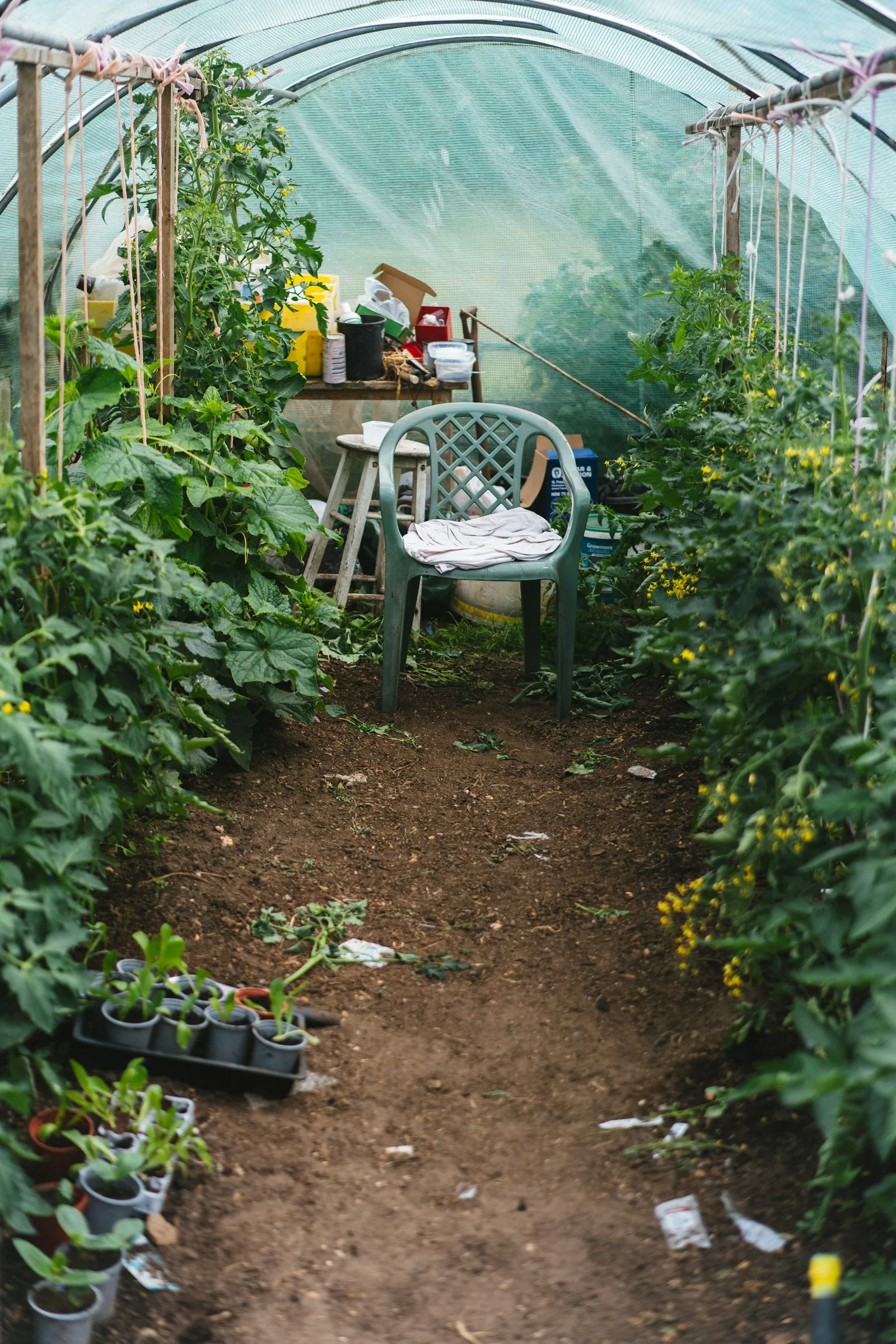
A greenhouse is a light-transmitting structure whose location determines much of its available sunlight. The Royal Horticultural Society identifies propagation, season extension and protection of tender plants among its uses, while emphasizing siting and ventilation. Treat those uses as possibilities to evaluate for your climate, not as an assurance that any greenhouse handles all of them. RHS guide to choosing a greenhouse.
A grow tent is an enclosure within another building. Its opaque reflective walls are useful for managing an artificial-light growing area, but those walls do not supply light. If the plan assumes that placing a tent beside a bright window eliminates the need for suitable grow lighting, reconsider the enclosure. Begin with the crop's requirements, then identify which environment can realistically provide them.
Measure usable space, not just the footprint
Mark the proposed footprint on the floor or ground and rehearse a working visit. Include the door or zip opening, watering access, pot removal and a place to put supplies. A nominal growing square that fits between furniture is not necessarily a usable workspace. Indoor access also needs to remain practical when the tent door is open and plants are larger.
Work downward from the available height. A container, its drainage arrangement, the mature plant, the light fixture and the fixture manufacturer's required clearance all occupy space. Hanging ventilation equipment can consume additional headroom. Do not compare tent height directly with plant height and assume that the difference is all available for growth.
For example, AC Infinity lists the CLOUDLAB 422 at 24 by 24 by 48 inches and supplies a reflective tent with a steel frame and equipment ports. That identifies the enclosure being purchased, not a ready-to-grow lighting and ventilation package. Check the exact listing and selected bundle rather than inferring accessories from a staged photograph. CLOUDLAB 422 manufacturer specifications.
Trace where light and heat will come from
For the greenhouse option, observe the intended site through the hours and season that matter. A sunny summer lawn can sit in a building's shadow when the sun is lower. Make a simple note of when direct light reaches and leaves the space. If winter production is the main goal, summer observations alone are insufficient for deciding whether supplemental lighting will be necessary.
For the tent option, identify the proposed light, its coverage at the intended mounting height and the crop stage it must serve. Use the fixture manufacturer's guidance and crop information to develop a lighting plan. A dimming control and a timer are management features; they do not establish that a particular fixture is sufficient for a particular canopy.
Compare operating demands with actual equipment rather than broad claims that one format is always cheaper. Record the lighting hours you expect, the equipment ratings and the local energy tariff when preparing a budget. Keep any estimate separate from measured consumption. Greenhouse heating needs and indoor-room conditions can change the comparison substantially, so a single national running-cost figure would be misleading.
Plan an air path all the way to its destination
Draw the route of incoming and outgoing air for each option. In a greenhouse, ask which openings supply replacement air and which remove warm air. In a tent, ask where the exhaust goes after leaving the enclosure. Sending warm, humid air into the same small closed room is a different arrangement from a properly designed route to another suitable destination.
Circulation within a space and exchange with surrounding air are separate jobs. A small fan moving leaves inside a tent does not establish adequate exhaust. Likewise, a greenhouse circulation fan cannot compensate for an opening that cannot release air. Select equipment as a system and check manufacturer requirements for ducting, mounting and clearances.
Do not conceal the building implications inside the gardening budget. Indoor moisture, water spills, noise and electrical supply concern the room as well as the plants. Obtain permission for any building alteration and qualified advice where needed. An enclosed growing space should not block an exit, rely on improvised electrical distribution or exhaust into an unsuitable hidden cavity.
Decide how much temperature control you actually need
Write the crop's acceptable conditions beside the conditions the proposed space experiences. For an outdoor greenhouse, include both cold nights and sunny periods. For a tent, include the room when household heating or cooling is reduced and the enclosure when its lights are operating. A temperature measured once while the equipment is off is a poor basis for a year-round plan.
If a greenhouse requires heating, budget for a suitable installed system and continued ventilation management. RHS guidance notes that insulation changes light availability and that winter damp still needs attention. Closing every gap to save heat is therefore not a complete environmental strategy. RHS guidance on greenhouse heating and insulation.
Set the crop choice before escalating the equipment. A gardener wanting a small winter supply of cool-season leaves might make different decisions from someone trying to maintain actively growing tropical plants. If the crop's needs are far from the conditions available, changing the crop or growing season may be more practical than adding several devices to overcome the mismatch.
Compare the maintenance and failure routines
Imagine a busy week rather than an ideal weekend. A greenhouse may need attention to opening positions, storm preparation, glazing, seasonal shading and watering. A tent may require checking lights, fans, reservoirs, drainage trays and the condition of the surrounding room. Neither option removes the need to inspect plants for pests and disease.
Create a failure list with a response beside each item. For a greenhouse, examples include a jammed vent or damaged covering. For a tent, examples include a stopped exhaust fan or a timer that has lost its settings. Add the simplest manual observation that would reveal the fault. An app notification can help only if the sensor, connection and notification setting are working.
Keep spare equipment proportional to the consequence of failure. A replacement hose washer is a different decision from a backup climate-control system. The important point is to know which failure requires immediate intervention and who can intervene when you are away. A system that depends on your presence every afternoon should not be purchased under the assumption that automation has removed that obligation.
Make a small, reversible first choice
If the main need is several weeks of seedling space, first compare a suitable lighted shelf or small seasonal enclosure with either larger investment. If you already have a greenhouse, test one crop area before attempting a demanding winter regime. If you choose a tent, begin with the plants and equipment that fit comfortably rather than the maximum number of pots that can be squeezed inside.
Use a short decision record: crop and season, available light, usable height, air route, water handling, equipment required and daily checks. Leave unanswered items visible. A missing exhaust route or unsuitable growing temperature is more important than a preferred frame color or a storage pocket.
Choose the option whose ordinary conditions are closest to the plants' needs and whose maintenance fits your routine. A greenhouse offers a sunlit protected space; a tent offers a defined indoor enclosure. The better choice is the one supported by a complete, manageable plan around it.
Sources & further reading
We favor university extension guidance and original product documentation. Linked sources support the specific facts cited; they do not endorse Garden Gear Atlas.
- Royal Horticultural Society: Choosing Greenhouses
- AC Infinity: CLOUDLAB 422
- Royal Horticultural Society: Heating Greenhouses Efficiently