
Define the harvest before counting planting holes
A useful first hydroponic garden has a clear finish line: a few heads of lettuce harvested together, or small amounts of an herb cut repeatedly. Those are different projects. Write down the crop, intended harvest size, how many plants you actually want, and the longest time you will normally leave the system unattended. A system with twelve openings does not oblige you to grow twelve mature plants. Its advertised capacity may describe seedlings or compact crops rather than the plants you have in mind.
Measure the available growing area and the space beside it. You need room to lift a lid, put down a wet root basket, take a sample and remove a container without passing over furniture. Include the intended light and its required clearance when checking height. Compare the three systems only after this sketch. Illinois Extension distinguishes passive wicks, aerated water culture and several pumped recovery systems; the word hydroponic alone tells you little about their maintenance. Illinois Extension: Getting started with hydroponics at home
Keep the crop and plant count identical when comparing systems.
Passive containers depend on an intentional air gap
In a non-circulating suspended-pot system, the falling solution level creates humid air space around part of the root system. Lower roots remain in solution while upper roots have access to air. The reservoir must therefore be chosen for both the crop's water use and that air space. UF/IFAS describes this as an option particularly suited to smaller, shorter-lived crops when container volume and starting nutrition are appropriate. UF/IFAS: Kratky hydroponic method
A low water line is not automatically a mistake to correct by filling the container to its original brim. Kratky's research describes the importance of preserving the established air-root zone; flooding it changes the conditions those roots developed in. Follow a documented design for your crop, including its refill rules, rather than borrowing the refill line from an aerated kit. University of Hawaiʻi: A suspended pot, non-circulating hydroponic method
Choose this approach if you want a small, observable crop cycle and can leave the container undisturbed. Before planting, decide how you will check the remaining solution without repeatedly pulling the plant out. If your goal is months of repeated harvesting, consider whether a system designed for ongoing replenishment will make that work easier. Passive describes the delivery mechanism; it does not remove the need to observe the plant.
An aerated reservoir makes roots and water easy to inspect
An aerated reservoir suspends plants above a body of nutrient solution and supplies air through equipment such as an air pump and diffuser. Oklahoma State describes this water-culture arrangement separately from systems that pump nutrient solution through channels or periodically flood media. Air movement and water movement are different functions, even when a particular kit provides both. Oklahoma State: Hydroponics
This is often a practical choice when you want to see the root zone, measure a single solution volume and complete maintenance at one container. Check that the lid can be opened with mature plants in place. A large panel carrying several root masses can be awkward even if the reservoir itself fits neatly on the floor. Removable plant holders or a separate inspection opening can be more valuable than additional growing sites.
Ask the supplier for the operating water level, aeration requirements, replacement diffuser information and cleaning procedure. Those details should be available before purchase. Compare the sound of the intended equipment with how you use the room, using an in-person demonstration or a seller's return policy rather than assuming that a listing's quiet claim will suit a bedroom. The relevant question is whether you can live with the complete operating routine.
Recirculating channels exchange reservoir access for flow checks
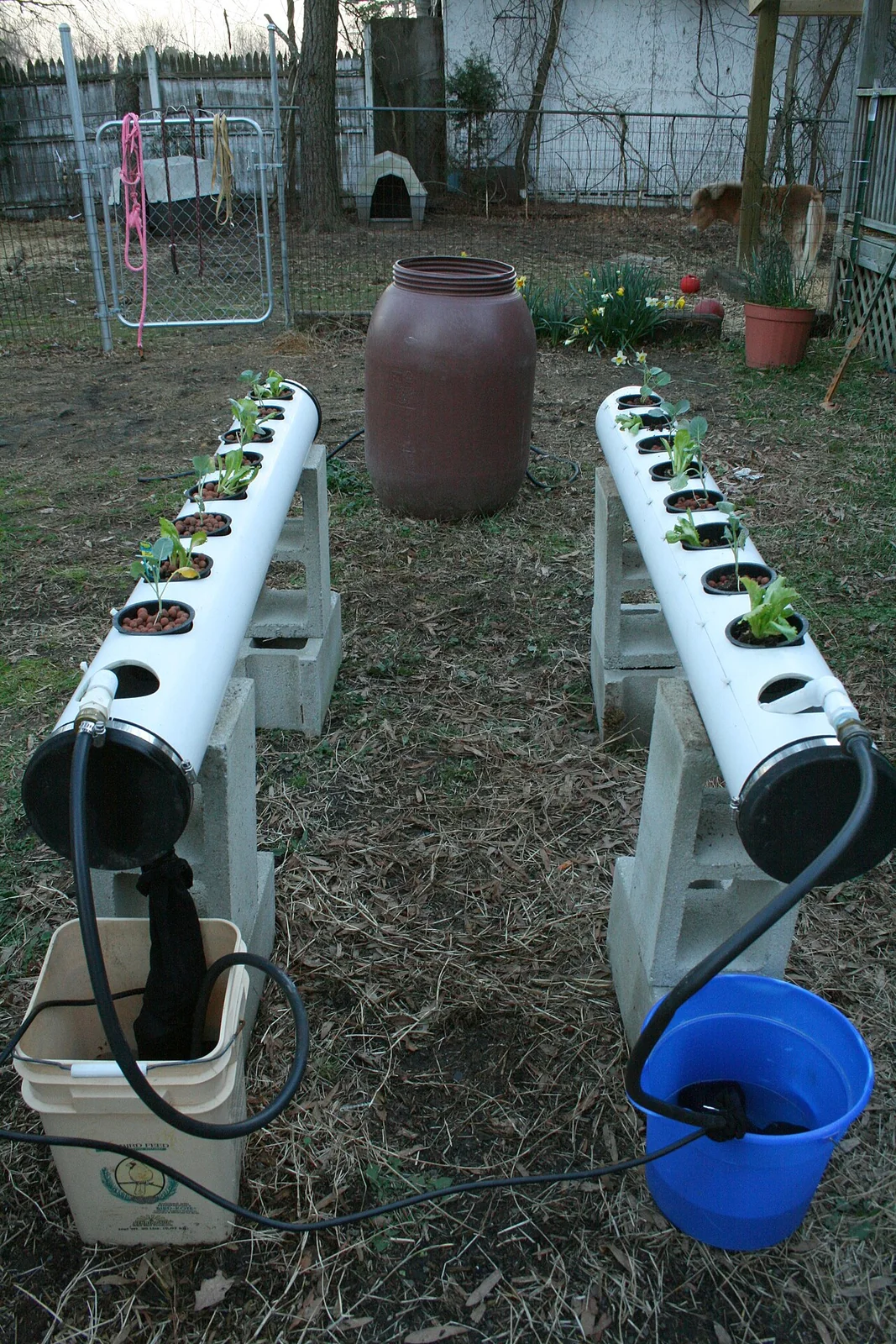
Nutrient film technique, or NFT, moves a shallow flow along plant roots and returns it to a reservoir. Oregon State emphasizes its dependence on continuous flow and the risk of rapid wilting when a pump stops or a channel clogs. Its limited rooting space favors shorter-lived crops. A recirculating system is therefore more than a tidy arrangement of pipes: every plant depends on an unobstructed delivery and return route. Oregon State: Nutrient film technique
Inspect how a prospective system comes apart. Can you see each outlet? Can a root mat be removed without dismantling the entire structure? Can you reach the reservoir when all the channels contain plants? A removable channel lid and an accessible return are useful features because roots do not respect the clean boundaries shown in an empty product photograph.
Recirculating also covers other arrangements, including flood-and-drain trays and some drip systems. Their timing and root-zone conditions differ from NFT. Use the manufacturer's exact system name when requesting care instructions; do not transplant a timer schedule from one method into another. Choose channels when the extra inspection is a reasonable daily commitment and the layout solves a real space problem. For four lettuce plants, reduced floor area may not justify a complicated return path.
Check usable light, materials and the service footprint
A vertical arrangement can add planting sites while making light distribution harder. UF/IFAS notes that upper plants can shade lower plants and that airflow can become uneven in vertical systems. Examine the growing positions from the side, imagining mature leaves instead of small plugs. An opening on the back of a tower is useful only if its crop receives suitable light and you can reach it for inspection. UF/IFAS: Growing lettuce in small hydroponic systems
For indoor growing, plan supplemental light as a separate decision. The University of Minnesota explains that indoor hydroponics commonly needs artificial lighting, especially through winter. A sunny-looking room does not establish how much light reaches each leaf. Use the grow-light selection guide and estimate operating cost with the grow-light cost tool. University of Minnesota: Small-scale hydroponics
Choose documented materials suitable for contact with plants and nutrient solution. Oregon State specifically recommends food-grade components. An unidentified secondhand container is a poor purchase if its previous contents or material suitability cannot be established. Oregon State: What is hydroponics?
Keep a separate list of items the kit does not include: nutrient products, measurement supplies, cleaning tools and a suitable way to handle removed water. Compare complete ownership costs without assuming that a grow light, tent or outdoor irrigation kit is a compatible hydroponic system.
Rehearse one complete maintenance session before planting
Set up the empty system in its intended location according to its instructions. Use water for the manufacturer's recommended initial checks before adding plants or nutrients. Confirm that covers fit, the stated operating level is readable, and every service opening is reachable. For a pumped system, observe the entire flow path and the normal stop-and-restart behavior described by the supplier. Do not improvise electrical changes or a different operating schedule during this check.
Now rehearse the human tasks. Put the sample cup where you would actually use it. Work out where removed lids and wet plant holders would rest. Check that the container or supplied drain arrangement can move water into a vessel you can handle. Record actual working volume from measured additions rather than relying on a container's nominal capacity; its normal fill level may be substantially lower.
Write a short daily sequence: look at leaves, inspect accessible roots, check level, confirm aeration or flow, then make scheduled measurements. Add a separate list for between-crop cleaning. If you cannot complete a task because something is trapped behind the system, change the layout now. This rehearsal often identifies the better purchase more clearly than comparing reservoir shapes.
Choose the simplest system that fits your actual household
Consider three example decisions. A gardener who wants a single batch of compact lettuce and enjoys observing water use may choose a documented passive container design. Someone who wants to learn solution management and inspect roots easily may prefer one accessible aerated reservoir. A grower already comfortable with daily checks, with a narrow space and a planned succession of small greens, may find removable recirculating channels worthwhile.
These are starting choices, not rankings. A passive setup can be unsuitable if its water allowance is inadequate; a large aerated container can be difficult to empty; a well-designed channel system may be easier to service than a poorly accessible reservoir. Score each candidate against your own crop, light, inspection, cleaning and water-handling requirements. Eliminate any candidate whose operating instructions leave one of those jobs unclear.
Run the first crop at a modest density and keep notes through cleanup. Use the complete cycle to decide whether you need more growing sites, easier access or different light placement.
Sources & further reading
We favor university extension guidance and original product documentation. Linked sources support the specific facts cited; they do not endorse Garden Gear Atlas.
- Illinois Extension: Getting started with hydroponics at home
- UF/IFAS: Kratky hydroponic method
- University of Hawaiʻi: A suspended pot, non-circulating hydroponic method
- Oklahoma State: Hydroponics
- Oregon State: Nutrient film technique
- UF/IFAS: Growing lettuce in small hydroponic systems
- University of Minnesota: Small-scale hydroponics
- Oregon State: What is hydroponics?