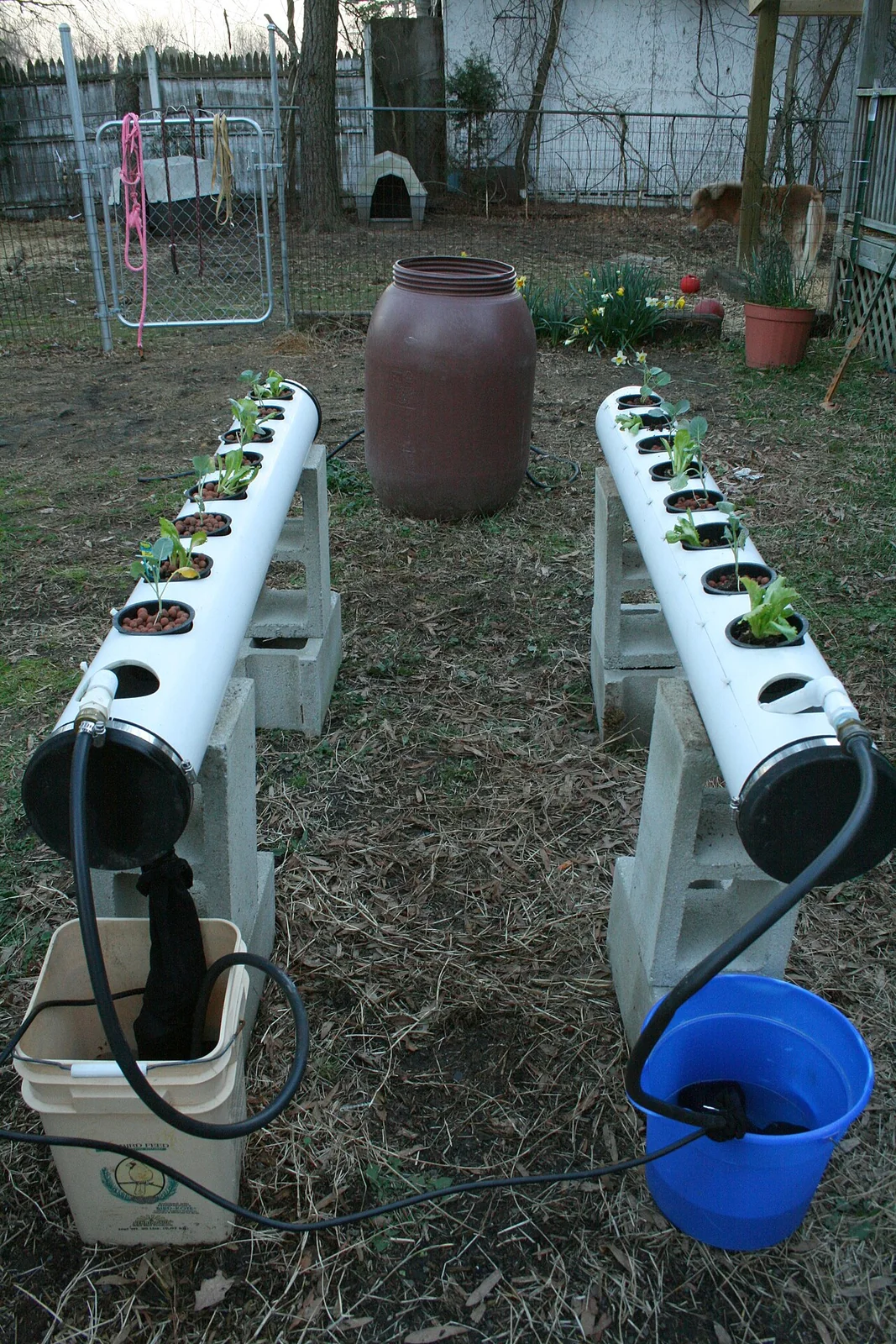

Identify how this root system receives oxygen
Start by naming the system. A passive suspended-pot design keeps some roots in humid air above the solution. Aerated water culture supplies air to the reservoir. Nutrient film technique depends on thin moving solution and air around roots. Raising a water line may restore one system's operation while flooding another's established air-root zone.
Kratky's suspended-pot method depends on the separation between roots in solution and roots in humid air. Treat its refill instructions as part of the design, not as an optional variation. A passive container converted to a different water level is no longer operating under the same assumptions. University of Hawaiʻi: A suspended pot, non-circulating hydroponic method
Draw a simple note showing the normal water line, the part of the roots in air and any pump or diffuser. Add where you can inspect each feature without damaging roots. This note helps distinguish an oxygen-delivery problem from a fertilizer problem before you start adjusting EC or pH.
Measure the water instead of inferring it from room temperature
A room thermometer describes the air at that instrument. It does not measure nutrient solution inside an opaque container, beside a window or returning from a lit growing channel. Take solution readings with an appropriate probe at a consistent position, allowing it to settle according to its instructions. Record the unit, location and time within the light cycle. Keep an air reading alongside it if available, but label the two clearly.
For a new location, compare early and late light-period readings over several days, including a warmer day. In recirculating systems, compare reservoir and accessible return samples too. Use any difference to investigate heat exposure before buying equipment.
Cornell's commercial lettuce handbook lists a water-temperature ceiling of 25°C for its particular production program, with intervention setpoints around that value. This is useful evidence that root-zone temperature warrants measurement, but it is not a universal home-hydroponics target. Your crop, cultivar, air conditions and system should determine the reference range you use. Cornell CEA: Hydroponic Lettuce Handbook
Remove avoidable heat exposure before buying temperature control
Look at the location when the solution is warmest. Does direct sun strike the container? Is the reservoir close to a heat source? Does a closed enclosure become warm during the light period? Oregon State recommends keeping hydroponic nutrient solution cool and shielded from sunlight. Use that principle to compare locations and covers before assuming that an active chiller is necessary. Oregon State: What is hydroponics?
Warmer water holds less dissolved oxygen than cooler water under otherwise comparable conditions. USGS explains this temperature relationship. That is why temperature and aeration deserve attention together: visible bubbles cannot override the physical limits of oxygen solubility. USGS: Dissolved oxygen and water temperature
Move the system only in accordance with its handling instructions and the practical limits of its filled weight. A better permanent location may solve more than a cooler: it may also improve access and reduce daily temperature swings. Keep the leaves' light needs separate from the reservoir's need for shade. Covering the plants to cool their water can introduce a different growth limitation.
A larger solution volume changes temperature more slowly than a small one; Oregon State describes this buffering effect in deep water culture. It does not make a reservoir immune to prolonged heat. Oregon State: Deep water culture
After changing the location or reducing an identified heat exposure, repeat the same measurements. If the crop still needs heating or cooling, ask the system supplier for compatible equipment and operating limits. Let a measured problem establish the purchase requirement.
Exclude light from nutrient solution while preserving access
Check the reservoir with the grow lights operating. Inspect the lid edge, unused plant openings, translucent walls, inspection ports and exposed wet media. Light reaching a nutrient-rich wet surface creates an opportunity for algae. Oregon State's deep-water-culture guidance recommends opaque surface coverage and minimizing gaps. The goal is a dark root environment with accessible service points, rather than a permanently sealed container. Oregon State: Deep water culture
Choose fitted opaque covers compatible with the system and suitable materials wherever they contact solution. Do not obstruct the ventilation or service openings required by the manufacturer. A cover should be removable for inspection, and its edges should not pinch stems or growing roots. After a plant is removed, close its empty site with the intended cover instead of leaving a bright opening until the next sowing.
Use a light check as a recurring observation. A lid that fitted at planting can lift around a large plant holder; an inspection cover can be left ajar after sampling. When you find green growth, record its location and inspect the corresponding light path. Removing visible algae without correcting the light exposure leaves the same growing conditions in place. Deal with accumulated material during the system's appropriate cleaning routine.
Check delivery rather than judging oxygen by bubbles alone
For an aerated reservoir, confirm that the equipment is running as intended and that air reaches the designated diffusers. Inspect accessible tubing and diffuser condition under the manufacturer's maintenance instructions. A sound from the pump does not establish what reaches the water, and a lively surface at one location does not quantify dissolved oxygen throughout a root-filled container. Check the actual root area as well as the easiest spot to see.
Cornell distinguishes dissolved-oxygen measurement from simply supplying air and notes that small systems can use air pumps and aquarium-style stones. Its commercial oxygen setpoints belong to the described production method, not to every home tank. A dissolved-oxygen meter can answer a specific measurement question, but requires appropriate calibration and sampling technique. Cornell CEA: Hydroponic Lettuce Handbook
For channels, inspect the water route and outlet rather than adding aeration to compensate for obstructed flow. For passive containers, check the remaining solution and established air gap rather than judging the absence of bubbles as failure. Keep the checks short enough to perform routinely. If a failed component is found, follow the supplier's response procedure promptly; do not wait for the plant to provide a clearer symptom.
Interpret roots and leaves alongside the record
Photograph a representative root system early in the crop cycle so you have a reference for that plant and nutrient program. Later, note changes in branching, texture, firmness, odor and the condition of new roots. Color alone is an incomplete observation because some products and growing materials can discolor roots or solution. Record whether changes appear in one plant, one channel or the whole system.
Check the sequence of events. Did a temperature increase precede wilting? Did symptoms follow an overfill? Did one return slow before nearby plants declined? These observations narrow the next investigation, but they do not identify a disease organism. Keep suspect plant material and its drainage from spreading into other reservoirs while obtaining advice on the appropriate response.
Avoid treating a cleaning chemical as an improvised oxygen supplement. A product intended for an empty system's sanitation is not automatically appropriate around living roots. When root deterioration continues after obvious operational faults are corrected, use an extension diagnostic service or the system supplier's support process. Provide the crop age, nutrient products, temperature record, pH and EC history, photographs and the exact system type. That evidence is more useful than a single description of brown roots.
Adjust for a cool room as carefully as for a hot one
Cooler is not always better. In a controlled Purdue experiment, butterhead lettuce 'Rex' grown under cool air responded to warmer nutrient solution. The treatment producing the greatest growth differed from the treatment providing the greatest heating efficiency. The experiment demonstrates that temperature decisions depend on the crop and the goal, as well as on the interaction between air and root conditions. It does not establish a heater setting for every household lettuce garden. Purdue: Lettuce root-zone heating under cooler air
In a cool winter room, first confirm actual solution temperature and light conditions. Decide whether you prefer slower seasonal growth, a different location, a crop better suited to the conditions, or compatible temperature-control equipment. In a hot home, ask the equivalent question about crop choice and season before building an increasingly elaborate cooling routine.
Before expanding, review a complete crop's warmest and coolest solution readings, light leaks, component maintenance and root access. Use the findings to improve the next planting's location, density and inspection routine.
Sources & further reading
We favor university extension guidance and original product documentation. Linked sources support the specific facts cited; they do not endorse Garden Gear Atlas.
- University of Hawaiʻi: A suspended pot, non-circulating hydroponic method
- Cornell CEA: Hydroponic Lettuce Handbook
- Oregon State: What is hydroponics?
- USGS: Dissolved oxygen and water temperature
- Oregon State: Deep water culture
- Purdue: Lettuce root-zone heating under cooler air