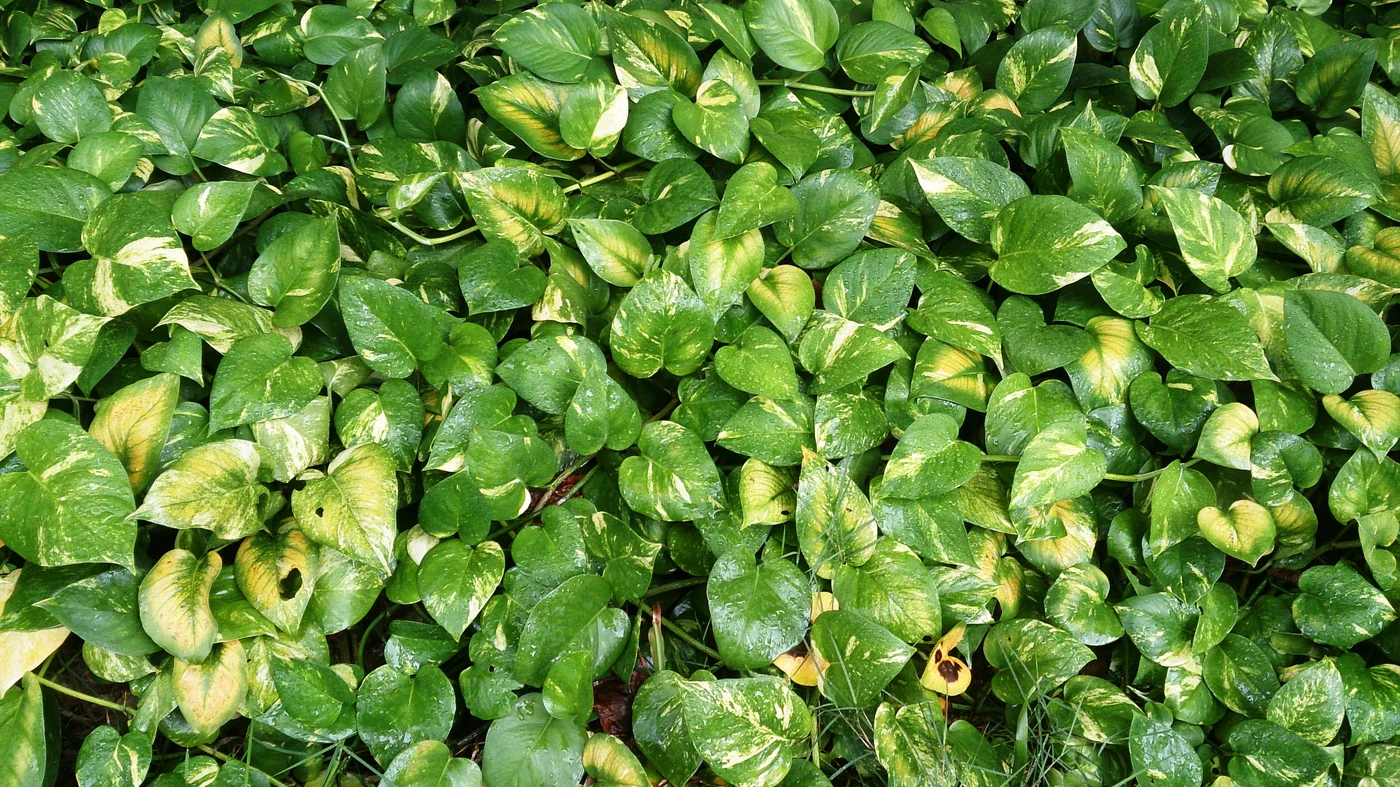
Choose the finished plant before taking the first cutting
A long pothos vine offers many possible cuttings, but availability is a poor reason to make more plants than you can place. Start with a finished display in mind. For a broad, trailing pot, you may want several independently rooted stems. For a supported plant, you may prefer fewer stems whose routes remain visible. For sharing, small separate pots make sense only if you have room to establish them before they leave your care.
Arkansas Extension describes single-node propagation and explains how several cuttings can create a fuller pot. The useful principle is that each retained growing unit contributes a vine; a large leaf count on one long cutting is not the same as several separate growing points. University of Arkansas Extension: Golden pothos propagation
Count available plant positions, not empty jars. Write down which cuttings will go into the parent display, a new pot, or a recipient's eventual plant. This simple allocation reduces the chance that a quick pruning job becomes an unplanned collection spread across the kitchen.
Find the stem node and distinguish it from the leaf stalk
Trace a leaf backward along its stalk until it joins the main vine. That attachment area is where you should look for the node. Follow the main stem past it in both directions so you can distinguish a useful stem section from a leaf with a long stalk. Lay the vine on the work surface in its original direction before making multiple cuts, and keep the growing tip end recognizable.
Iowa State's stem-cutting instructions emphasize keeping proper orientation, removing lower leaves, and placing at least one node in the rooting medium without burying foliage. Both tip pieces and sections from lower on a vine can be used. Iowa State Extension: Stem tip cuttings
For your first attempt, choose a piece whose structure is easy to see. A bare stem fragment can be harder to orient than a leafy section, and an especially long cutting is awkward to hold upright. A clear view of the node is more valuable than maximizing the length of each piece. Photograph a representative cutting beside the original vine if you want a reference during potting.
Inspect the source material and prepare an orderly work area
UF/IFAS discusses disease entering commercial pothos production through propagation material and emphasizes inspecting incoming cuttings and using clean stock. Its commercial treatment recommendations are not a home diagnosis, but the prevention lesson applies: do not multiply visibly questionable material merely because a stem can be cut. UF/IFAS: Pothos diseases in commercial greenhouse production
Inspect both leaf surfaces, the stem, and the node area. Set aside any piece with unexplained softening, spreading discoloration, or visible pests while you determine what is wrong. Label questionable material separately rather than dropping it into the same water as clean pieces. If the source plant is declining, take photographs before dismantling it; a container of anonymous fragments is harder to assess than an intact plant with a visible damage pattern.
Prepare clean containers, an appropriate rooting medium if using one, and a sharp tool that gives a controlled cut. Work on one source plant at a time. Keep the pieces you will retain separate from discarded material so that orientation and identity do not become confused midway through the job.
Choose water or rooting medium by the transition you can manage
Water offers a clear view of developing roots and makes it easy to see if a node is submerged while the leaf stays above the surface. Use a vessel wide enough to remove the roots later without forcing them through a narrow neck. A decorative bottle that looks attractive with a fresh cutting may become inconvenient once several pieces root together. Choose accessibility before appearance for this temporary stage.
Illinois Extension explains that a rooting medium must balance support, moisture, and air, and cautions that roots formed in water may adapt less readily to potting mix. Rooting directly in a suitable medium can therefore reduce one transition, although the roots are less visible. Illinois Extension: Houseplant propagation
Neither route removes the need to observe the cutting. In water, keep the node accessible to inspection and separate deteriorating pieces. In medium, maintain contact without compacting everything around a delicate stem. Choose the method whose condition you can check consistently, then avoid switching repeatedly simply because another grower's photograph shows faster progress.
Manage the rooting stage as its own task
Iowa State recommends warm conditions and bright indirect light for houseplant stem cuttings and notes that too much light can injure foliage, particularly under a cover. It also makes established roots, rather than a rigid elapsed time, the basis for potting on. Iowa State Extension: Stem tip cuttings
Place the cuttings somewhere that is convenient to check without moving the entire setup daily. Keep a label showing the start date and rooting method. If you use a cover, make sure you can inspect beneath it and adjust the arrangement rather than treating condensation as proof that the cutting is healthy. The purpose of the setup is to keep the plant material functioning while roots develop, not to produce the most impressive-looking propagation display.
Check the node, leaf firmness, and medium or water condition. Do not repeatedly tug at a cutting to prove that it has rooted. A photograph or a note about visible changes preserves progress without disturbing the plant. If a piece deteriorates, remove it from the shared setup and reassess the source material and conditions before starting another batch in the same container.
Pot rooted pieces for the actual display
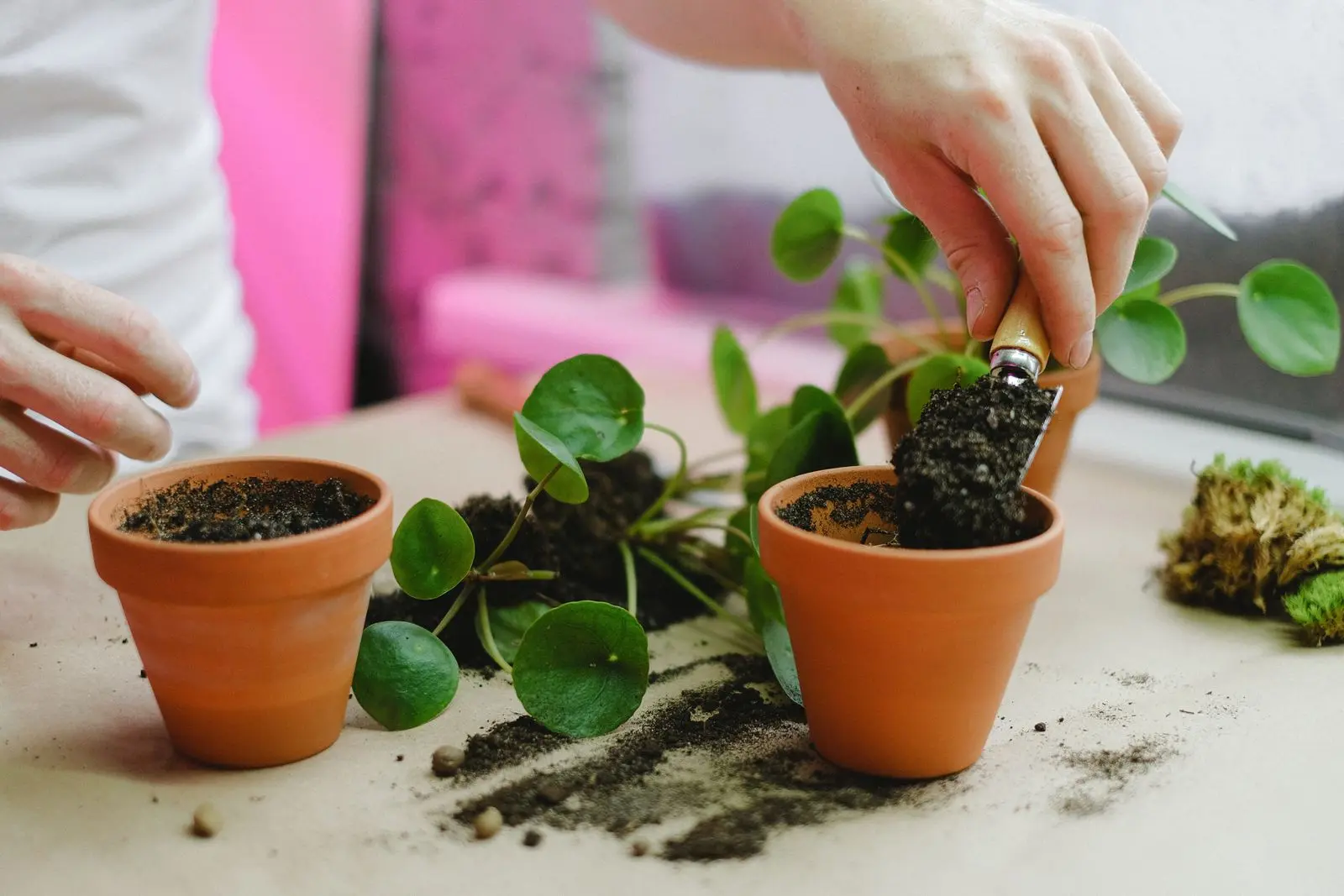
Arrange rooted pieces around the intended pot before filling it. Check that the roots can enter the mix without being crushed and that the foliage will remain above the surface. Choose a container that suits the amount of rooted material you have now. An oversized decorative container can wait while the plants establish in a manageable nursery pot that fits inside it later.
For a trailing display, spread the stems so you can distinguish and inspect them at the rim. For a climbing display, position the future growing route close enough to the support that you will not need to bend an established stem sharply afterward. Keep the support insertion area in mind before the root zone becomes densely occupied. Record which rooting method was used if you are comparing establishment between groups.
After potting, keep access for checking moisture and drainage. Do not interpret temporary settling or a slower new leaf as proof that another repot is required. The repotting guide helps separate a real root-space problem from normal adjustment to a new container and routine.
Distinguish a supported vine from a rooted climbing surface
Pothos climbs with aerial roots, and adequate light plus support can allow larger, more mature foliage. NC State describes this as a change associated with climbing growth. A fastening that simply holds the stem upright is a different feature from a surface into which roots can attach. NC State Extension: Epipremnum aureum
Choose which job you need. A trellis or stake can organize the vine's route. A maintained rooting surface adds another care responsibility. If you cannot conveniently reach the support to inspect and maintain it, choose a simpler structure or keep the plant trailing. Avoid building a tall installation just to pursue one leaf characteristic when the room cannot comfortably accommodate that growth.
The Mossify pole and VELCRO garden ties in the catalog are relevant options to compare after you know the required route and attachment points. Check how much of a pole is actually available above the mix and whether the fastener can hold a small stem gently. For the broader comparison of structures, see indoor climbing-plant supports.
Judge success by a manageable plant that resumes growth
Choose a few observable outcomes: the rooted pieces remain secure, the foliage is sound, and new growth follows a route you can maintain. The propagation has not failed merely because one cutting roots later than another, and it has not fully succeeded merely because a long root is visible in a jar. Establishment includes the move into the intended growing arrangement and your ability to care for it there.
Review the original goal once the plant begins extending. If you wanted a full pot, assess the number and distribution of active stems. If you wanted a climber, inspect attachment and clearance rather than counting only leaf size. If you wanted gifts, wait until each small plant is established enough to hand over with clear care information.
Keep the golden pothos profile with your notes for ongoing care. The best reason to repeat the process is a defined use for another plant. A successful first batch can be the end of the project, leaving you with a display that fits the window and a method you understand.
Sources & further reading
We favor university extension guidance and original product documentation. Linked sources support the specific facts cited; they do not endorse Garden Gear Atlas.
- University of Arkansas Extension: Golden pothos propagation
- Iowa State Extension: Stem tip cuttings
- UF/IFAS: Pothos diseases in commercial greenhouse production
- Illinois Extension: Houseplant propagation
- NC State Extension: Epipremnum aureum
.jpg)