Decide whether the location can accept a redbud shape
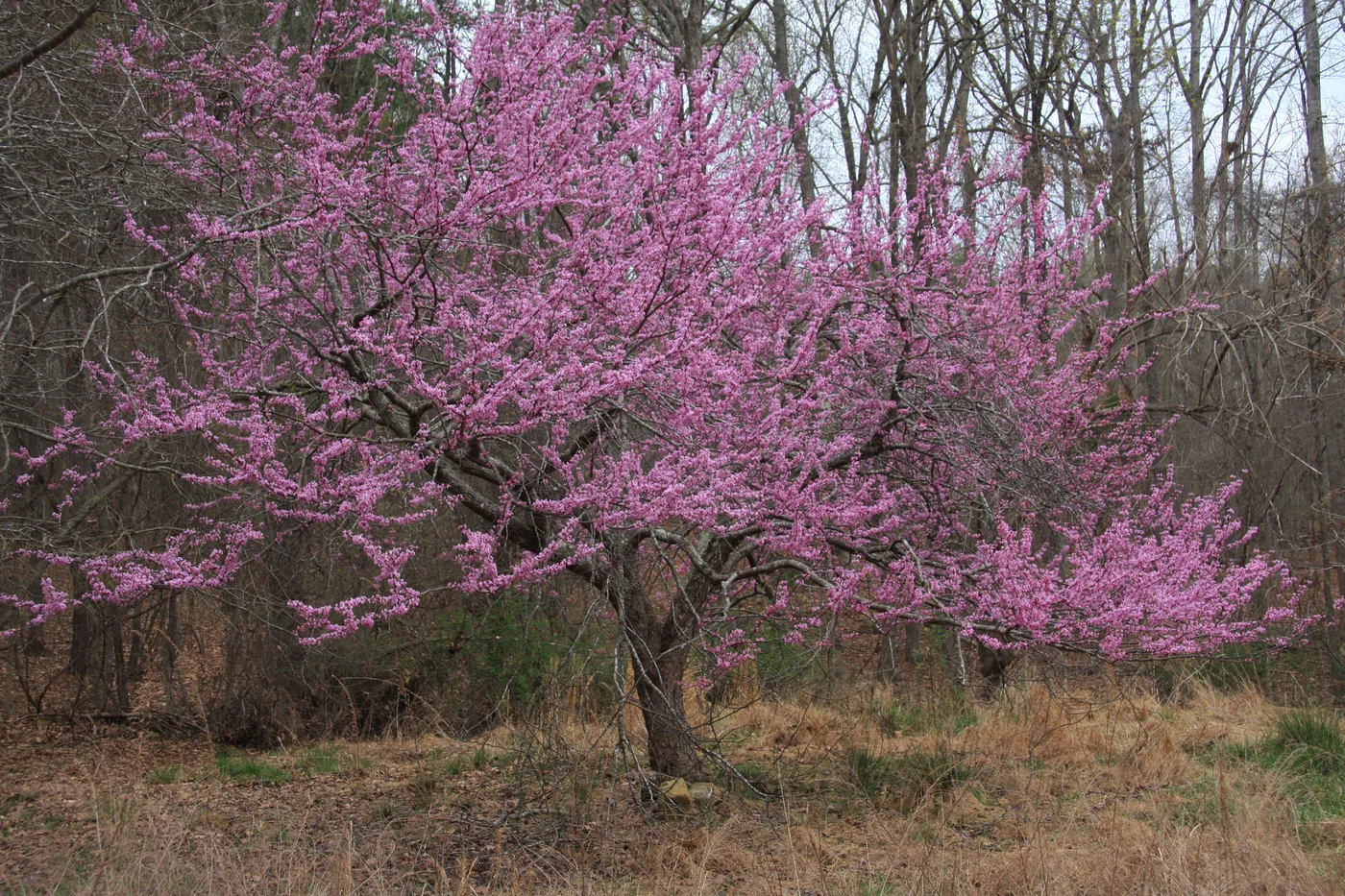
Eastern redbud normally develops a broad crown, often from a short trunk. It can also be grown with several stems. The first structural decision is therefore a landscape decision: can the place accommodate low, spreading wood? A tree standing in a generous border can retain branches that would block an adjacent sidewalk. Confirm the plant is an ordinary Cercis canadensis form before using this guide; a grafted weeping selection has a different intended outline. The Morton Arboretum: redbud
Sketch the available space from above and from the side. Include the route people use while carrying bags, opening a gate or pushing a mower. Mark the clearance you need, then mark branches that actually cross that space. This prevents an appealing but unnecessary bare-trunk appearance from becoming the default goal. If almost the whole young crown conflicts with the plan, reconsider the planting position before cutting. The small ornamental tree guide helps compare a different shape while that choice is still inexpensive.
Inspect the trunk path before selecting a nursery tree
At the nursery, follow each main stem from its base into the canopy. Look for branches emerging at different heights and directions, then compare their thickness with the supporting trunk. UF/IFAS recommends keeping redbud laterals smaller than half the main trunk’s diameter and describes spacing main branches roughly 6–10 inches apart. These are training guides for a developing framework, not instructions to impose a measured pattern on every mature redbud. UF/IFAS: eastern redbud
Put two plausible nursery trees side by side in your notes: one with a useful trunk line and small low branches, another with an attractive symmetrical crown but two large stems pressed together. The first may offer more manageable future choices even if its current outline is less polished. Ask the nursery to explain any existing large pruning wound or tightly joined fork. Do this before paying for delivery; a planting discount does not reveal whether later corrective work will be simple.
Separate a spreading habit from a crowded union
A broad branch angle can be part of a sound redbud form. More concerning is a pair of vigorous, similarly sized stems crowded into a tight attachment, particularly where bark is pressed between them. Colorado State explains that this included bark prevents the normal connection of wood across the union. Its guide is written for young shade trees; apply the attachment principle to redbud without converting its natural multistem habit into an automatic demand for one tall, bare trunk. Colorado State Extension: structural pruning
Use observation to set a priority, not to certify a tree as safe. Photograph the fork from both sides, note whether a seam or crack is visible and show what lies beneath it. A low branch that merely occupies space is a different question from a heavy competing stem attached over a patio. Existing cracks, large attachments and work beyond stable ground access warrant professional assessment. Do not pull stems apart to test strength or attempt to solve an established structural defect by tying the stems together.
Give each small branch a present job and a future decision
A useful branch plan has three kinds of entry: retain as part of the crown, retain temporarily while controlling vigor, or remove for a defined reason. The middle choice is easily missed. A lower limb may be healthy and useful now even though eventual access requires its removal. UF/IFAS demonstrates shortening such limbs to keep them small before the later removal wound becomes large. The purpose is staged development, not postponing the decision until the branch obstructs the route. UF/IFAS: shorten lower limbs
For example, imagine a small low limb pointing toward a path and another of similar size pointing into the open bed. The path-side limb has a future clearance conflict; the bed-side limb may have a permanent role. They need not receive identical treatment because they are the same height. Record the reason beside a photograph, with a seasonal reminder to reassess. If you cannot say why a branch must go, leave it in the planning stage while checking the rest of the tree.
Treat planting year differently from an established growth phase
Do not strip a newly planted redbud to make it resemble a mature specimen. Minnesota Extension recommends limiting planting-time pruning to diseased, dead or broken branches, then beginning training after planting as the tree develops. Other structural guidance also allows attention to major defects but emphasizes retaining foliage and pruning lightly under stress. Nursery stock with a major problem is best assessed before purchase instead of relying on extensive correction at planting. Minnesota Extension: pruning trees and shrubs Colorado State Extension: structural pruning
Before a planned session, check the tree’s recent history. Has it wilted repeatedly, lost part of its crown, suffered a damaged root ball or remained waterlogged? Those conditions change the priority from shaping to diagnosis and establishment. The root-flare guide and protected rooting-area guide address two common foundations of care. A good-looking cut cannot compensate for a poor root environment. Reschedule elective shaping if the tree’s condition makes the benefit uncertain.
Choose shortening or removal before choosing the tool
A reduction cut shortens a branch back to a suitable lateral that can continue growth; a removal cut takes the branch back to its attachment. Cutting midway along a stem merely because that point matches an imagined crown outline is a different operation. Do not top the tree or shear its perimeter into a fixed shape. Minnesota Extension warns that topping damages natural form and promotes weak growth. Minnesota Extension: pruning trees and shrubs
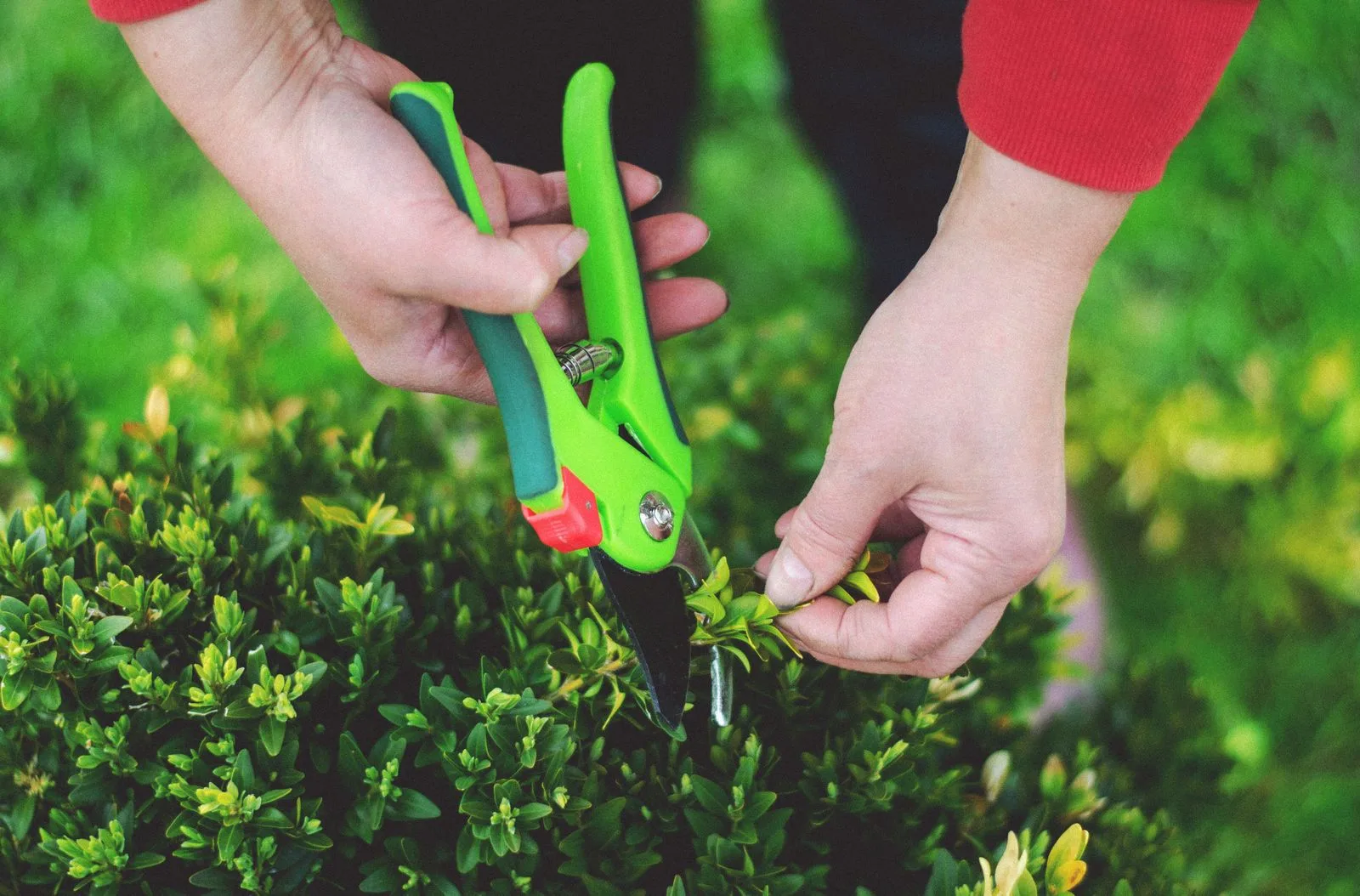
For a small, reachable branch selected for removal, use the branch-collar cutting guide. For a proposed reduction, locate a suitable side branch and decide whether you can make the cut without damaging retained growth; if not, get advice before proceeding. A bypass pruner such as the existing FELCO 6 profile serves small live-wood work when it fits the user and branch. The pruning-tools comparison helps with fit, but no advertised cutting capacity establishes that a structurally important limb should be removed.
Put timing around a purpose and the local conditions
There is a tradeoff between seeing the bare framework and keeping every spring flower. Dormant inspection makes branch arrangement easier to see, while cutting flower-bearing wood removes its flowers. Redbud flowers arise on existing wood, including older branches. Make a modest structural plan with that tradeoff visible rather than selecting a date solely to maximize this year’s display. Do not delay attention to broken or dangerous wood for the sake of bloom. Wisconsin Extension: eastern redbud
Local disease considerations and the tree’s condition should determine the work window. If you need help, send the branch photographs before scheduling the cut and ask whether the planned operation and timing fit the local redbud. A useful request identifies one or two specific concerns: a competing stem, a future walkway conflict or rubbing branches. “Make it smaller” does not communicate which structure should remain. Where the purpose is unclear, a season of observation can be more informative than cutting several unrelated limbs.
Review growth before the next round of cuts
Keep an after-work photograph showing what remained, then compare it after the next growth period. Look for the relative growth of competing stems and whether the intended clearance problem actually changed. A shortened temporary limb still needs reassessment; it does not become permanent merely because it was left. UF/IFAS’s redbud guidance emphasizes early structure because breakage and disease can shorten this tree’s useful life. Structural work manages those risks; it does not promise an unlimited lifespan. UF/IFAS Gardening Solutions: redbud
If new dieback appears, record where it starts before assuming the pruning plan needs to become more aggressive. Read the eastern redbud reference for species-level moisture and disease context. Also check whether access has changed: a moved bench, widened path or new raised bed may put a different demand on the same branch. Update the landscape decision first. The aim is a crown that can occupy its space with increasingly predictable care, not an annual obligation to remove a fixed percentage of wood.
Sources & further reading
We favor university extension guidance and original product documentation. Linked sources support the specific facts cited; they do not endorse Garden Gear Atlas.
- UF/IFAS: eastern redbud
- Colorado State Extension: structural pruning
- The Morton Arboretum: redbud
- UF/IFAS: shorten lower limbs
- Minnesota Extension: pruning trees and shrubs
- Wisconsin Extension: eastern redbud
- UF/IFAS Gardening Solutions: redbud