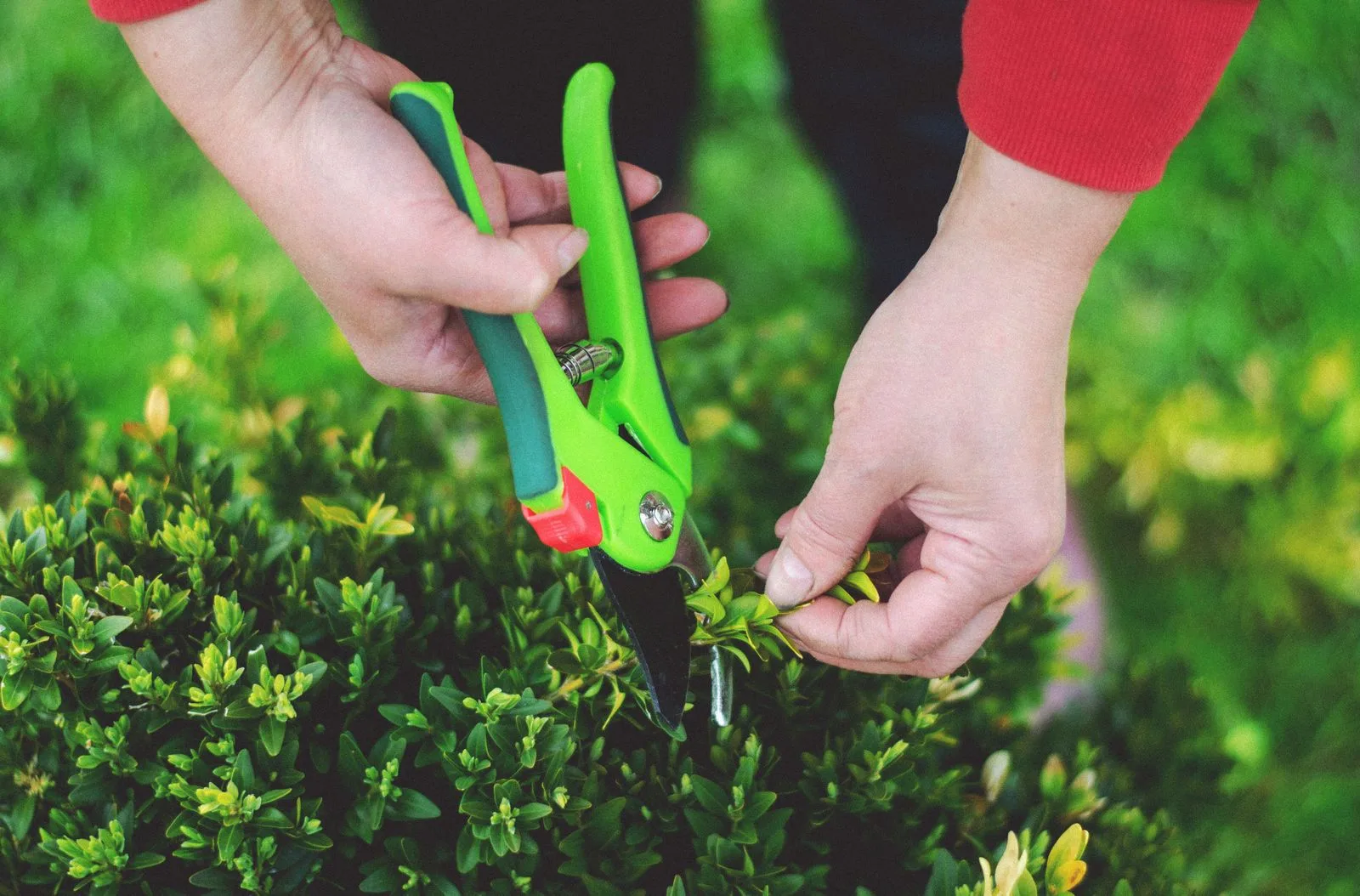
Choosing pruning tools
The most useful pruning tool is the one you can control while making the cut your plant actually needs. Start with a comfortable pair of bypass pruners for routine stems, then add a saw or loppers when branches outgrow that job. Buying the largest cutting capacity first can leave you with a tool that is awkward on most of your garden.
This guide compares published specifications and practical use cases. We have not hands-on tested these products, and the recommendations are not based on retailer star ratings.
Quick answer: our three role-based picks
These solve different problems. Choose one of the hand pruners according to fit; add the saw only if your garden actually needs it.
- FELCO 6 — routine pruning for a medium right hand. Its compact bypass design has a clearly specified fit; the tradeoff is a smaller cutting envelope than a large pruner.
- FELCO 9 — routine pruning for a large left hand. Its left-handed layout and angled head are the reasons to consider it; the tradeoff is that it is not sized for every left-handed user.
- Corona RS16150 10-inch folding saw — accessible branches beyond hand-pruner comfort. Its curved blade handles woody cuts, but it needs stroke clearance and control of the branch.
First decide what you are cutting
A hand pruner is designed for individual stems and smaller branches. Loppers add long handles and leverage. A pruning saw removes wood with repeated strokes rather than asking your grip to close a blade through it. University of Minnesota Extension describes hand-pruner capacities commonly around 3/4 to one inch, and loppers around 1.5 to two inches, while noting that models vary. Treat those figures as categories, not permission to force a particular tool.
Look at your likely work before ordering: a patio full of herbs, a rose border, and an established fruit tree need different kits. For delicate harvesting, a narrow snip may be more convenient than a woody-stem pruner. For a few thick branches, a folding saw may be more useful than buying a second, slightly larger pair of shears.
Hand fit matters more than another fraction of capacity
The important fit is the handle opening during use, not merely the tool's closed length. You should be able to keep control while opening, closing, and operating the lock without constantly shifting your grip. If possible, handle the candidate while wearing the gloves you normally garden in.
Also check handedness. A label saying “ergonomic” does not tell you whose hand the tool was designed around. A dedicated left-handed pruner is worth considering before spending more money on a right-handed premium model that never feels natural.
FELCO 6: the medium right-hand option
FELCO specifies the 6 for medium right hands, with a 0.79-inch cutting diameter and 7.68-inch overall length. It uses forged aluminum handles and hardened steel blades. That combination makes it a sensible starting point for a gardener seeking an ordinary one-handed bypass tool with a clearly stated fit.
Choose it because the size suits you, not because a compact pruner is automatically easier for every hand. If larger branches dominate the workload, make a separate saw-or-lopper decision. Stretching this pruner's role to justify owning only one tool is poor economy.
FELCO 9: the large left-hand option
The FELCO 9 is explicitly left-handed and large-hand sized. Its angled head, 0.98-inch listed cutting diameter, and 8.27-inch length distinguish it from simply using a symmetrical-looking pruner in the other hand.
Its limitation is just as important: left-handed gardeners do not all have large hands. If the opening feels excessive, keep looking for a smaller left-handed model. Right-handed gardeners with large hands can compare the FELCO 2, which FELCO specifies for that combination.
Bypass, anvil, and ratchet describe different things
Bypass blades pass each other; an anvil design closes a blade against a supporting surface. Bypass is a useful default for routine live-stem work, particularly when you want close placement at the intended cut. But avoid the sweeping claim that every anvil tool always ruins living stems: a University of Florida discussion highlights how much common advice goes beyond the available comparative research. Tool condition and how the cut is made deserve attention too.
Ratchet refers to the cutting mechanism, not a separate plant material. It divides the action into stages. The Corona RP 3230 is one candidate with a 3/4-inch capacity and right- or left-hand use. That can suit someone who prefers several shorter squeezes, but it also means more movements per cut. Test the action if possible; do not assume “ratchet” guarantees comfort.
Add a saw when the job requires one
The Corona RS16150 has a 10-inch curved folding blade and a listed branch capacity up to six inches. We would consider it for accessible woody branches beyond comfortable hand-pruner work. The useful distinction is the sawing action, not merely the larger number on the package.
Check the model before buying: Corona's current manufacturer page lists RS16150B. Older Amazon links may select another version, so compare the displayed model and blade details rather than assuming every 10-inch RazorTOOTH is identical.
Capacity is not a safe-work limit. A heavy limb, overhead cut, nearby cable, unstable footing, or branch under tension can make an otherwise small cut unsuitable for DIY work. Leave those jobs to an appropriately qualified professional. For manageable branches, plan where the cut piece will go before starting.
Maintenance should influence the purchase
Before ordering, look for a replaceable blade, available spring, adjustment instructions, and a maintenance diagram. A named model with a real parts list is easier to assess than a generic promise of lifetime durability. Corona's BP 3180D page, for example, lists a resharpenable blade and specific replacement components.
After use, remove debris, clean the blades, dry the tool, and follow its maker's lubrication and sharpening instructions. Cleaning and disinfecting are not interchangeable. UMN recommends cleaning visible debris first and discusses 70% isopropyl alcohol for hand pruners, while warning that it may not adequately disinfect tools exposed to fire blight. Follow disease-specific local guidance instead of treating one disinfectant as universal.
Two mistakes a better tool cannot fix
First, preserve the branch collar rather than cutting flush into the trunk. Larger manageable branches may require staged cuts to remove their weight before the final cut, helping avoid torn bark.
Second, confirm the plant's pruning season. Early-blooming shrubs that flower on last year's growth are generally pruned after flowering; local disease risks can change tree-pruning timing. A universal “prune everything this weekend” rule is not useful.
Final verdict
Buy for the cut you make most often and the hand making it. Start with the FELCO 6 if its medium right-hand fit suits you, or consider the FELCO 9 for a large left hand. Add the Corona folding saw for appropriate larger-branch work. A small, well-matched, maintained kit is the goal—not a drawer full of overlapping tools.
Sources & further reading
We favor university extension guidance and original product documentation. Linked sources support the specific facts cited; they do not endorse Garden Gear Atlas.
- UMN Extension's pruning-tool overview
- FELCO 6 specifications
- FELCO 9 specifications
- FELCO 2 specifications
- University of Florida's comparison
- Corona RP 3230 specifications
- RS16150 product identity and specifications
- Current manufacturer version
- Corona ClassicCUT parts and specifications
- UMN tool-cleaning guidance
- Purdue's tree-pruning essentials
- UMN pruning guidance