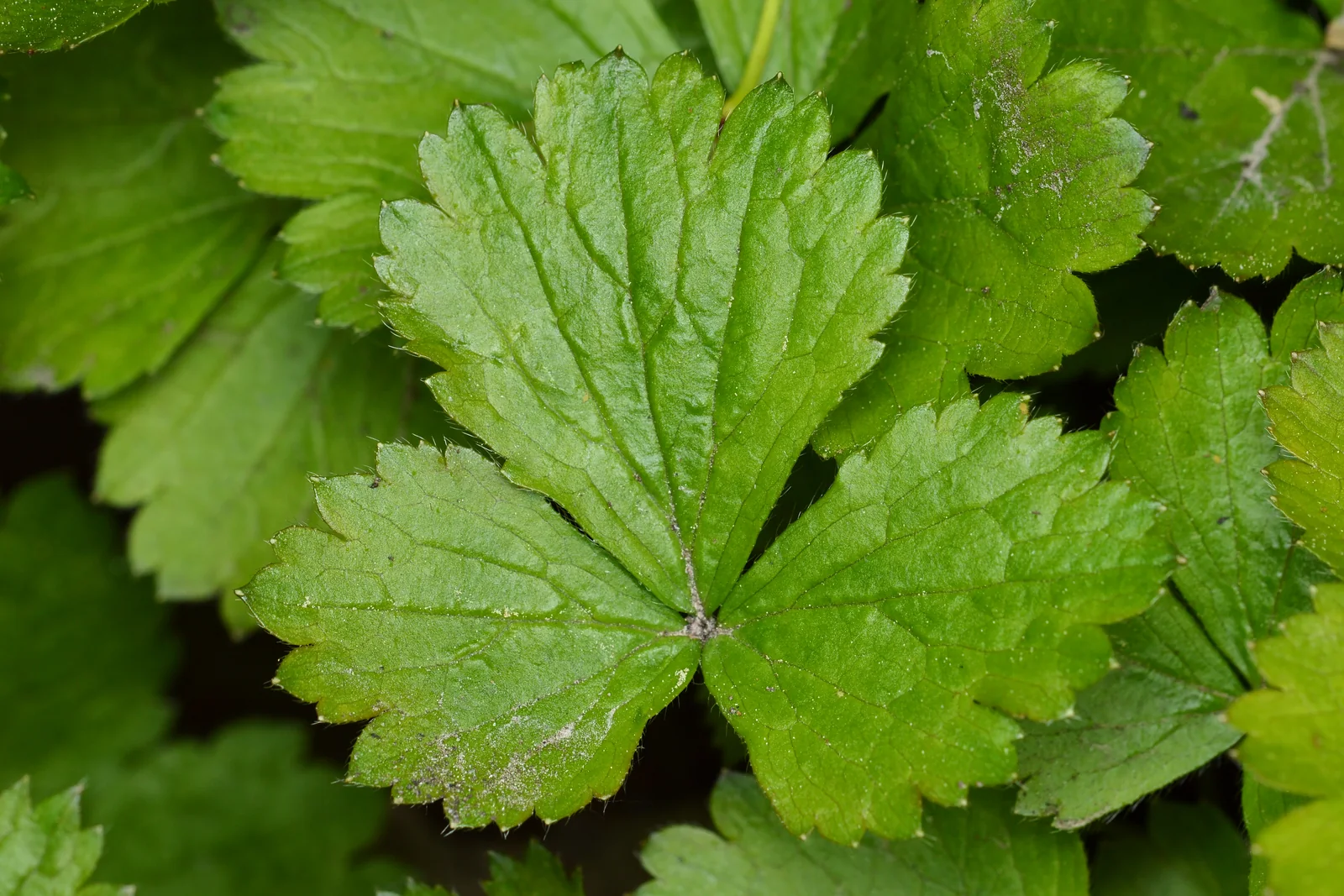
Check the scientific name on both the label and the reference
NC State Extension lists Geum fragarioides as another name associated with Waldsteinia fragarioides. Native Plant Trust uses Geum fragarioides for Appalachian barren-strawberry. Those names can refer to the same North American plant; keep both in your notes when searching regional guidance.
Do not substitute Waldsteinia ternata without recognizing the change. The Morton Arboretum notes that the two are often confused and distinguishes the less glossy leaves and lower heat tolerance of W. fragarioides. Its main barren-strawberry page concerns W. ternata, so read the species headings carefully when using that reference.
Ask the nursery how its stock is identified and whether the plants are nursery propagated. Keep the original label and order record. A tray marked only “barren strawberry” is insufficient for a planting whose purpose includes local native species. If the seller cannot resolve the identity, choose a confirmed alternative or wait to buy.
Expect a spring accent and a low foliage layer
Chicago Botanic Garden’s archived plant profile describes yellow spring flowers, three-part leaves and an approximately six-inch-high ornamental groundcover. Its cultivation record is useful for understanding the plant’s garden role, but it is not a live inventory or a guarantee of present availability.
Use barren strawberry to connect groups of suitable larger perennials or soften the front of a bed. Judge the layout outside the bloom period as well as during it. The leafy patch should still have a clear relationship to its surroundings after the flowers fade. A defined edge and a repeated group can provide that structure without requiring a perfectly uniform carpet.
Keep the bed out of habitual walking routes. Low height and strawberry-like leaves do not prove trampling tolerance. Where a narrow route crosses the proposed planting, leave an accessible surface rather than testing repeated footsteps on the plants. This makes future weeding and watering easier too, especially after the colony fills in.
Choose exposure by observing heat and available moisture
Begin with a reachable trial patch where you can compare moisture after rain and during dry weather. In a cooler climate, an open bed may be worth testing. Where afternoon heat is intense, investigate a position with gentler exposure and consult local experience before planting a large sunny area. Treat the species’ published zone range as one screening tool among several.
Inspect the actual soil pocket. Clay texture alone does not tell you whether water remains around roots for too long, and a slope can contain both dry and damp sections. Record standing water, runoff and how the soil feels below the surface. Choose a plant suited to those observations instead of planning to irrigate an entire bed heavily to compensate for one unsuitable exposure.
Under an established tree, preserve existing roots and soil levels. Do not build a new raised ring or dig broad trenches to make the groundcover fit. Leave dense root areas mulched and use small plants in workable pockets. The tree-root planting guide provides a practical way to arrange those pockets.
Plant a group that you can maintain while it closes
Obtain the supplier’s spacing recommendation for verified W. fragarioides, then lay out the pots before digging. An eventual plant width is not a guaranteed first-season spread. Use the spacing calculator for a purchase estimate and count the actual positions around companion plants and access gaps before ordering trays.
For a small border, keep one planting group together rather than sprinkling individual plants through unrelated beds. A group is easier to label, inspect and compare. If you want to try two exposures, make each a clearly marked group of similar starting plants. Keep the planting dates and sources with your drawing so the later comparison is meaningful.
Moisten the root balls, remove pots with the roots supported and plant at the appropriate nursery level. Water gently and check for settling. Keep mulch clear of crowns and leaves, and avoid burying the small plants beneath the depth used in surrounding shrub beds. Hold any extra stock in a labeled, watered nursery area until its destination is ready.
Watch the edges and diagnose losses before replacing them
During establishment, check representative root balls rather than watering only when the whole patch looks stressed. Pick an exposed edge, a central position and a pocket near a companion plant. Compare each with the nearby garden soil. The growing medium that came in the pot may behave differently from the bed around it, especially while roots have not yet expanded.
Weed while competing plants are small. Avoid disturbing the desired colony simply to make every gap look bare and tidy. As coverage develops, inspect the boundary and preserve space around slower companions. If expansion becomes inconvenient, address a small edge while it remains accessible rather than waiting for several species to intertwine.
When plants decline, map the losses. A repeated strip of failure can point to moisture, traffic or exposure; scattered isolated losses may have a different explanation. Photograph the foliage and soil conditions before removing a failed plant. Make the next purchase after deciding whether the same species still fits that position, rather than automatically repeating the original order.
Keep a useful identification record as the patch matures
NC State describes three wedge-shaped, toothed leaflets and yellow five-petaled flowers on leafless stalks. Its plant account provides useful details to photograph alongside the nursery label. Take one picture of the full plant, one of a complete leaf and one of the flowering stalk.
These photographs are a record, not a complete identification key. Similar-looking groundcovers can share several broad features. If an unfamiliar plant appears within the colony, photograph it separately rather than assuming it is a seedling of the labeled plant. Compare its growth and flowers with the original stock or ask for identification. Keeping the colony’s identity clear is particularly useful before dividing it, because a small contaminating plant can otherwise travel with an apparently healthy clump.
Keep the strawberry name separate from food and native claims
Native Plant Trust describes the fruits as inedible and notes that the species is rare in New England. Grow it for ornamental coverage, not a berry harvest, and source it from propagation rather than wild collection. Do not apply the edible-fruit expectations of Fragaria strawberries to this plant.
Keep botanical labels so you can track spread and match replacements to the established colony. A nursery’s native label also needs a regional check. Verify that the species belongs in the ecosystem relevant to your planting, rather than relying on a continent-wide description.
Evaluate the trial through one growing season and winter before expanding it. Record flowering, summer condition, water demand, spread and winter foliage separately. Those observations will tell you more about its fit than a single spring photograph. Consult the regional-spread screen before sharing divisions, and carry both botanical names forward so future gardeners can verify the same plant.
Sources and scope
Research-based guidance informed by institutional references. Cultivar, region and growing conditions can change the advice. Product inclusion does not imply hands-on testing of every model.
_-_Guelph,_Ontario_02.jpg)