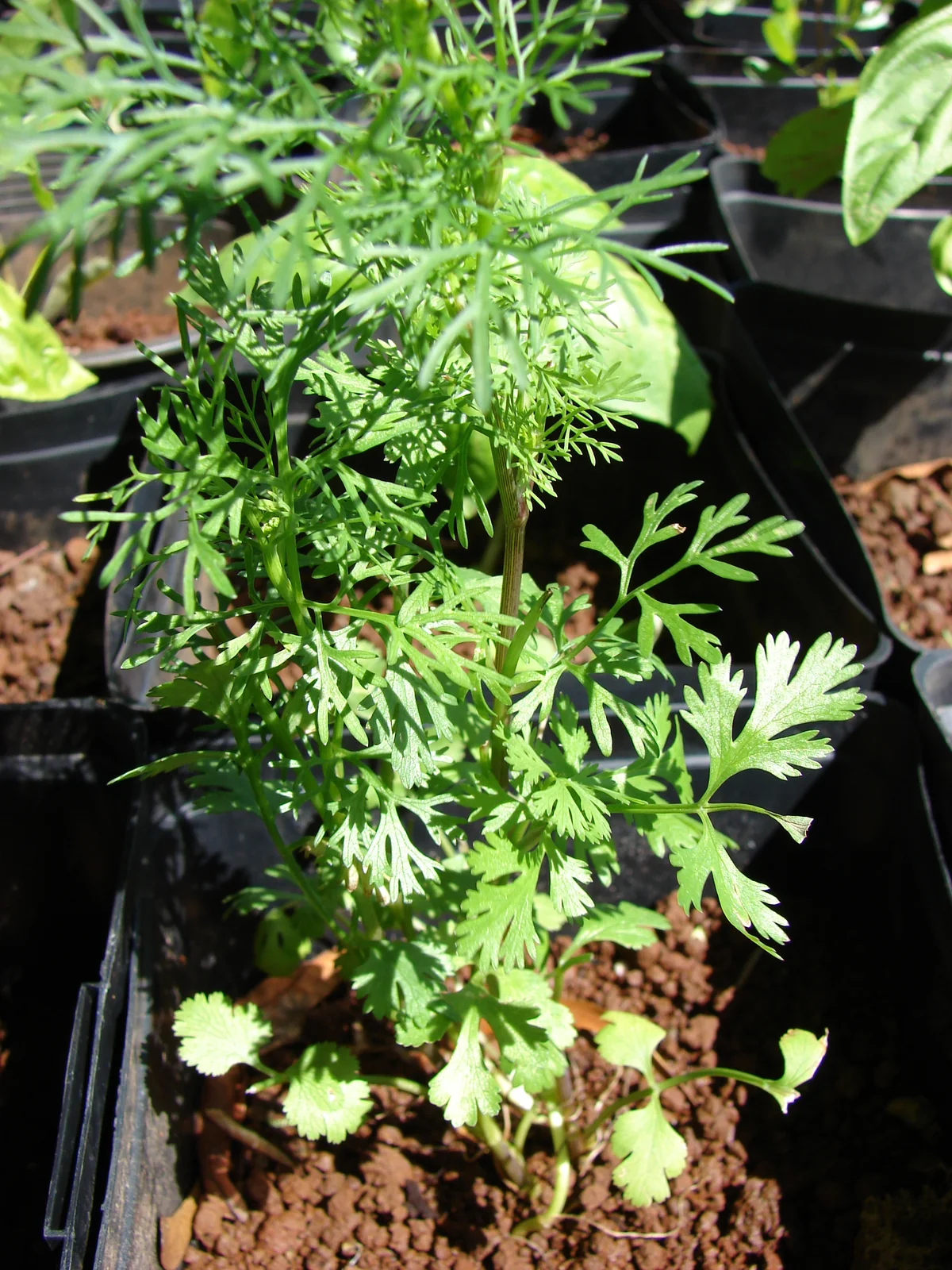
One plant offers two different harvests
Cilantro and coriander usually refer to different harvested parts of Coriandrum sativum: fresh leaves and stems are called cilantro in much of North America, and the dried spice is coriander. In other English-speaking regions, coriander also names the fresh herb. Decide which crop you want before allocating space. A plant kept for mature seed must pass beyond the leafy stage, so it occupies the bed after it stops supplying the same quality of fresh greens. NC State cilantro profile.
The leaves can resemble flat-leaf parsley, but this is a different herb with a distinct aroma and a much shorter useful leaf-growing life. Keep planted rows and nursery pots labeled, especially when several carrot-family herbs are close together. If both leaves and seeds are useful in your kitchen, designate plants for each purpose rather than harvesting all of them heavily and then expecting a substantial seed crop from what remains.
Use the cool part of the year
Cilantro's transition to flowering is strongly influenced by growing conditions. Wisconsin Extension describes a cool-season annual that bolts in hot weather and cannot be relied on through a hard freeze. Lower, broad leaves give way to finely divided foliage along rising flower stems. That change is a normal developmental signal, not a new weed suddenly appearing in the pot. Wisconsin cilantro and coriander guide.
A slow-bolting cultivar buys some time; it does not cancel the effect of high temperatures and long days. In a hot-summer climate, forcing repeated sowings through the harshest period may produce little useful foliage. Return to sowing as a suitable cool window approaches. Shade can soften intense exposure but cannot reverse the calendar. The cilantro succession guide covers the more detailed decision about how to space batches and when a summer pause makes sense. Keep notes on the first harvest and first flower stalk for each batch. Those observations make the next sowing decision more specific to your garden than a packet date interpreted without the season and local weather.
Sow where the taproot can stay
Direct sowing is a practical way to start cilantro because its taproot makes transplanting less forgiving than with some other herbs. Illinois Extension recommends small successive sowings to maintain access to leaves instead of expecting one planting to last. Space and thin plants for the intended harvest; a crop kept for seed needs room to branch and flower. Keep the seed packet and sowing date so you can compare how different batches respond to your conditions. Illinois cilantro guide.
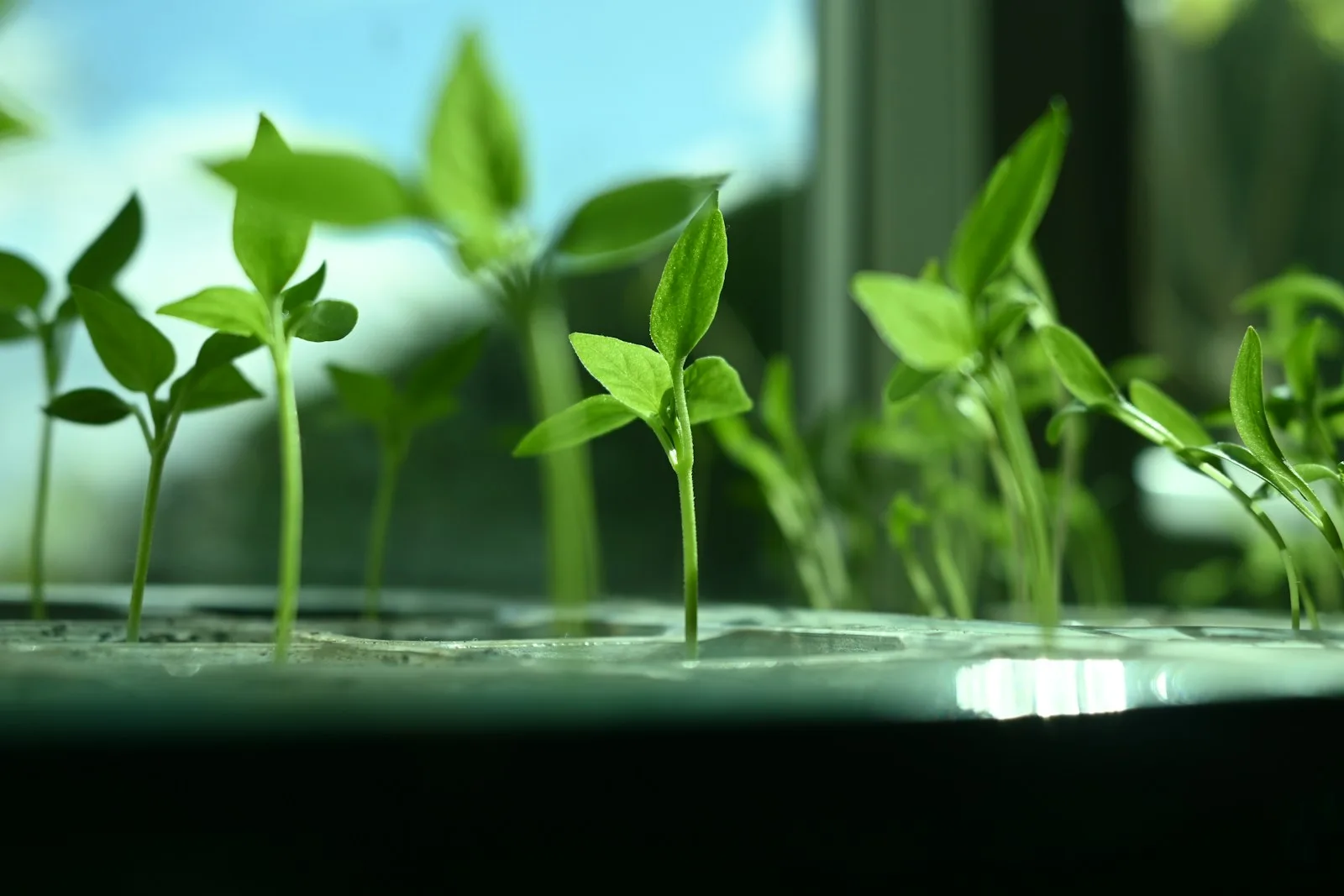
Prepare a fine enough surface for seedlings to emerge and maintain moisture during germination. When using purchased starts, favor young plants and preserve the root ball during planting. A large transplant already extending a flower stem may offer less leafy time than its size suggests. If you want regular small kitchen harvests, use several modest areas or pots with different sowing dates. This allows a young batch to develop while an older batch is harvested or finishes its seed crop.
Keep a container cool enough for leaves
Coriander grows well in pots when its moisture and temperature needs are met. The RHS notes that windowsill plants can become pale with insufficient light and bolt when conditions are too hot or dry. A bright, reasonably cool location is therefore more useful than the hottest possible glass exposure. Use a pot with a real root zone and drainage, and sow directly into it where practical. RHS coriander guide.
Check the mix as the canopy fills rather than watering on a fixed day. Container walls and exposed surfaces can heat rapidly, so afternoon protection may improve a leaf crop during warm weather. This is a way to reduce stress, not a guarantee of summer persistence. Avoid placing the pot over a heating vent indoors. The realistic indoor herb harvest guide helps set expectations: a short-lived herb still needs replacement sowings even when it is protected from outdoor weather.
Pick leaves early and give seed plants time
UF/IFAS recommends beginning leaf harvest once plants reach about 6 inches tall and sowing additional small batches as needed. Take what you can use while leaves are fresh and the plant is growing actively. In Florida, the reliable leaf season is fall and winter; warming, lengthening days push plants toward flowers and seed. The same broad principle translates elsewhere, but the named months do not. UF/IFAS cilantro guide.
For coriander, allow chosen plants to flower and develop brown fruiting structures. Cut those structures and finish drying before separating out the spice for storage. Keep the drying crop contained so the harvest does not scatter as it becomes brittle. A leaf batch and a seed batch should have different end points in your notes. Flowers also provide a display and attract insects, so a bolted plant can still have a useful role when you have the space to let it complete that cycle.
Distinguish bolting, seedling collapse and feeding damage
Normal bolting produces an extending flower stalk with increasingly fine foliage. Seedlings dying at the soil line suggest a different problem, while sap-feeding leafhoppers and unusual flower development deserve closer inspection. Utah State identifies damping-off and leafhopper-associated aster yellows among potential cilantro problems. These are reasons to examine the whole plant and growing conditions, not to diagnose disease from a yellow leaf alone. Utah State cilantro guidance.
Keep seedling areas from staying saturated and avoid damaging young roots while weeding. If many seedlings collapse, review drainage, crowding and equipment hygiene with the damping-off guide. A tall plant with distorted flowers is a different case from a healthy plant flowering on schedule. Photograph the stems, leaf undersides and flowers for a local Extension diagnosis if symptoms are unusual. Heavy fertilization will not restart a mature plant's leaf phase or correct a damaged root system; replacement sowing is often the appropriate response to an aging crop.
Sources and scope
Research-based guidance informed by institutional references. Cultivar, region and growing conditions can change the advice. Product inclusion does not imply hands-on testing of every model.