Choose true garlic and a type suited to winter
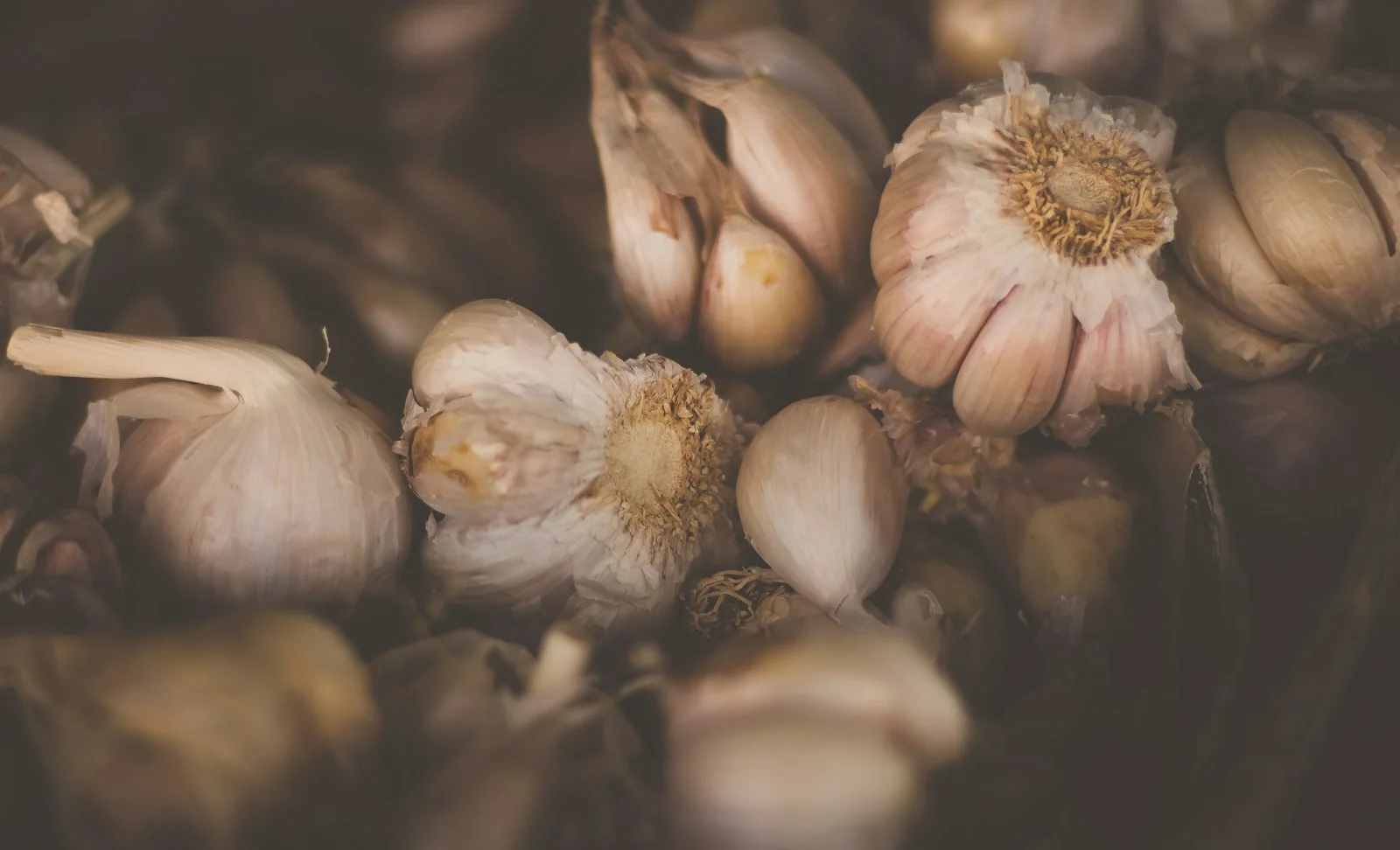
True garlic is Allium sativum, a bulb-forming perennial related to onions and leeks. Gardeners normally lift the whole crop rather than leave it as a permanent clump. Its flat leaves differ from the hollow leaves of many onions, and a mature bulb encloses several cloves beneath papery wrappers. Elephant garlic is a leek relative and falls outside this true-garlic profile. Iowa State Extension explains garlic identity and types.
Hardneck garlic generally produces a central scape and often suits colder winters. Softneck garlic usually lacks that rigid stalk, is easier to braid and often stores longer. These are useful tendencies, not guarantees for every cultivar or climate. Choose planting stock from a source that can explain its regional adaptation. Minnesota Extension discusses local suitability and variable scape production. If comparing types, label the rows separately; harvest readiness and storage life need not coincide even when the cloves went into the ground together.
Plant cloves on a schedule that allows proper bulbing
Fall planting gives garlic time to establish roots before strong spring leaf growth. Cold exposure followed by longer days helps bulb development; a late spring planting may produce small or poorly divided bulbs. Maryland recommends covering cloves with one to two inches of soil and spacing them three to six inches apart, within its regional planting system. Those dimensions provide a reference, but local soil and winter advice should govern your bed. Maryland Extension explains the seasonal sequence.
Separate a sound bulb into individual cloves close to planting time, keeping the clove's protective skin intact. Place the basal end down and point upward. Do not plant an intact whole bulb if you want full-size individual bulbs at harvest. Select healthy planting stock rather than supermarket cloves that may carry disease or be poorly adapted. The planting and curing guide follows the complete workflow. Mark the occupied bed so winter tidying or early spring planting does not disturb cloves whose shoots are not yet visible.
Prepare a sunny bed that stays drained through winter
Garlic needs a loose root zone with good drainage; a saturated winter bed can lose cloves before spring. Minnesota gives a suitable soil pH of 6.0–7.0. Use a soil test when planning amendments and consider what compost has already supplied. Early weeds are particularly troublesome because garlic leaves do not quickly close over the soil. Remove them while small and cultivate shallowly to avoid damaging bulbs. Minnesota Extension covers soil and weed care.
Containers are possible when bed drainage or space is unsuitable. The Royal Horticultural Society recommends pots at least ten inches deep, with cloves given the same appropriate spacing used in the ground. Container mix can dry quickly and needs regular checking. The RHS garlic guide explains container planting. In a cold region, exposed pot roots experience a different winter environment from a mulched bed. Choose a stable position and a local winter-protection plan, and keep drainage open rather than allowing a saucer to stay full.
Support spring leaves, then respond to bulb maturity
Strong spring foliage helps supply the eventual bulb. Maintain moisture during active growth without keeping the root zone saturated, and apply nutrients according to the crop's stage, soil results and fertilizer label. Excessively late nitrogen can delay the shift toward harvest readiness. Do not transplant another state's fertilizer calendar directly into a warmer or colder growing season. Utah State Extension describes garlic growth and moisture needs.
Mulch can moderate winter temperature changes, reduce weeds and conserve moisture. Check that emerging shoots can pass through it and reassess a thick, wet layer as spring arrives. A hardneck scape can be cut while tender and beginning to curl, without removing the foliage that feeds the bulb. Cornell Cooperative Extension explains scape harvest. Save the leaves, harvest the scape separately, and continue checking bulbs as maturity approaches. A scape is not proof that garlic is ready to lift, and the absence of one on a softneck is not a flowering problem to correct.
Check a sample bulb before lifting the whole crop
Lower leaves browning while upper leaves remain green is a useful signal to investigate harvest. Gently lift a representative bulb and inspect whether its cloves are well developed and still securely wrapped. Harvesting too early sacrifices size; waiting until every leaf is dead can leave split wrappers and exposed cloves. Dig around the bulb instead of pulling forcefully on the stem. Cornell Cooperative Extension describes sample harvesting and wrapper condition.
Cure sound plants with bulbs attached in a dry, shaded place with good air circulation. Spread them loosely or use a ventilated rack, keeping different cultivars identifiable. Curing is complete when wrappers, stems and roots are dry; the actual time depends on conditions. Trim and store sound bulbs in a cool, dry, ventilated location, keeping damaged ones separate for prompt use if otherwise sound. Utah State Extension explains curing and storage. Only retain planting cloves from a healthy crop; large size alone is not evidence that a bulb is suitable to replant.
Distinguish ripening leaves from early decline
Yellow leaf tips well before expected maturity can reflect water stress, nutrition problems or disease. Unsegmented bulbs can result from small planting cloves, late planting or unfavorable growth; they do not automatically establish a new garlic variety. Iowa State Extension compares these garlic problems. Check whether damage is scattered, follows a wet part of the bed or forms a spreading patch before changing fertilizer.
White fungal growth around a rotting bulb, especially with tiny black resting structures, raises concern for white rot. This disease can move with planting cloves, soil and tools and persist for many years. Rotation alone does not eliminate it. Maryland Extension explains white-rot identification and prevention. Isolate suspect material and seek an Extension diagnosis before saving cloves or shifting soil elsewhere. Record bulb condition as well as leaf color. A garlic bed with premature collapse needs a different response from a uniformly maturing crop whose bulbs are firm and well wrapped.
Sources and scope
Research-based guidance informed by institutional references. Cultivar, region and growing conditions can change the advice. Product inclusion does not imply hands-on testing of every model.
- Iowa State Extension: Growing garlic
- University of Minnesota Extension: Growing garlic
- University of Maryland Extension: Growing garlic
- Royal Horticultural Society: Growing garlic, including containers
- Utah State University Extension: Garlic in the garden
- Cornell Cooperative Extension: Growing and curing garlic
- University of Maryland Extension: White rot of onion and garlic