Buy a defined plant for a defined patch
Virginia sweetspire is Itea virginica, a North American shrub with a range extending through parts of the eastern and central United States. Root suckers can form dense colonies. The species identity is therefore only the beginning of a useful buying description; cultivar and intended patch size also matter. NC State Extension: Virginia sweetspire
Write down the area you actually want it to occupy. A colony beneath an open window, a drift at the edge of a lawn and a shrub among small prized perennials are different projects. In one, expansion fills the design; in another, it creates recurring interference. Decide which situation you have before ordering several plants.
Retain the nursery's full cultivar name rather than shortening every entry to sweetspire. When comparing two listings, check whether the dimensions describe an individual plant or a grouping. The width of one crown should not be interpreted as a boundary that later stems will automatically respect.
Read small-cultivar labels without promising small colonies
UT Gardens lists compact selections including 'Little Henry' and 'Fizzy Mizzy', generally around 2–3 feet tall in its account. The same publication distinguishes typical nursery plants from potentially taller wild plants. These descriptions help shortlist a height; they do not specify a maintenance-free colony edge. UT Gardens: Virginia sweetspire
A low planting may still be wrong for a narrow strip if every new stem competes with another use. Ask the supplier about the cultivar's behavior in local gardens, and look for an established example if one is accessible. Note its age and maintenance history; repeated cutting can make any display a misleading size reference.
If matching plants are essential, buy identified stock and retain a count and a simple map. If variation is acceptable, you can start with fewer plants and evaluate the composition over time. Avoid filling every apparent gap during the first season, because that removes the space you intended the shrubs to grow into.
Where the purchase is intended to replace several individual shrubs, decide whether you actually want the planting to read as one continuous patch. If separate specimens are essential to the design, leave clearly accessible divisions and count their maintenance as part of the project. The same cultivar can look successful in a broad drift and awkward in a collection of small isolated pockets.
Put the whole water pattern on the plan
Sweetspire is often considered for the low part of a garden, but low ground is not a complete description. Observe where water enters, how far it spreads and where it leaves. Include the dry intervals between rain events. A spot receiving a short pulse from paving differs from a hollow that remains saturated indefinitely.
Keep paths, drain access and maintenance routes outside the expected plant area. If the shrub is part of a designed rain garden, follow that garden's site assessment and overflow plan. The plant selection cannot establish how much runoff the bed can accept, or whether an outlet should be blocked.
Also think about how you will reach a newly planted shrub during a dry spell. A damp-looking landscape from the kitchen window may hide a dry original root ball. Arrange a workable inspection route before surrounding the planting with other plants or expecting a whole colony to take care of itself.
Accept the arching display where you can see it
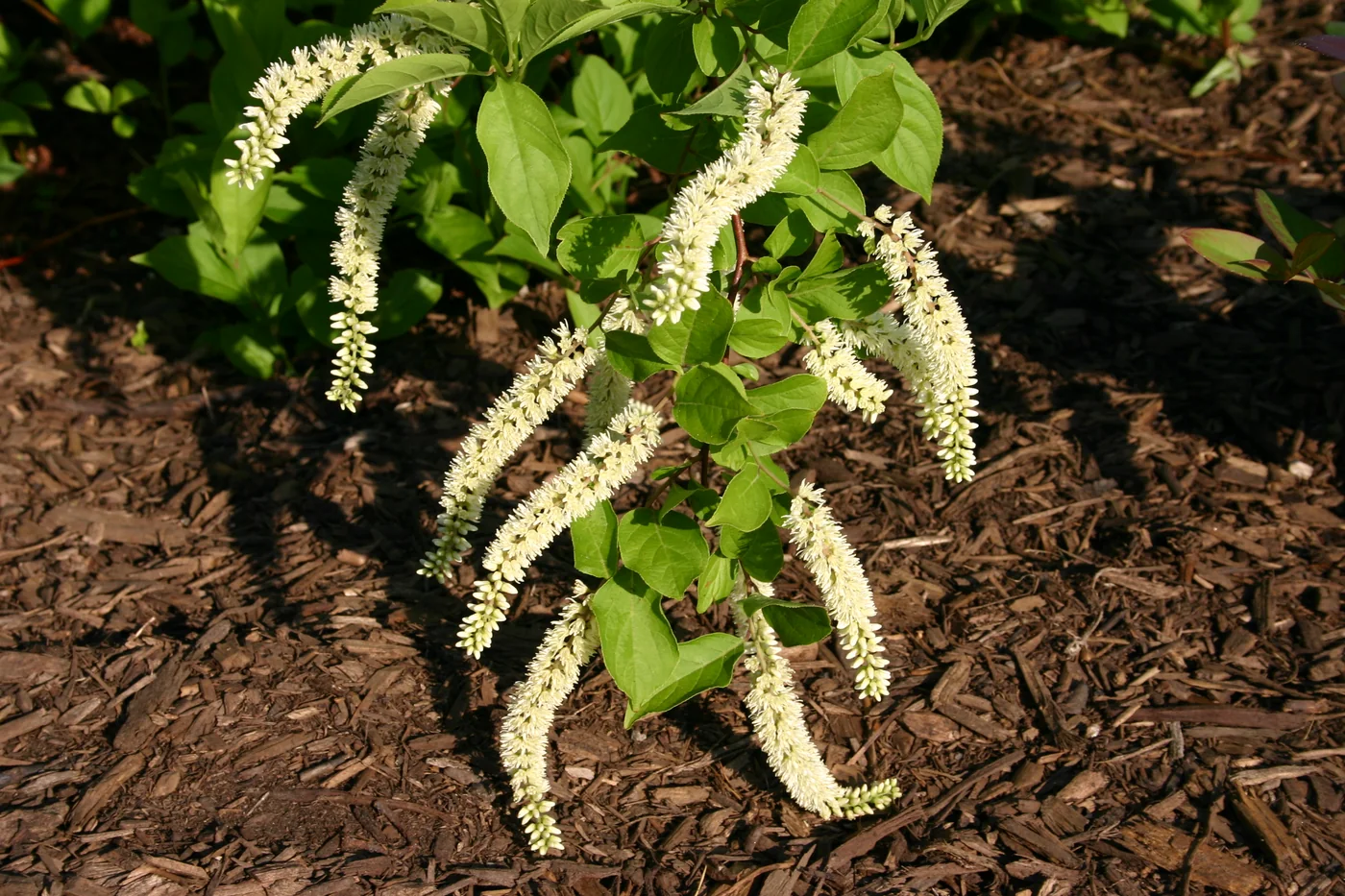
Mt. Cuba Center describes fragrant white clusters followed by persistent brown capsules and a strong red autumn display; its species account emphasizes an arching form. A planting can therefore earn its place across more than its flowering interval. Mt. Cuba Center: Virginia sweetspire
Choose the viewing distance accordingly. From a room across a lawn, the whole patch and its fall color may matter most. Beside a seat, individual flower clusters may be the feature you notice. Neither use requires every stem to have an identical outline, so leave room to evaluate the actual plant before imposing a geometric shape.
For a mixed border, place smaller plants where their care will not demand regular digging through the sweetspire base. Use an accessible outer band for temporary additions. A design that lets you change the edge without dismantling the central shrub planting is easier to refine after observing a full season.
Make spreading a visible maintenance choice
Arkansas Extension reports vigorous suckering and cautions that claims of reduced spread among some cultivars need more experience. Its observations of 'Little Henry' also differ from simple compact-height expectations. That regional evidence supports keeping cultivar claims and your own measurements separate. Arkansas Extension: Virginia sweetspire
Identify a boundary that can be inspected: the inside edge of a path, an open strip of ground or a clearly documented line within the bed. It should be a place you can reach without stepping into the shrubs. A hidden boundary behind several layers of planting is unlikely to receive consistent attention.
Record whether new stems stay in the intended patch or appear in adjoining planting pockets. Count the visits needed to keep those pockets clear. If the effort grows beyond what you want to give, revise the composition or location. Calling the plant native does not decide whether its spreading behavior fits this particular bed.
If the patch borders a property line, keep the permitted growth area inside ground you can reach and maintain yourself. Do not draw the colony right up to an inaccessible fence and assume that the neighbor will edit the far side. Mark the service route on your plan as real unplanted space. It has a continuing function even when the new shrubs make that strip look wider than necessary.
Separate removing an unwanted stem from reshaping everything
The Arkansas account confirms that flower buds form on the previous year's growth and advises pruning after flowering. Keep this timing in mind if you want to preserve the display while making planned changes to the shrub's branches. Arkansas Extension: Virginia sweetspire
An edge problem does not automatically justify cutting all the top growth. First locate the unwanted stem and decide whether it belongs inside your retained patch. Work on a limited area that you can identify clearly, and preserve a photograph of the result. If you cannot distinguish the shrub from intertwined neighboring plants, pause for identification before cutting or digging.
Use a small hand tool only where it gives controlled access. The Wilcox 202S trowel can help inspect a modest edge pocket; it is not a tool for levering an established woody root system out of the ground. Small reachable stems can be assessed for a correctly fitting hand pruner.
Judge success by the edge as well as the autumn color
During the first complete growing cycle, assess three things separately: the display from your usual viewpoint, the usable space around the patch and the work required along its boundary. A beautiful autumn photograph cannot tell you whether the route to a tap has become inconvenient or a neighboring planting needs repeated rescue.
The sweetspire colony-boundary guide provides a more detailed layout and review method. Use the native-shrub season plan when deciding how this patch contributes to the rest of the garden, and the shrub moving guide if relocation becomes the sensible option.
Expand only into places where the same conditions and access can be provided. Keep any successful compact cultivar's identity with the plan, but continue monitoring its spread as the planting ages. A useful sweetspire colony is one whose growth advances your design and whose limits remain practical to maintain.
Sources and scope
Research-based guidance informed by institutional references. Cultivar, region and growing conditions can change the advice. Product inclusion does not imply hands-on testing of every model.