Choose the patch before choosing the plant count
A sweetspire project needs an area decision before a quantity decision. On a rough plan, mark the ground the shrub may occupy and the places that must remain clear. Include access to drains, taps and stepping stones. Leave individual planting positions blank until the permitted patch is obvious.
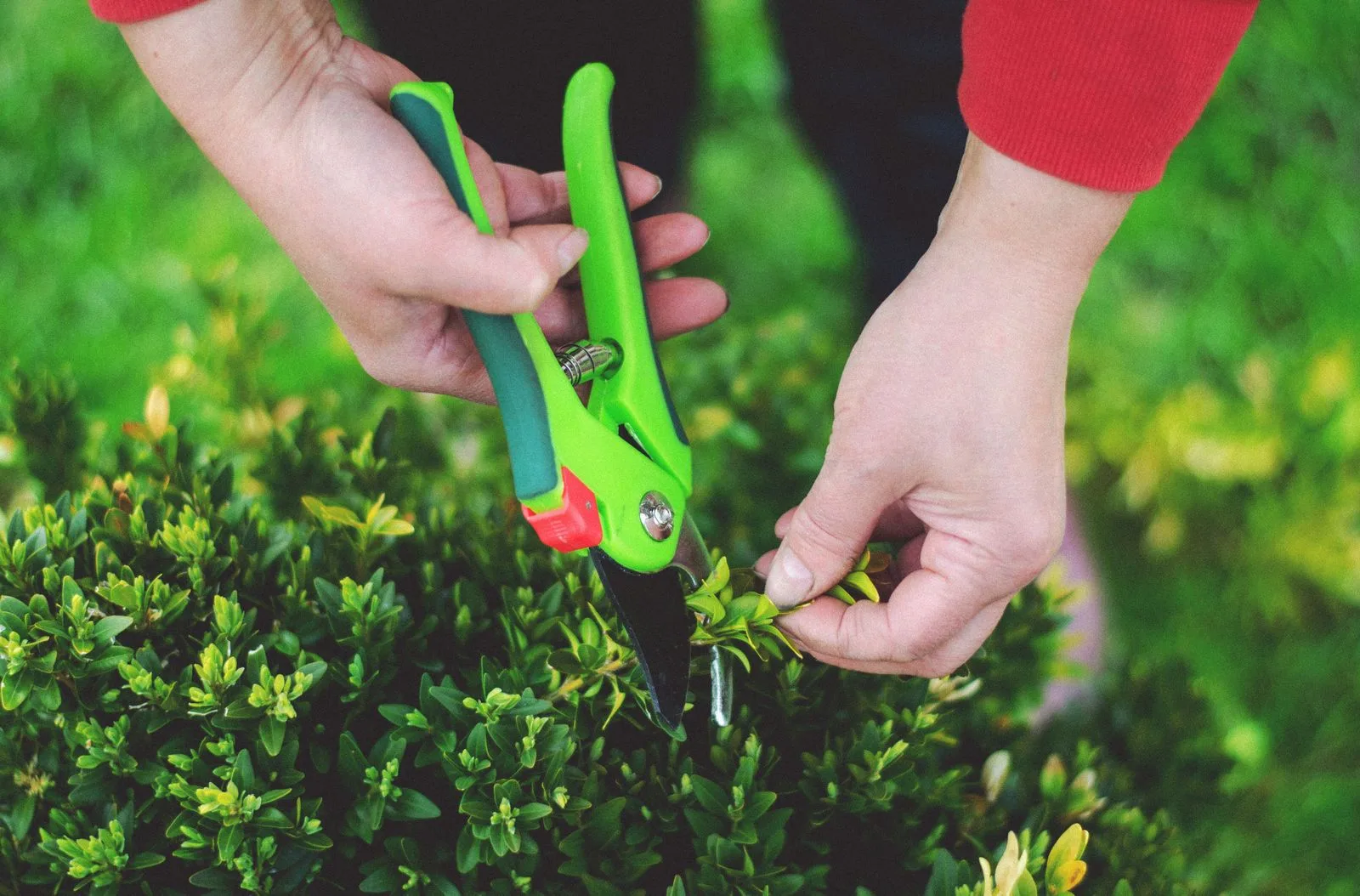
Two useful tools for a modest edge task are the Wilcox 202S trowel, for inspecting small accessible soil pockets, and the FELCO 6 pruner, for suitable small stems. They have different roles. Neither substitutes for a spade or other equipment when an established woody plant must be moved, and a trowel should not become a lever for substantial roots.
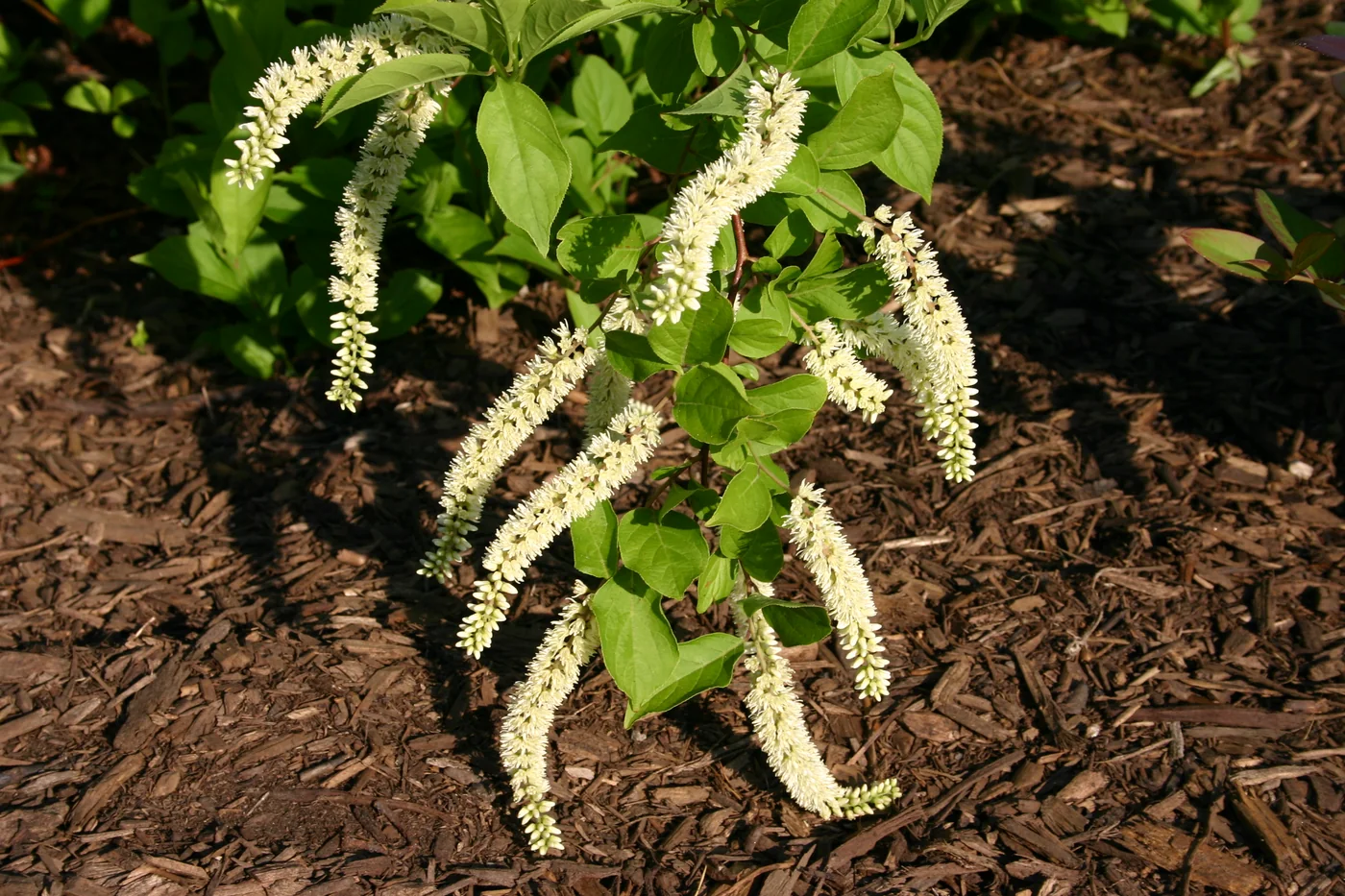
Start with a photograph from the normal viewing position and another looking down at the edge. The first records the display; the second records the working space. Keep the plant identity with both. If the label is incomplete, the Virginia sweetspire profile provides the species context before you commit to a colony design.
Treat cultivar height and spreading behavior as different questions
Arkansas Extension describes vigorous suckering and expresses uncertainty about reduced suckering claims for some cultivars. That is a useful limit on the word compact: a height description alone does not establish how the edge of an established patch will behave. Arkansas Extension: Virginia sweetspire
Ask two separate questions of a proposed purchase. How tall is this named selection expected to become here? How will I maintain the ground around it if additional stems appear? A satisfactory answer to the first does not answer the second. A low patch can still interfere with small neighboring plants or a narrow route.
UT Gardens distinguishes compact selections from taller species growth and lists cultivars with different habits, including upright-flowered 'Fizzy Mizzy'. Use that information to choose the intended visual role, then evaluate spread in your own planting. UT Gardens: Virginia sweetspire
If an established example is available, ask how often its owner edits the edge. A tidy public planting may owe its apparent restraint to maintenance that is invisible during a short visit.
Map where water arrives and where it stops
Mt. Cuba Center describes sweetspire as suitable for average to moist ground as well as wet or clay soils, with a suckering habit useful on slopes and at water edges. That does not define the water-handling capacity of a particular garden bed. Mt. Cuba Center: Virginia sweetspire
Observe the proposed patch after meaningful rain and again during a dry interval. Mark the inlet area, any long-lasting wet pocket and the route of overflow. Also mark ground that remains comparatively dry beneath a roof edge or tree canopy. This simple map is more informative than labeling the entire border damp.
For a designed rain garden, preserve the planned flow routes and required access. Avoid planting directly over a point that must be inspected or cleared. Where a slope is actively eroding, assess the slope and runoff problem itself; buying a shrub does not establish that immediate stabilization has been achieved.
Think about establishment separately. You still need to reach the original plants and assess their own rooting areas before a filled-in patch exists. A planting plan that works only once everything has grown together is incomplete.
Budget maintenance by perimeter rather than by plant count
Consider two illustrative layouts containing the same planted area. A ten-by-ten-foot square has forty feet of perimeter. A two-by-fifty-foot ribbon has one hundred and four feet. If every boundary must be inspected, the narrow ribbon gives you much more edge to walk even before accounting for obstacles or uneven ground.
That arithmetic is not a prediction of sucker numbers. It is a way to compare the amount of boundary you are choosing to maintain. A long narrow strip among small plants may demand more careful attention than a broad patch beside an open lawn, even when both contain the same number of shrubs.
Walk the perimeter on the ground. Can you stand beside every section? Can you see new growth without moving other plants? Where would removed material be placed? Simplify awkward corners now. An accessible continuous edge is easier to follow than several hidden pockets, and one obvious inspection route makes it easier for another person to understand the intended limit of the planting.
Decide which new stems belong before removing any
Use three categories when you inspect: new stems within the permitted patch, stems at an edge that needs review and stems clearly entering ground reserved for another use. Mark uncertain growth on a photograph before cutting. This is a garden-management choice, not a claim that every new shoot is harmful.
Inside the retained area, expansion may be the point of the planting. At the boundary, look at what the stem would affect if it remained. A stem leaning into open lawn creates a different problem from one emerging among a small collection plant. Prioritize actual conflicts rather than chasing an identical outline around the entire patch.
For a small inspection pocket, move loose surface material carefully and identify what you are handling before using a tool. Avoid tearing connected growth out by force. If substantial roots, intertwined plants or an unclear identity make the work difficult, seek a more suitable method or help. Do not turn a routine edge check into an unplanned attempt to excavate the whole colony.
Keep edge work separate from a full-canopy haircut
NC State explains that sweetspire blooms on the preceding season's wood and places planned pruning after flowering. Cutting the entire visible outline for convenience can therefore conflict with the display you wanted to preserve. NC State Extension: Virginia sweetspire
When the problem is an outward-growing stem, review that stem and its position first. When the problem is the height of the whole planting, return to the cultivar choice and the intended view. Treating both problems as one hedge-shearing task conceals their different causes and may leave the boundary issue unresolved.
Agree on the desired appearance before maintenance begins, especially if more than one person works in the garden. A brief note such as retain the arching patch, keep the stepping-stone route open is easier to follow than tidy it up. Include a photograph with the permitted area marked.
If the colony has become an extensive woody tangle, use the shrub rejuvenation-or-replacement guide to assess the larger intervention. This edge plan is intended to prevent small repeated conflicts from becoming that larger project.
Record whether the boundary is becoming easier or harder
Choose repeatable inspection points: the first clear flush of growth, the period after flowering and the end of the main growing season. Those are observations to adapt locally, not fixed regional dates. At each point, photograph the same corners and note which neighboring spaces remain usable.
Record effort as well as appearance. Five minutes spent checking an open edge is different from an hour spent untangling shoots among perennials. If the time increases, write down why. Perhaps the boundary is poorly accessible, a neighboring plant has expanded, or the chosen shape leaves too much perimeter for the area available.
Do not interpret a successful first season as proof that the mature colony needs no attention. Conversely, one troublesome corner does not require removing the entire planting. Your record should identify whether the problem is local and fixable or built into the design.
Keep flowering and fall display in the same record so that the work can be judged against the benefits. The aim is a patch worth maintaining, not merely an edge that stays empty.
Choose the next action from the actual cost of the patch
Keep the present arrangement when growth remains within a manageable area and the display meets your purpose. Simplify the boundary if the main difficulty is access or too many corners. Relocate or replace when the required shape repeatedly conflicts with what the plant does in your site.
Before moving anything, identify a destination with a better footprint and a practical water route. Read the small-shrub relocation guide to assess the scale and preparation. Do not assume that a well-established colony can be shifted as easily as one nursery plant.
If you expand a successful patch, add space deliberately rather than placing more shrubs wherever a gap remains. Use the seasonal native-shrub guide to decide what additional planting contributes to the rest of the garden. Use gear comparison only for the fit and specifications of tools needed for the defined task. The lasting plan should show the allowed area, the inspection route and the conditions that would justify changing the edge.
Sources & further reading
We favor university extension guidance and original product documentation. Linked sources support the specific facts cited; they do not endorse Garden Gear Atlas.
- Arkansas Extension: Virginia sweetspire
- UT Gardens: Virginia sweetspire
- Mt. Cuba Center: Virginia sweetspire
- NC State Extension: Virginia sweetspire