Describe the problem without using the word overgrown
An overgrown shrub might be healthy but blocking a window, sparse after repeated shearing, full of old canes, or declining because the site no longer suits it. These conditions can look similar from a distance yet require different decisions. Write down what you want to change and what you value enough to keep.
The University of Maryland's shrub-pruning guide points out that pruning is not a permanent cure for a plant too large for its space. If the shrub's normal mature width exceeds the bed, a strong flush of regrowth may recreate the same obstruction. Evaluate the future plant rather than only the appearance immediately after cutting.
Photograph the shrub from the path and from inside the house if it affects a window. Measure the room available. A plant may be appropriately sized for the garden but badly positioned by a gate. In that case, relocation or a small layout change could be more useful than repeatedly reducing the entire shrub.
Check health before asking the plant to regrow
Look for live buds, recent healthy shoots, stem damage, dieback, and changes in leaf size or color. Consider the history: drought, standing water, trenching, heavy traffic, repeated herbicide exposure, or increased shade from a nearby tree. An absence of visible insects does not prove that the plant is healthy enough for a major cutback.
The University of Maryland's tree-and-shrub decline guide explains that environmental and care problems can overlap with pests and disease, and symptoms may appear after a delay. Investigate persistent weakness before treating it as a simple need for renewal pruning.
If only one side is sparse, inspect the conditions on that side. A wall, neighboring plant, or changed light pattern may explain the shape. Cutting the weak side harder does not necessarily create the light or root conditions it lacks. Obtain a diagnosis for significant unexplained dieback, especially before spending effort on a multi-year recovery plan.
Identify the shrub and its ability to regenerate
Find the botanical name and whether the plant is grafted or maintained in a special form. Look up its response to hard pruning, using a source that addresses that species. Deciduous and evergreen are useful starting categories, but neither one provides a universal cutting instruction.
Iowa State Extension's overgrown-shrub guide distinguishes cane-type deciduous shrubs that can respond to renewal from evergreens such as junipers and pines that do not regenerate reliably from bare interior wood. Its species discussion also shows that potential recovery and an acceptable-looking result within a reasonable time are different questions.
For a shrub with only a thin outer shell of foliage, inspect how far back a proposed cut would go. A hedge clipped into leafless wood may remain open even though the remaining plant is alive. Before making a large test cut in a prominent spot, confirm what regrowth is realistic and how long you are willing to tolerate the result.
Choose a staged approach when it preserves useful options
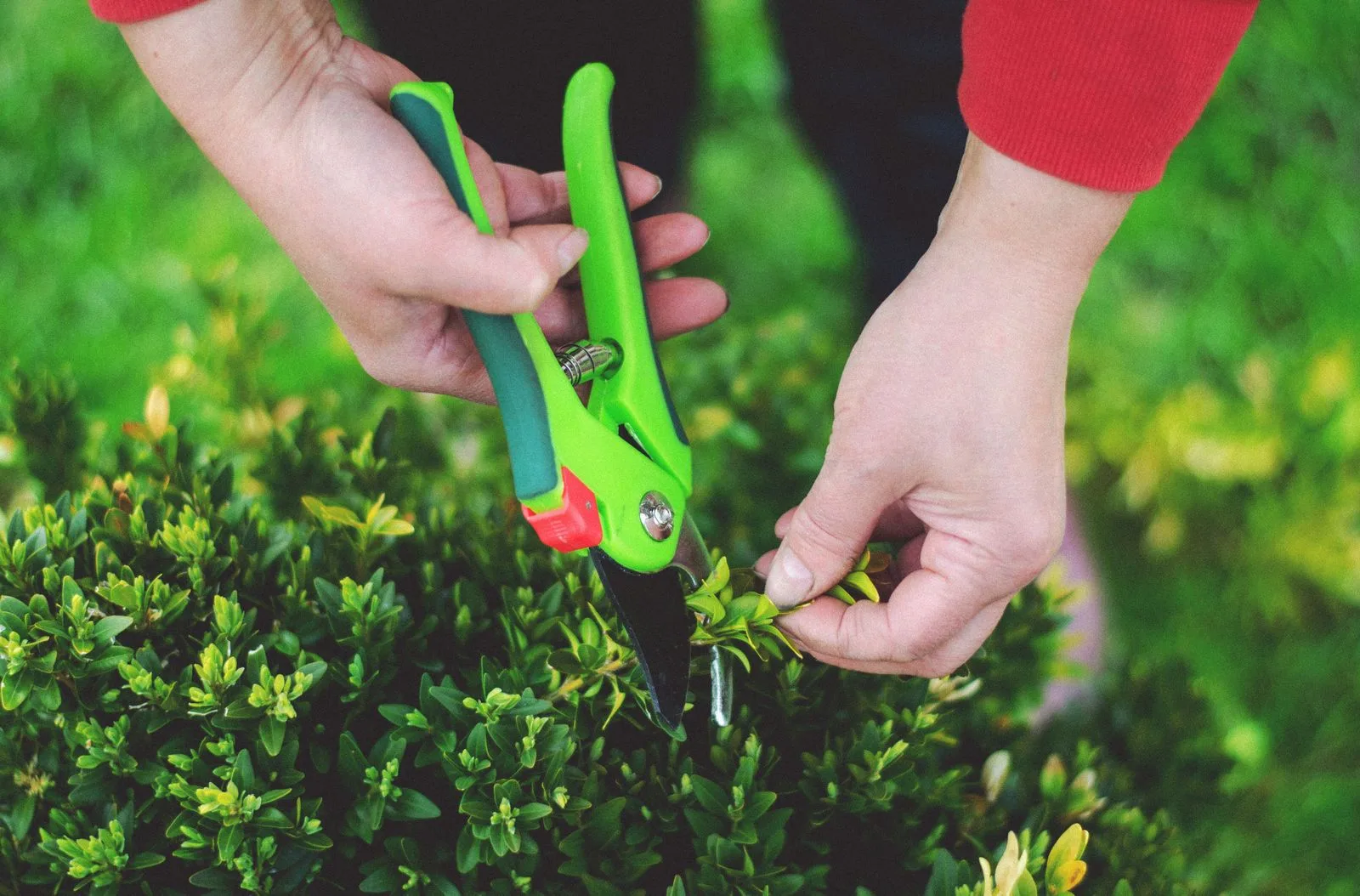
For an appropriate healthy multi-stemmed shrub, selective removal of older stems can allow younger growth to take over while retaining some structure. A staged plan also lets you observe the response before committing the whole plant. Its value is the information gained and the continuity of the planting, not merely spreading work across several weekends.
The RHS renovation guide distinguishes complete renovation from work spread over multiple years and notes that grafted plants require care to preserve the desired part. Confirm which approach fits the species and condition. Its broad UK seasonal windows should be adjusted to local climate and plant-specific guidance.
Mark the stems proposed for removal before cutting. Look at the remaining framework from outside the shrub. If the plan leaves a useful form and the plant responds with healthy replacement shoots, you can continue at the appropriate later stage. If it responds poorly, investigate rather than following a calendar mechanically and removing the rest anyway.
Keep work within manageable ground-level limits. Old canes can be crowded, heavy, or under tension. When a stem cannot be reached or controlled with appropriate hand tools, arrange help rather than forcing an awkward cut deep inside the plant.
Count the flowering and appearance costs
A severe cutback can remove the wood carrying a forthcoming flower display. Even a successful recovery may therefore involve one or more disappointing flowering seasons. Decide whether flowers, screening, or rapid size reduction matter most for the current year. A shrub cannot always deliver all three immediately after renovation.
Clemson Extension's pruning-shrub guidance distinguishes selective thinning from repeated heading and shearing, which can produce a dense outer canopy. Use that distinction to examine the maintenance history. A shrub that repeatedly becomes hollow-looking may need a different pruning method, not simply more frequent clipping.
Consider the location's importance during recovery. A temporarily sparse shrub at the back of a large border may be acceptable. The same appearance beside the only entrance may be less tolerable. Compare the likely recovery period with the establishment time of a replacement, including how each option affects privacy and access in the meantime.
Replace when the same conflict will keep returning
Replacement becomes more persuasive when the plant repeatedly outgrows the site, struggles with conditions you cannot reasonably change, or requires more maintenance than you want to provide. It may also be appropriate for a species identified as invasive in your region. Confirm that status locally instead of treating every vigorous shrub as invasive.
Compare the complete costs. Renewal includes pruning, removal of debris, possible loss of display, aftercare, and future maintenance. Replacement includes removal, site correction where needed, a suitable new plant, and establishment watering. A low purchase price does not settle the comparison, and keeping an unsuitable plant does not automatically save money over time.
For example, a healthy large shrub used as a broad boundary mass may justify staged renewal because its mature size is useful. A similar shrub forced between steps and a window may simply repeat the obstruction. The plant's biological ability to regrow can support keeping the first specimen and strengthen the case for replacing the second.
If the shrub has sentimental value, ask whether propagation or a suitable relocation is practical before making an irreversible decision. Keep expectations realistic: preserving the exact existing specimen, its genetic material, and its original location are three different goals.
Set a review point before beginning
Write down the chosen action and what success will look like. For renewal, it might be healthy new shoots in useful positions, retained access, and a manageable framework. For replacement, it might be a new plant whose mature width fits the bed without routine hard cutting. Choose observations you can actually make through the next growing season.
After pruning, check moisture and general health while the plant recovers. Do not automatically force growth with fertilizer unless a soil test or plant-specific assessment supports it. If the cause was shade, poor drainage, or damaged roots, more nutrients do not correct those conditions.
Keep a photograph and brief maintenance record. Review before the next planned stage and adjust the decision to the response. The purpose is a healthy shrub planting that fits its space and care routine, whether that comes from renewing a suitable plant or choosing a better replacement.
Sources & further reading
We favor university extension guidance and original product documentation. Linked sources support the specific facts cited; they do not endorse Garden Gear Atlas.
- University of Maryland Extension: pruning shrubs and hedges
- Iowa State University Extension: pruning large, overgrown shrubs
- Royal Horticultural Society: renovating overgrown shrubs
- Clemson Cooperative Extension: pruning shrubs
- University of Maryland Extension: what causes trees and shrubs to die?