Find a useful cutting point
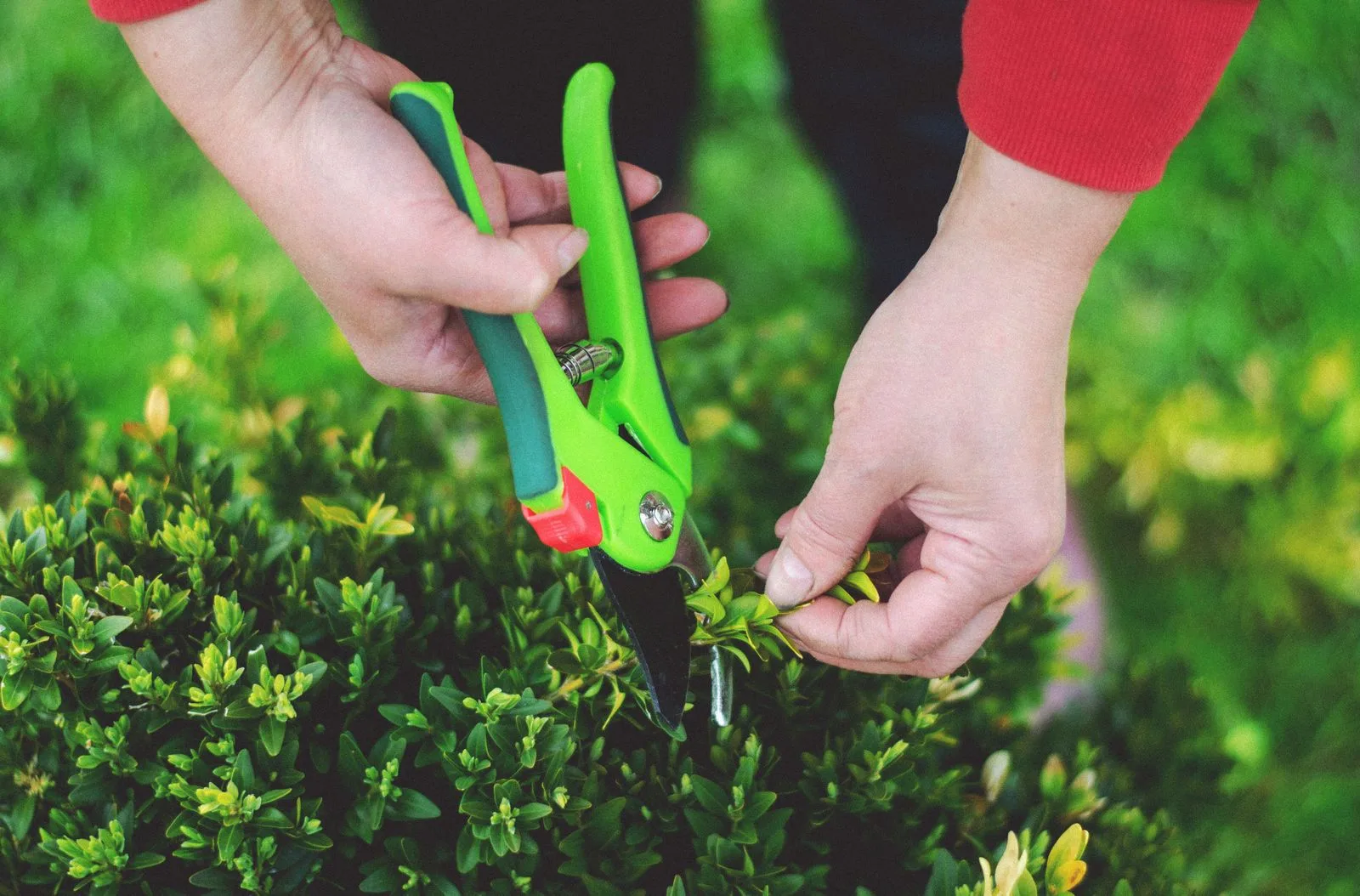
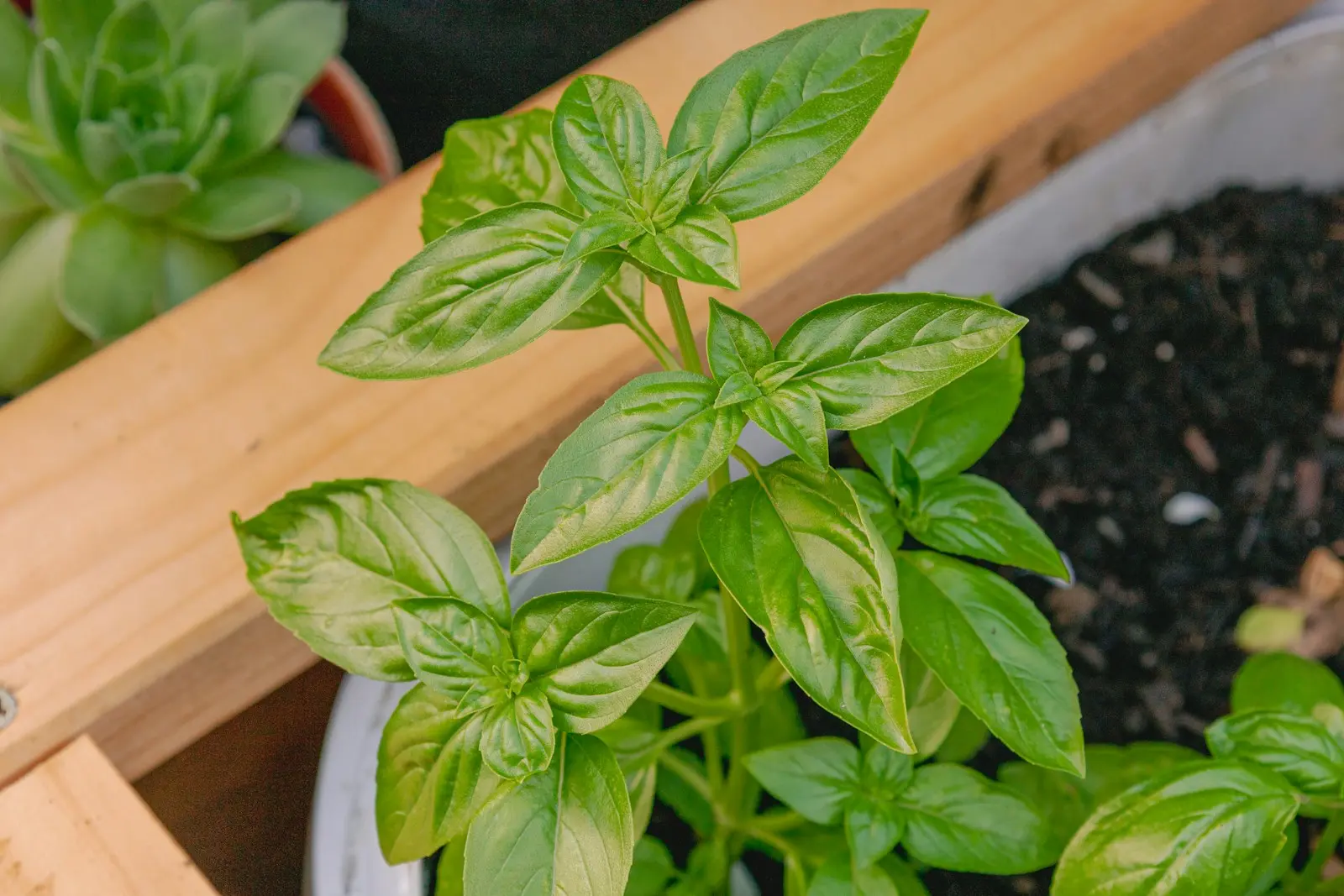
Look down a healthy stem for a pair of leaves and the small growing points where those leaves meet the stem. Make the cut just above that node so the retained plant has leaves and potential side shoots below it. The aim is a clean, leafy framework that can branch, not a bare stick with all its useful growth removed.
Pinching individual leaves is fine for a garnish, but repeatedly removing only the largest leaves from the bottom while allowing every tip to lengthen may not create the compact plant you want. A modest tip harvest can combine kitchen use with shaping. Decide whether you need a few leaves or a whole stem before reaching into the plant.
Illinois Extension describes tip pinching as a way to encourage a bushier basil plant and recommends removing flower buds when leaf production is the goal. Its basil guide connects harvest technique with plant shape. That principle is more useful than an exact universal cutting height, because a compact small-leaved basil and a vigorous large-leaved cultivar do not share the same dimensions.
Match the first harvest to the plant's condition
A newly transplanted basil should first show that it is establishing. Look for fresh growth and a stable root ball rather than harvesting heavily on the day it comes home. A plant that is wilting, chilled or still adapting to outdoor light needs recovery before a large cut. The presence of edible leaves does not mean it has a surplus of them.
For a young plant, take a small amount and observe the response. Once several stems are growing strongly, distribute harvest among them. Leave a substantial leafy portion of the plant rather than following a severe cut simply because a mature basil in a photograph tolerated it. The right amount depends on vigor, season and how soon you want to harvest again.
Choose a time when leaves are reasonably dry and the plant is not visibly stressed. Use clean, sharp scissors or careful fingers for tender tips. Support a stem while cutting so the action does not tug at the roots. Keep the harvested leaves out of harsh sun while you finish; handling quality matters when the goal is food rather than just pruning.
A garnish pot and a pesto planting are different projects
One small pot may supply occasional leaves for sandwiches without providing repeated large bowls of basil. If each recipe removes most of the canopy, recovery will dominate the plant's life. Start with your cooking habits: a few leaves several times a week, a modest weekly harvest, or a large seasonal batch. Those are different planting targets.
For repeated bigger harvests, grow several plants and rotate which one receives the heavier cut. Record how long it takes a harvested plant to produce useful new growth under your conditions. Do not impose a fixed weekly schedule if growth has slowed. A second sowing or replacement plant can provide continuity while an older plant recovers or declines.
Utah State Extension discusses basil establishment, harvest and the value of warm, suitable growing conditions. Its basil-growing guide supports planning for active regrowth rather than simply increasing cutting frequency. Use the cultivar's mature size to space plants, and preserve enough access to harvest without breaking neighboring stems.
- Occasional garnish: one healthy plant may be a reasonable trial.
- Frequent cooking: use several plants and rotate modest harvests.
- Large pesto batches: plan a larger planting or a dedicated harvest, not a permanently stripped windowsill pot.
- Slow recovery: reduce harvest first, then investigate light, temperature, roots and moisture.
- End-of-season use: decide whether preserving the remaining crop is more useful than waiting for unlikely regrowth.
Flowers change the goal, not the plant's worth
If your priority is tender leaf production, inspect growing tips regularly and remove developing flower spikes with a sensible stem cut. Once a plant is extensively flowering and woody, repeatedly removing only the flowers may not restore the growth pattern of a young vigorous plant. Evaluate the leaves and the season before committing to more rehabilitation.
You can also deliberately allow some basil to flower for its appearance and visiting insects. That is a legitimate garden choice, but it changes the harvest plan. Separate a flowering plant from the plants you are keeping in active leaf production so care remains intentional. A mixed-use garden does not require every basil to be managed identically.
Flavor differs among basil types and can change with stage and conditions. Taste a small healthy leaf before using a large harvest in a recipe. Do not assume lemon, Thai, purple and Genovese types are interchangeable in the kitchen merely because all respond to some form of harvesting. Growing the flavor you want is more important than copying the exact cultivar in a pruning demonstration.
When a bad harvest is really a growing problem
Repeated wilting, stunted growth or blackened leaves after cold weather should shift your attention away from scissors. Basil is a warm-season herb, not a plant to push outdoors simply because the last frost date has passed. Check the near-term forecast and the actual sheltered or exposed location. Cold stress can leave little surplus growth to harvest.
Check container moisture below the surface and ensure excess water can leave. A dry root ball and a continuously saturated one can both lead to disappointing growth, but they need different corrections. Do not respond to every pale leaf with fertilizer. Consider the mix's existing nutrients, light, recent temperature and root health before changing the feeding routine.
Give crowded plants room and avoid leaving foliage wet unnecessarily. A pot sold as a dense cluster may contain many seedlings competing in a small space. Treat it as a group that needs an establishment decision, not as proof that basil naturally thrives indefinitely at that density. If separating or thinning, do it carefully and allow recovery before a heavy harvest.
Know when to retire a diseased or exhausted plant
Basil downy mildew can begin with yellowing that might be mistaken for a nutrient problem; inspect leaf undersides for characteristic discoloration or sporulation and seek confirmation when uncertain. Repeated pruning does not cure an infected plant. Wisconsin Extension describes the disease, its spread and appropriate removal of symptomatic plants. Its basil downy mildew guidance helps distinguish disease management from routine harvesting.
If disease is confirmed, follow local Extension advice and avoid carrying contaminated plant debris or tools directly to healthy basil. Choose replacement cultivars with relevant documented resistance when disease has been a recurring local problem, while recognizing that resistance is not immunity. Do not rely on a generic 'organic' spray as a cure without a crop- and disease-specific recommendation.
At the end of a useful plant's life, make an intentional final harvest of healthy material and start again when conditions support it. Record the cultivar, planting date, harvest pattern and what ended production. A successful basil routine is not measured by keeping one plant alive forever. It is measured by useful, good-quality leaves produced with a care and replacement rhythm that fits your kitchen.
What to do with a supermarket basil cluster
A pot sold for immediate kitchen use may contain a dense group of seedlings rather than one established branching plant. Inspect the stem bases before applying a single-plant pruning rule. If you want to keep it growing, decide whether to thin the cluster, carefully divide manageable groups or use it primarily as a short-term harvest while starting a separate plant. Each option has tradeoffs: division adds root disturbance, thinning removes plants, and repeated harvesting from the crowded original pot may offer only limited recovery. Do not promise that every grocery-store pot can be converted into a long-lived garden specimen. Give any retained plants suitable light, drainage and recovery time, and judge success by fresh healthy growth rather than by preserving every original stem.
Sources & further reading
We favor university extension guidance and original product documentation. Linked sources support the specific facts cited; they do not endorse Garden Gear Atlas.
- University of Illinois Extension: Basil
- Utah State University Extension: Basil in the garden
- University of Wisconsin Extension: Basil downy mildew