Begin with the food, then choose the plant habit
If you want tender whole pods for dinner, shop for snap beans. If you want mature seeds removed from green pods, look for shelling types. If you want a dry pantry crop, choose a suitable dry bean and allow time for seed maturation and drying. Those goals occupy garden space for different lengths of time. A packet described as a pole bean does not by itself answer which harvest you are planning.
Within snap beans, pod color, shape, stringiness and preferred picking size vary. A flat Romano-style bean is not a failed round bean, and a purple pod may change color during cooking. Select for the kitchen first. Then compare bush and pole cultivars that produce the kind of bean you actually enjoy.
Minnesota Extension separates bean uses and growth habits, including intermediate half-runner types. Its bean-growing guide helps decode those overlapping names. For a first comparison, use one clearly identified bush snap cultivar and one clearly identified pole snap cultivar. Comparing a quick bush snap bean with a late dry pole bean would confound habit, use and maturity.
The support tradeoff is more than its purchase cost
Bush beans can make a useful crop without a tall climbing structure. That simplifies installation and makes them a good candidate for a short vacant section of bed. The tradeoff is working near ground level and allocating enough horizontal space to reach the plants. A dense low patch can conceal pods just as effectively as a tall vine.
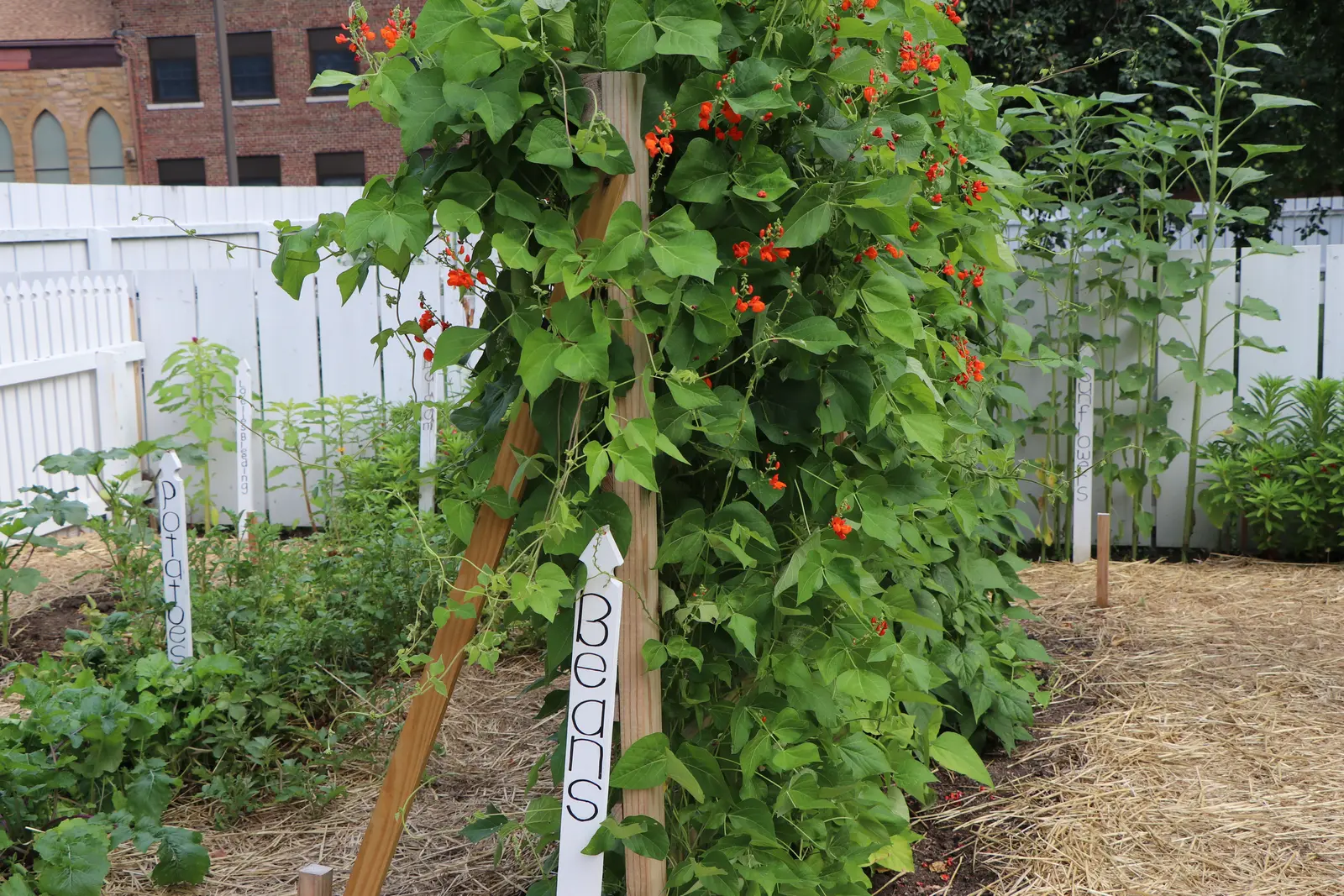
Pole beans shift much of their growth upward. They need support early, and the structure must withstand mature vines and wind. A tripod, tower or panel may work, but it should offer climbable vertical elements and be stable in the actual soil or container. Buying a tall trellis without considering how you will pick the top pods can exchange one access problem for another.
Measure the footprint of the complete system, including the path from which you will harvest. A teepee uses more ground than the narrow point at its top suggests. A panel along a boundary may be efficient if both the sunlight and access work. Avoid attaching heavy seasonal vines to a fence or railing whose load capacity and ownership are uncertain.
- Bush beans suit a temporary bed slot when you want little setup and can pick low.
- Pole beans suit a permanent seasonal support when you want frequent picking at reachable heights.
- Half-runners deserve their own support check; do not assume their needs match either extreme.
- For any habit, plan a path wide enough to harvest without stepping among roots and stems.
Match the harvest pattern to your calendar
Bush snap beans often give a relatively concentrated flush, although plants can continue producing under favorable conditions. Pole beans generally begin after a longer establishment period and can provide repeated pickings over a longer span. Cultivar and weather can blur those patterns, so compare packet maturity information and local experience rather than assuming every bush bean is early or every pole bean is late.
Utah State Extension describes successive bush sowings and the longer production period of pole beans. Its bean guide provides a useful basis for planning harvest continuity. Adapt any calendar dates to your region. A suggested last sowing in Utah is not a national deadline, and a packet's days to maturity does not include an unlimited harvest season afterward.
For a small household, a short bush row followed by another modest sowing can be easier to use than one large planting. For someone who enjoys picking a handful several times a week, one pole planting may fit better. If travel will interrupt harvest, avoid scheduling the first heavy crop for that absence. Mature pods left unnoticed can become unsuitable for the tender-pod use you intended.
Sow into warm conditions, not merely an empty bed
Common snap beans are frost-sensitive warm-season crops. Wait for suitable soil warmth and a reasonable weather outlook rather than sowing just because peas or lettuce are already growing. Large seeds can fail in cold, saturated ground. A fast crop planted at a suitable time may outperform an earlier sowing that struggles to emerge.
Install a pole-bean support before planting around it. Follow the cultivar and system's spacing directions; do not pack extra seedlings against every leg because the structure looks bare. Mature foliage needs room, and harvesters need a view into the canopy. Label the planting with its sowing date so later comparisons are based on the same starting point.
Beans are legumes, but that does not mean they can be grown in any infertile soil without assessment, or that they need routine heavy nitrogen feeding. Maryland Extension notes nitrogen fixation after establishment and warns that excess nitrogen can delay flowering. Its bean guide connects fertility, warm-season planting and support choice. Use soil-test guidance and account for amendments already applied.
Make picking part of the design
Snap beans are generally best before the seeds make pronounced bulges in the pods, but the cultivar's intended stage matters. Inspect a representative pod and compare tenderness and size with the supplier's guidance. Waiting for every bean to become as long as the largest one can sacrifice the quality of an entire picking.
Use one hand to steady the plant while the other removes a pod, or snip where appropriate. Pulling hard on a cluster can damage stems and young pods. On pole beans, check the back of the support and the lower foliage as well as the obvious hanging crop. On bush beans, move leaves carefully instead of flattening the plant to search underneath.
Keep a simple harvest record if you want to compare habits. Count useful meals or weigh usable pods, and note the bed space and support involved. Do not compare only a single day's haul: bush beans may have a stronger peak while pole beans spread the crop through time. Also record work that matters to you, such as bending, tying, setup and removing old vines.
When neither option solves the problem
Flowers without good pod set during a difficult weather period do not automatically mean you chose the wrong habit. Inspect moisture during flowering and pod development, and consider heat stress. A taller support cannot correct dry roots, and extra fertilizer cannot make an exhausted late sowing outrun the end of the season.
Leaves with holes, distortion or spreading spots deserve identification before treatment. Photograph the whole planting and both leaf surfaces, and check the stems and pods. Keep the cultivar name and recent care history available for local Extension advice. Avoid choosing a pesticide simply because it appears in a broad bean-growing list; crop, pest, timing and current label all matter.
If your only site is deeply shaded, the best decision may be to reserve beans for a sunnier location rather than debate bush versus pole. If a balcony cannot support a stable tall structure, choose a compact cultivar and realistic container plan. The winning bean is the one whose space, support and harvest routine fit the garden you can maintain—not the one with the most impressive theoretical yield.
A comparison that includes your time
To compare two suitable snap-bean cultivars at home, reserve a small separate area for each and note both their planting dates and usable growing space. Record the first picking, the number of meals supplied and the date quality declines. Add setup and harvest notes: did the pole support require extra anchoring, did low picking become uncomfortable, or did a large bush flush arrive when you could not use it? Do not announce a universal winner from unequal areas or one unusual season. The purpose is to choose a better fit for your own routine. A cultivar yielding slightly less but harvested comfortably and used completely may be more useful to you than one producing a larger crop that is difficult to reach or regularly becomes overmature.
Sources & further reading
We favor university extension guidance and original product documentation. Linked sources support the specific facts cited; they do not endorse Garden Gear Atlas.
- University of Minnesota Extension: Growing beans
- Utah State University Extension: Beans in the garden
- University of Maryland Extension: Growing beans
.JPG)