Start at the junction of leaves and roots
Part the outer leaves and identify the base where leaf stalks join the plant. Remove loose surface debris gently until you can see the relationship between that base, the soil, and any mulch. You are looking for evidence of a changed planting level, exposed roots, or deterioration; this first inspection does not require lifting the entire plant.
RHS advises leaving a gap between mulch and the heuchera crown. It notes that shallow-rooted plants can lift over winter and may need resetting with the crown at the surface. RHS: growing heuchera
Photograph the base before correcting anything. Include enough surrounding soil to show whether the plant sits in a depression or on a raised patch. A close-up of leaves alone will not preserve that information. Compare with a planting photograph if you have one, and note whether mulch or soil was added recently. That history can turn an apparently mysterious decline into a much more specific maintenance question.
Identify what the label does and does not promise
Heuchera villosa is comparatively tolerant of heat and humidity, but NC State notes that complete soil drying can cause scorch and general decline. NC State Extension: Heuchera villosa
Check whether you have the species, a named species selection, or a hybrid whose description mentions villosa ancestry. Keep the full name in your notes. A general promise of heat tolerance should not replace the selection's light instructions, expected size, or local performance record. It also does not establish that the plant belongs beside a hot wall or in a dry container.
If several heucheras share a bed, compare them by name and position. One healthy plant is useful evidence that some combination of genetics and conditions works there; it does not prove that a neighboring selection is receiving the same exposure or moisture. Avoid prescribing an identical treatment to the whole collection just because the plants are sold under the same common name.
Distinguish a buried plant from one that has risen
Vermont Extension recommends preserving the nursery soil level at planting and describes freeze-and-thaw lifting of heuchera crowns. When a plant has heaved, it advises replanting in spring once the soil can be worked. Vermont Extension: heuchera
A buried plant may need excess mulch cleared so the original base becomes visible. A lifted plant may have sound exposed roots that need the plant carefully reset. An older plant may have elongated stems without a recent change in soil level. These situations can look superficially similar from above, but adding more material over the entire crown is not a universal solution.
Do not force frozen, saturated, or otherwise unsuitable soil into a repair simply because the calendar says spring. Inspect the condition of the plant and the workability of the site. If the crown is soft or the roots appear badly compromised, pause before resetting and seek a diagnosis. Correct planting depth cannot restore tissue that is already unsound.
Read summer leaf damage with the exposure history
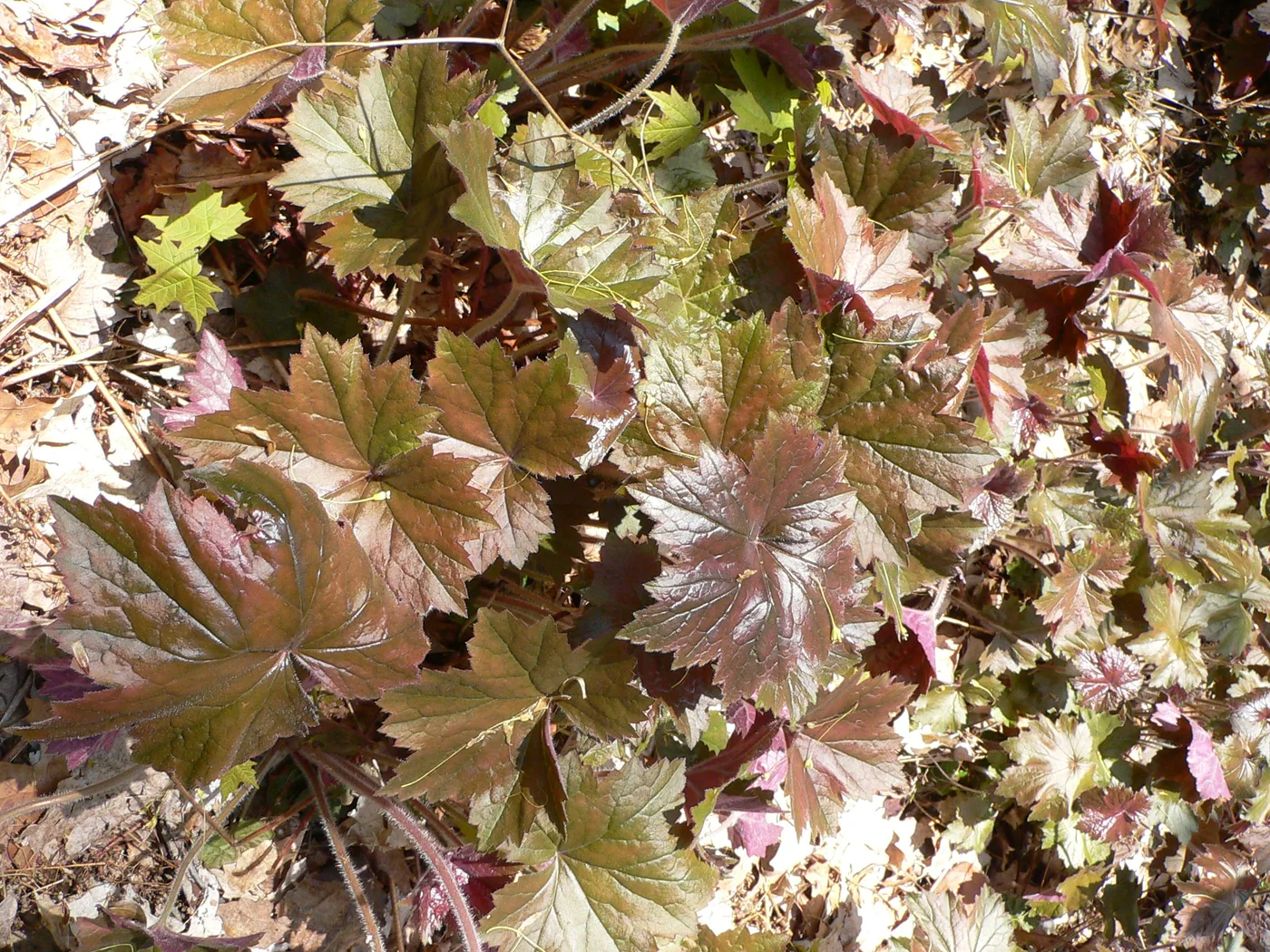
Mt. Cuba Center found that Heuchera villosa ‘Bronze Wave’ bleached and burned in full sun during its trial and recommended it for partial-to-full-shade conditions. Mt. Cuba Center: Bronze Wave trial
Examine where the damage occurs. Leaves nearest an exposed edge, reflective wall, or recently opened gap in the canopy may tell a different story from leaves deteriorating throughout a wet clump. Note when the site changed. A shrub pruned back in early summer can alter the heuchera's afternoon exposure without any change to its watering schedule.
If the pattern suggests an exposure problem, compare a more sheltered position that still offers suitable drainage and access. A temporary move is straightforward for a pot; relocating a ground-grown plant needs a considered establishment plan. Do not rush to divide a plant merely because some leaves are scorched. Division is a structural intervention, and it may add work without resolving the conditions that caused the visible injury.
Check the root zone before increasing the water
Look at the original planting area and the surrounding bed separately. Is water entering the root ball, running away, or collecting around the crown? Does a container have an unobstructed outlet? Did irrigation continue through an extended wet period? Write down what you see before making a schedule change. A plant can look wilted for reasons that are not corrected by a longer runtime.
For a dry root zone, direct water where it can reach the planted area and confirm the result. For a persistently wet one, inspect drainage and stop adding water by habit while you determine the cause. If roots or the base seem unhealthy, preserve photographs and seek specific advice. Avoid interpreting leaf appearance alone as a moisture measurement.
When multiple plants share irrigation, use the circuit planning guide to assess whether their requirements are compatible. Separating a plant from a poorly matched schedule can be more useful than adjusting every plant to accommodate one struggling specimen.
Use the trial record to ask better buying questions
Mt. Cuba's Mid-Atlantic heuchera trial examined 83 cultivars and evaluated several traits, including vigor, habit, flowers, sun tolerance, and resistance to problems. Its results apply to the plants and conditions evaluated. Mt. Cuba Center: heuchera trial
Before replacing a failed plant, decide what failed in your garden. Was the choice too wide for the available space? Did it lose its appearance under afternoon exposure? Was it inaccessible for watering? Did a winter level change go unnoticed? A new cultivar should answer that actual limitation rather than merely supply a different leaf color.
Bring your notes to a nursery that can discuss local performance. Ask which selections have persisted in similar sites and whether the nursery's description refers to mature plants. If you are planting outside the trial's region, a small local trial of your own is more informative than buying a large quantity from a ranking alone. Keep it explicitly informal and document the conditions so future comparisons remain useful.
Reset a sound plant with a visible reference level
When inspection indicates a sound plant needs resetting, prepare the destination before lifting it. Make sure the opening can accommodate the root system without forcing the crown below the surrounding surface. Keep an intact reference to the original soil level where possible. Settle the plant, water appropriately, and inspect the level again rather than assuming it stayed where you placed it.
A planting trowel can help with a small root ball, but choose a tool that suits the actual size and soil. The 14-inch Wilcox All-Pro 202S is an option where the planting area gives its longer body room to work; a larger established clump may require a different tool you already own. Do not use a small trowel as a lever against a substantial root system simply because it is nearby.
Replace mulch around the root zone while retaining access to the base. Photograph the completed level. This gives you a clear comparison after winter or after maintenance adds more material to the bed.
Choose division for renewal, not as a reflex rescue
RHS notes that aging heucheras can become woody and sparse and describes renewing them through rooted, vigorous outer sections. RHS: growing heuchera
Assess whether that description fits the plant you have. An aging clump with sound outer growth is a different candidate from a recently purchased plant whose whole crown is collapsing. If you cannot identify healthy material, obtain a diagnosis rather than distributing the problem among several pots. Prepare destinations for useful divisions and keep each one labeled.
Renewal also changes the display. In a repeated planting, working in stages may preserve enough foliage structure while smaller plants establish. For a single focal specimen, you may prefer a purchased replacement of suitable size. Compare the time, space, and attention required by each option. Do not preserve every small fragment merely to maximize the number of plants if the garden has no appropriate place for them.
Keep healthy leaves while you evaluate the repair
After any corrective work, remove only the leaves whose loss serves a clear purpose. A dead outer leaf hiding the base can be removed for inspection; a sound leaf with a minor blemish may still belong in the display. Avoid repeatedly stripping the mound because its older leaves do not match the condition of fresh nursery foliage.
Choose one or two observations that will show whether the intervention helped: the crown remains at the intended level, the root zone no longer stays wet, or subsequent leaves develop without the same damage. Photograph those features instead of relying on an overall impression. If decline continues despite correcting a documented problem, preserve the new evidence for a diagnostic service.
Finish by updating the plant's record and the bed's maintenance instructions. Keep the crown inspection accessible, retain the full name on a durable marker, and use the Heuchera villosa profile to reassess the species' long-term fit. Once the plant is stable and the care routine works, further intervention is unnecessary.
Sources & further reading
We favor university extension guidance and original product documentation. Linked sources support the specific facts cited; they do not endorse Garden Gear Atlas.
- RHS: growing heuchera
- NC State Extension: Heuchera villosa
- Vermont Extension: heuchera
- Mt. Cuba Center: Bronze Wave trial
- Mt. Cuba Center: heuchera trial