Start with the conflict and leave the tools closed
Write a specific sentence about the problem: the outer branch blocks the gate, the flowers obscure a window, or the shrub occupies the route to the tap. Avoid starting with simply too big. A broad shrub may be successful in every respect except one narrow access point, and that distinction changes the amount of work required.
For small selected cuts, the FELCO 6 is a medium right-hand option and the FELCO 9 suits a large left hand. They are alternatives based on hand fit. Check the maker's specifications and your own reach before choosing; owning one does not establish that every stem is within its useful capacity. FELCO: Model 6 specifications FELCO: Model 9 specifications
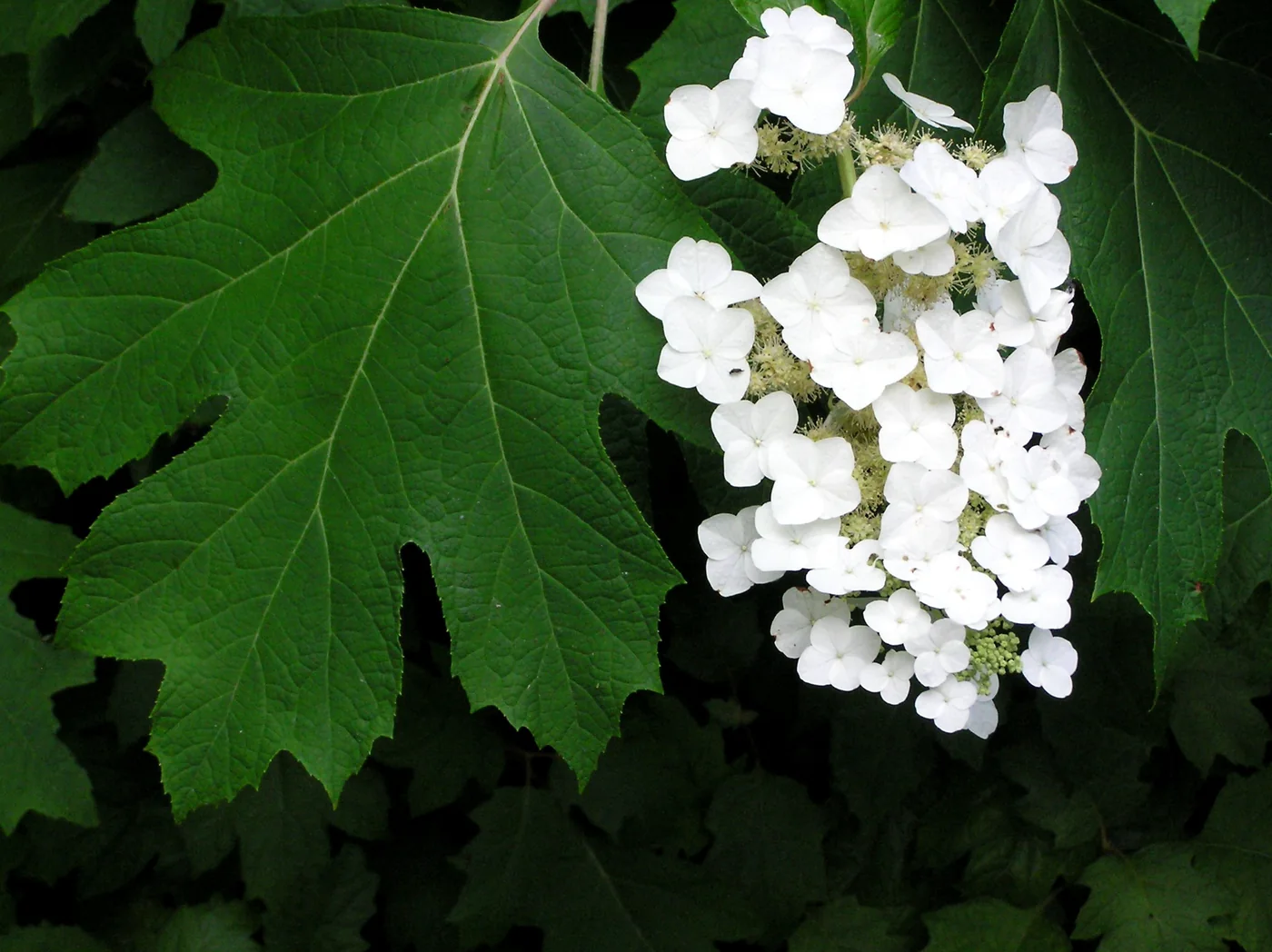
Keep a tape measure, a camera and a hose available for the first visit. Their immediate job is to document the space, not to mark a cutting height. If you are still confirming the plant's identity, begin with the oakleaf hydrangea profile and keep the cultivar label with the measurements.
Draw the adult outline in two directions
Measure both height and width from a cultivar-specific reference. Piedmont Master Gardeners describes 'Ruby Slippers' as wider than tall, approximately 3.5 by 5 feet, while large selections such as 'Alice' can occupy much more space. Compact is a comparison within the group, not a promise that a shrub fits every small bed. Piedmont Master Gardeners: Oakleaf hydrangea
For a new plant, draw the expected outline on paper and mark the width on the ground. For an existing plant, measure its present reach in several directions. The longest branch may point toward the light or open ground, so one diameter measured across the easy side can miss the actual conflict.
Include the viewing height from indoors. A shrub can leave ample walking clearance while blocking the lower part of a window, or remain below the glass while spreading across the path. Treat these as separate dimensions. A lower cultivar does not automatically solve a width problem, and moving a plant farther from a wall does not necessarily solve the view.
Work through a clearance example before choosing a cut
Imagine a bed six feet deep between a wall and a path. You want a one-foot service gap along the wall and one foot of free space before the path. That leaves four feet for the canopy in this illustrative layout. A cultivar expected to spread five feet cannot occupy that envelope without overlap, even if the nursery plant is only two feet wide today.
You have several useful options: widen the bed into suitable adjoining space, reduce the service gap only if it still works, select a narrower plant, or use another location. None of those options requires a pruning prescription. They are layout decisions made before the plant creates a conflict.
Now consider a broad open bed with just one branch reaching toward a gate. The whole canopy may fit while that stem does not. Mark the gate's full swing and normal standing space, then identify which branch crosses it. This turns an imprecise size complaint into a bounded job that can be assessed without shortening every stem.
Set the flowering cost you are prepared to accept
Maryland Extension explains that old-wood hydrangeas form their next flower buds before winter and places oakleaf in that group. Cutting established growth can remove that investment; the usual planned pruning window for preserving the cycle is just after flowering. Maryland Extension: Pruning hydrangeas
Translate that fact into your own priorities. If the shrub is the main feature for an anticipated garden visit, retaining the coming display may be more valuable than correcting a minor outline issue immediately. If a branch prevents safe use of a gate, usable access can be the stronger priority. Make the tradeoff explicit instead of expecting every intervention to preserve every benefit.
Think of the flower budget as a planning aid, not a count you can calculate from stem length. One branch may carry several growing points; the number of future clusters is not reliably predicted by removing a fixed percentage of height. Photograph the branch you propose to remove and the framework you intend to retain. The practical question is whether enough useful plant remains to meet your purpose.
Separate a winter setback from a permanent space problem
UF/IFAS notes winter dieback toward the northern end of oakleaf hydrangea's growing range and the value of shelter from high winds. A shrub that survives but flowers inconsistently may therefore have a climate or exposure limitation as well as a pruning history. UF/IFAS: Hydrangea quercifolia
When the display is poor, gather the sequence before taking corrective action. Was the plant cut after the previous flowering season? Did buds develop and then fail? Are leaves emerging on the stems you thought were dead? Compare the protected and exposed sides. These observations cannot diagnose every problem, but they prevent a missing-flower complaint from automatically becoming a hard-pruning job.
Keep records of any unusual winter weather with photographs of spring growth. If stem condition is uncertain, seek local advice rather than repeatedly shortening apparently inactive branches. For a new purchase near the climate limit, a nearby mature example of the same cultivar provides more relevant evidence than a distant photograph. You need to know whether the desired flowering habit is reliable in your setting.
Choose the smallest change that resolves the measured conflict
Evaluate the alternatives on the same drawing. Leaving the plant alone may be reasonable if the issue is visual irregularity and the route remains functional. Moving a temporary pot or narrowing an adjacent annual planting may restore access without touching the shrub. A selected branch change may be appropriate where the conflict is genuinely local.
If cutting is chosen, trace the proposed stem from the outside back into the plant before acting. Check whether its removal leaves a large empty window or affects neighboring branches. Do not cut from the outer silhouette inward while guessing where the stem belongs. Use the reachable-branch cutting guide for cut placement when the branch structure and task fit that guidance.
If many sides must be reduced to make the outline acceptable, return to the layout. Repeatedly imposing the same small envelope is a continuing maintenance commitment. The useful decision is whether you want that commitment and its flowering consequences. It is not settled by finding a stronger pruner or a faster way to remove the same growth.
Keep a realistic alternative position ready
Before considering relocation, identify a destination that resolves the actual measured constraint. If width caused the trouble, do not move the shrub into another narrow pocket simply because that pocket is currently empty. Include future neighboring plants, watering access and the route required to carry the root ball to the new position.
Assess whether the plant is still a manageable moving project. Its visible canopy is only part of the task, and a mature shrub may be much harder to handle than the plant you remember buying. Use the small-shrub relocation guide to work through preparation and scale before digging.
Replacement can be a better design choice when the needed form is fundamentally different. Keep the measured limit in the shopping notes and compare mature cultivars against it. Do not choose a replacement only because the new nursery container looks compact. If you are keeping the original plant elsewhere, label both positions so future pruning and flowering records remain associated with the correct cultivar.
Review the outcome from the same viewpoint
After any change, repeat the original access test: open the gate fully, stand at the window and walk the route carrying the item that previously caught on branches. A neat photograph does not prove that the functional problem has been resolved. Note what improved and what still needs a design decision.
Revisit after the next flowering cycle, using photographs from the same positions. Record how much of the intended display remained and whether the conflict returned. That gives you an evidence base for choosing between occasional branch work and a larger change in plant placement.
Use gear comparison if hand fit, cutting dimensions or a documented specification remains uncertain. Use the hydrangea flowering-wood guide if another hydrangea needs a different timing decision. For this oakleaf, keep the final plan short and specific: the clearance to maintain, the framework to retain and the point in its flowering cycle when the next assessment will be made.
Sources & further reading
We favor university extension guidance and original product documentation. Linked sources support the specific facts cited; they do not endorse Garden Gear Atlas.
- Piedmont Master Gardeners: Oakleaf hydrangea
- Maryland Extension: Pruning hydrangeas
- UF/IFAS: Hydrangea quercifolia
- FELCO: Model 6 specifications
- FELCO: Model 9 specifications