Confirm that the white material is a disease
Powdery mildew often appears as white to gray patches on living leaves, stems, or buds. It can begin in a limited area and become more extensive. Some affected leaves also distort, discolor, or fall prematurely. The University of Minnesota flower-garden guide describes these symptoms and distinguishes mild cosmetic infection from disease severe enough to reduce growth or flowering.
Do not identify the problem from color alone. Dust, spray residue, naturally pale leaf hairs, and other plant diseases can produce a whitish appearance. Look at both leaf surfaces, the pattern across the plant, and whether neighboring plants of the same kind are affected. Photograph the whole plant as well as close details.
Record the plant name and when the patches first appeared. A recurring late-season problem on one known cultivar is different from a sudden unexplained coating across unrelated plants after a recent application. Include that context if you request an extension diagnosis.
Avoid rubbing or washing every leaf before collecting photographs. You may remove useful evidence without solving the underlying issue. If the diagnosis remains uncertain, preserve a representative sample according to the receiving diagnostic service's instructions rather than trying several products in sequence.
Understand what the name does and does not mean
Powdery mildew is a group of related diseases, not one fungus that necessarily infects every plant in the garden. Host relationships matter. Finding it on one flower species does not mean every neighboring tree, vegetable, and houseplant is about to develop the identical infection.
The University of California IPM guide to ornamental powdery mildew explains the disease group and its management. An important distinction is that powdery mildew does not require the same wet-leaf conditions as many other foliar diseases. Do not reduce the explanation to overhead watering caused it.
Humidity, plant susceptibility, shade, and air movement can influence disease development, but their effects depend on the host and pathogen. A garden that receives no overhead irrigation can still develop powdery mildew. Likewise, deliberately wetting foliage is not a universal treatment plan.
Downy mildew is not another name for powdery mildew. Different diseases can require different responses, and an uncertain diagnosis should be resolved before selecting a product. The appearance of a word such as mildew on a bottle is not enough to establish that it fits your plant's problem.
This guide concerns ornamental flowers. If the affected plant is grown for food, use crop-specific disease guidance and label directions rather than transferring an ornamental recommendation to an edible crop.
Decide whether intervention will improve the season
Consider timing first. A small amount of infection near the natural end of a perennial's display may have limited practical effect. The same disease arriving early on young growth can interfere with much more of the season. Compare the likely benefit of intervention with the amount of healthy growth and flowering still ahead.
Assess function, not just whiteness. Is the plant producing healthy new leaves and buds? Are leaves dropping rapidly? Is the flowering display meaningfully reduced? A plant that looks imperfect but remains vigorous may be a reasonable candidate for monitoring rather than repeated treatment.
Take photographs from the same angle and compare a few identified shoots. Old infection will not vanish simply because management improves. New growth and the rate of additional symptoms provide better evidence of progress.
Avoid stripping all affected foliage from a heavily infected plant. Removing nearly every leaf can create a separate setback. For a few isolated affected leaves, selective removal may be reasonable when plant-specific advice supports it, but a severe case needs a broader plan.
Set the goal realistically. You may be protecting the remaining display, reducing a source of recurring disease, or learning which cultivar to replace next year. Restoring already damaged leaves to a flawless appearance is not a useful success criterion.
Improve the setting without overcorrecting
Check whether the plant receives the light recommended for its species and cultivar. A sun-loving flower placed in a crowded, shaded pocket may have several problems at once. Moving or replacing it can be more effective over time than repeatedly treating a fundamentally unsuitable location.
Look at mature spacing rather than the spacing you used when the plants were small. Foliage may now overlap tightly, and nearby shrubs may have expanded into the bed. Create appropriate room where practical, but do not thin or shear a plant indiscriminately during stressful weather just to open the center.
The University of Maryland powdery mildew resource highlights resistant varieties and appropriate growing conditions as important management choices. Resistance is a selection criterion, not a guarantee that a plant can never show symptoms.
Keep watering appropriate to the root zone and the plant's needs. Do not drought-stress a plant because the disease involves humidity, and do not saturate the bed in an attempt to wash the problem away. Correct a leaking hose or chronically unsuitable irrigation pattern for its own reasons, while recognizing that powdery mildew has a more complex relationship with moisture.
Avoid unnecessary nitrogen fertilizer. A rapid flush of tender growth is not automatically the best response to a diseased plant. Use the plant's actual nutrient needs and any soil-test guidance rather than fertilizing every time leaves look poor.
Be selective about removal and cleanup
When removing affected material, avoid dragging it through healthy neighboring plants unnecessarily. Put it directly into an appropriate collection container and follow local disease-management disposal guidance. Do not shake a bag of diseased leaves over the bed to free trapped soil.
Cleanup recommendations depend on the host and the disease's survival pattern. Record the affected plant and consult local guidance for end-of-season handling. Do not assume that removing every standing stem from every species is necessary because one plant had powdery mildew.
Keep the rest of the planting identifiable during cleanup. Mark crowns and plants that disappear seasonally so that routine maintenance does not disturb them later. Remove confirmed problem material thoughtfully while retaining healthy structure where it suits the garden's objectives.
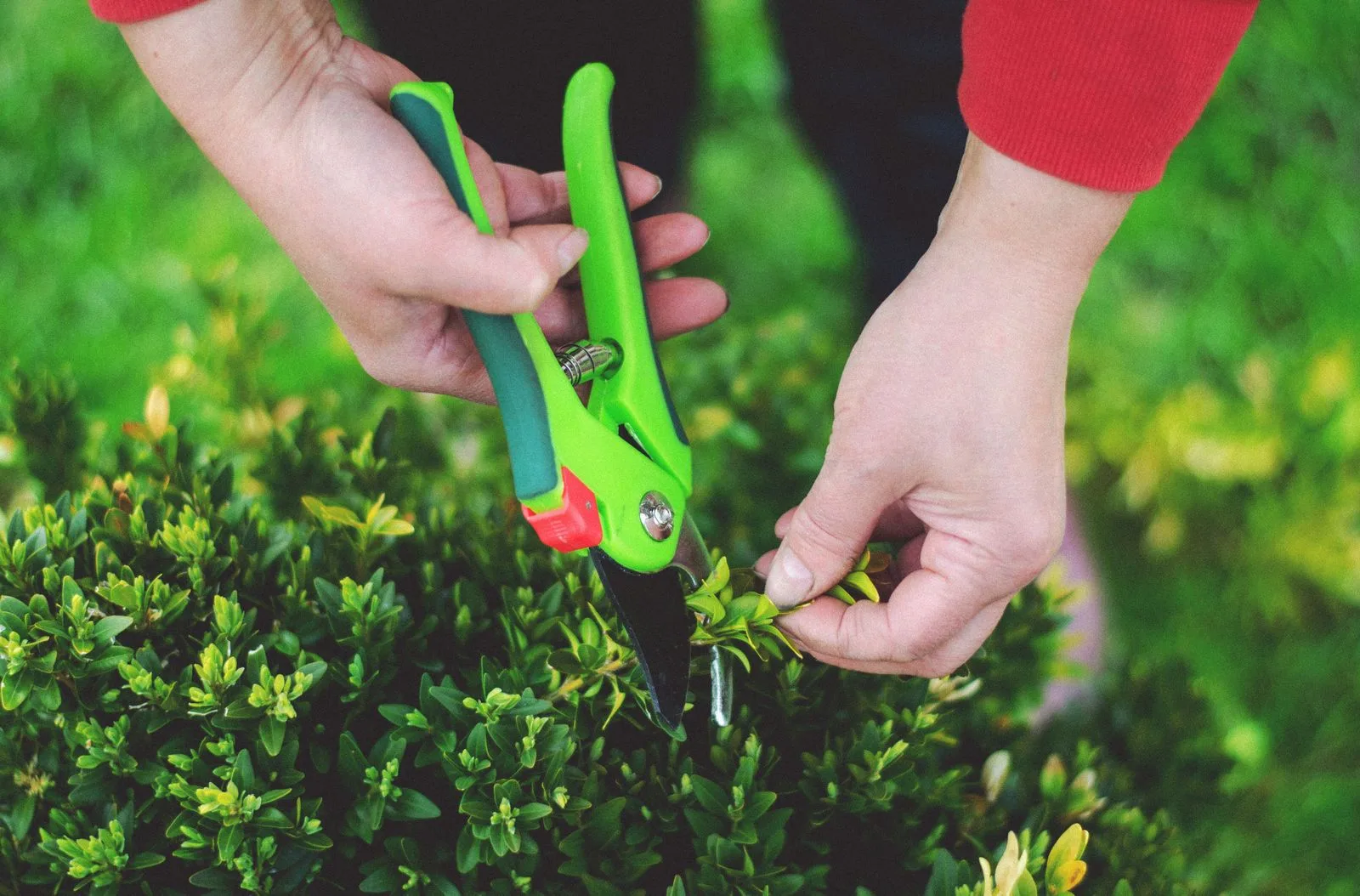
Clean tools as appropriate after working on diseased plants, following cleaning-product instructions and avoiding mixed chemicals. Tool care is useful, but it should not distract from larger recurring causes such as poor placement or a highly susceptible cultivar.
If a plant has been chronically disappointing despite reasonable care, replacement can be a legitimate management choice. You are not required to preserve a troublesome cultivar indefinitely through a demanding treatment schedule.
Understand the limits of fungicides
A fungicide does not rebuild damaged leaves or erase all visible evidence of infection. Products, application timing, and plant sensitivity vary. A treatment that may help protect susceptible new growth is different from a cure that returns old foliage to its original condition.
For a high-value plant with a documented recurring problem, ask extension for plant-specific options before the next outbreak becomes severe. Preventive planning may matter more than a late reaction. This does not mean every garden needs a routine spray program.
If a product is warranted, verify that the exact plant or use site and disease are covered by its label. Follow all directions, including weather restrictions, intervals, protective measures, and warnings about combining products. Oils, sulfur products, and other formulations are not interchangeable, and some combinations or conditions can injure plants.
Do not use kitchen mixtures as though their safety and effectiveness were established for every flower. A familiar household ingredient can still damage foliage, and concentration matters. This guide intentionally provides no homemade spray recipe or universal dose.
Keep a record of any application, including product identity and date. If symptoms worsen, that record helps distinguish ongoing disease from possible treatment injury and helps a diagnostic adviser understand what has already happened.
Use this year's evidence to improve next year's choice
At the end of the season, note when disease first appeared, how much it affected growth, and which neighboring varieties remained useful. Do not call a plant resistant on the basis of one symptom-free week, but do use repeated local observations to guide future questions.
When replacing plants, look for documented resistance in the particular species and cultivar, along with the light, moisture, and size requirements that fit your bed. A resistant variety in the wrong site can still disappoint for unrelated reasons.
Reconsider whether the bed is too crowded or whether a once-sunny location has become shaded as trees grew. These changes can be gradual enough to escape notice until a recurring disease makes them obvious.
The practical objective is a flower garden that performs acceptably with the care you want to provide. Sometimes that means tolerating a little late-season powdery mildew. Sometimes it means changing a plant or its placement. Both can be more sensible than pursuing perfectly unmarked foliage at any cost.
Sources & further reading
We favor university extension guidance and original product documentation. Linked sources support the specific facts cited; they do not endorse Garden Gear Atlas.
- University of Minnesota Extension: Powdery mildew in the flower garden
- University of California IPM: Powdery mildew on ornamentals
- University of Maryland Extension: Powdery mildew disease of flowers