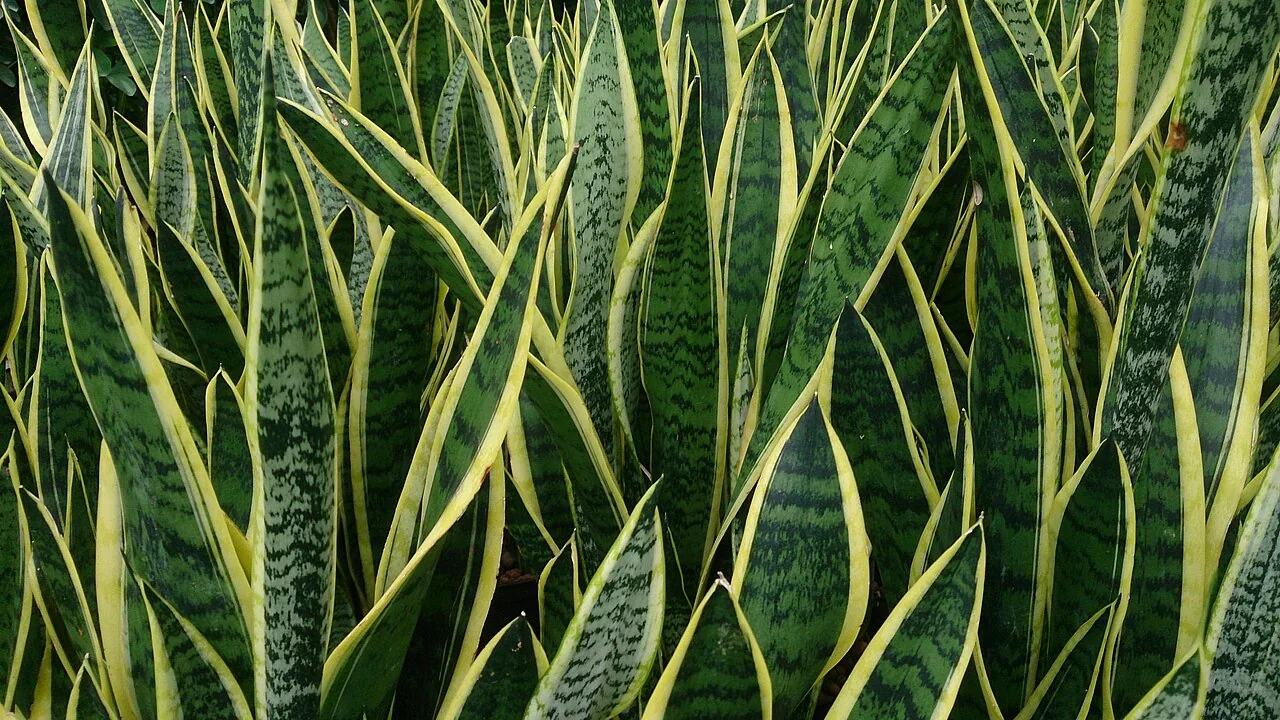
Use the current name and check the cultivar
Dracaena trifasciata is the accepted name used by NC State's Plant Toolbox; Sansevieria trifasciata remains a familiar synonym on older labels. This evergreen tropical perennial belongs to Asparagaceae. Upright forms have firm, strap-shaped leaves with transverse patterning, while named selections differ in leaf margins and stature. NC State Extension: Dracaena trifasciata
A nursery label saying only snake plant leaves a meaningful buying question unanswered. Decide whether you want a low rosette on a desk or a taller accent on the floor, then ask for the named selection and expected form. Do not infer the eventual height from the pot diameter. A young upright cultivar and a mature compact cultivar can occupy similarly sized sales pots while making very different room displays.
Use the whole plant for identification. A narrow crop of a striped leaf can hide whether the leaves are flat, cylindrical, tightly rosetted, or part of another related plant. Keep the species and cultivar information with your care notes so future division or propagation choices refer to the plant you actually own.
Think of a clump beneath a fan of leaves
Snake plant produces underground rhizomes connecting shoots. Iowa State recommends dividing those connections so each retained section includes roots and shoots. For cultivars with variegated margins, division preserves the pattern that leaf-section propagation may lose. Iowa State Extension: Caring for Sansevieria
This structure explains why a pot may seem full in one direction before it is full everywhere. New shoots can appear near the rim while the center still looks open. Before buying a larger pot, inspect the complete root ball and the direction of the rhizomes. A photograph from above helps you decide whether keeping one large clump or making several smaller plants better fits the available display.
Treat a newly emerging shoot as a planning signal, not a deadline. If the container still functions, you have time to prepare the next step. If the pot is becoming distorted or unstable, make the replacement decision around the actual underground mass. Trying to straighten the foliage without understanding the base can conceal rather than resolve the reason the plant no longer fits.
Choose growth conditions instead of a survival challenge
Illinois Extension advises letting snake plant soil dry completely between waterings and identifies overwatering as a common reason for failure. Its ability to tolerate different light levels should be read alongside that dry-root-zone requirement. Illinois Extension: Mother-in-law tongue
For placement, choose a spot you can inspect without shifting heavy furniture. A dark corner may be visually convenient, but it also makes subtle changes easy to miss. If the plant has stopped producing new shoots, review its light exposure and moisture history before concluding it needs a larger container or more fertilizer. Compare what happens at the current window with what happened at the previous location.
A tall leaf should have clearance from a walkway, window sash, and closing blind. Rubbing and bending can spoil the shape even when the growing conditions are reasonable. Measure the space with the window covering in use, and consider the direction in which a person approaches to water. A site that looks spacious from the sofa may be awkward when you must lift the pot with both hands.
Check the pot before interpreting a drooping leaf
A leaning leaf prompts several different questions. Is it still firm along its length? Is the entire clump tilting, or only one old leaf? Does the base feel secure in the mix? Is the pot wet, dry, or impossible to assess through a decorative topping? Answering these questions helps separate a support issue from a root-zone issue. Photograph the base before adding a tie that hides it.
NC State emphasizes well-drained soil and careful watering because excessive moisture can cause root rot. It also advises monitoring for mealybugs and spider mites. A symptom therefore calls for inspection, not a diagnosis made from the common name alone. NC State Extension: Dracaena trifasciata
If there is soft, deteriorating tissue at the base, prioritize understanding and correcting the wet conditions. A heavier cover pot can improve balance but cannot repair damaged roots. If the plant is sound and only the whole container is tipping, address the stand or outer container as a separate mechanical task. Keep these observations distinct in your notes so the correction matches what you found.
Select a container by root volume and handling
Take measurements of the existing root mass before ordering a pot. Include its depth and its widest horizontal dimension; a single rim measurement does not describe a tapered container. Check that the replacement leaves enough working room to position the clump without burying the bases of the leaves more deeply simply to make them stand straight. There should also be a practical way to remove excess water.
Decide where drainage will happen. A small specimen can go to a sink; a large clump may need a stable floor-level tray that can be emptied without tipping the plant. Test that movement using the current assembly. The cost of a beautiful heavy planter includes the effort required every time you inspect or clean beneath it. Avoid choosing mass alone as a substitute for a broad, stable base.
The rhizome and pot-moisture guide walks through keeping, dividing, or resizing a clump. For a cover pot, check nursery-pot and cachepot fit. You may discover that the growing pot is acceptable and only the outer arrangement needs to change.
Divide only into plants you can accommodate
Iowa State's general division guidance calls for healthy leaves, stems, and roots in each piece and notes that larger divisions recover faster than very small ones. The sensible unit is a viable plant section, not an arbitrary equal fraction of the original pot. Iowa State Extension: Division and offsets
Before separating anything, arrange the empty receiving pots and decide which pieces you intend to keep. A crowded parent does not require a room full of tiny divisions. Keeping fewer substantial clumps can simplify aftercare and make better gifts later. Label each piece with the cultivar while the source plant is still obvious; similar green shoots become difficult to distinguish once they are lined up in plain pots.
Use a clean cutting tool that can make a controlled cut through the connection you can actually see. Avoid pulling tall leaves as handles. After potting, choose a location where you can watch the divisions without repeatedly disturbing them to check progress. New growth and secure rooting are useful milestones; a promised date on a generic propagation chart is less useful than the condition of each section.
Keep the purchase list proportionate
A snake plant rarely needs an elaborate support system. If you need to fasten every leaf upright, first establish why the bases are not supporting them. Likewise, a moisture gadget is not a substitute for knowing whether you are checking the surface or the lower mix. Use an existing drainage tray and a reachable position before adding equipment to a problem you have not identified.
For growing medium, compare how the current mix behaves in your room with the requirements of the replacement. A very coarse gritty mix changes the watering task and may not suit someone who already struggles to keep a small pot supplied. A fine, moisture-retentive mix presents a different challenge in a dim, cool room. Ask what problem the purchase will solve and how you will recognize improvement.
At each review, record the pot condition, the firmness of the clump, and whether a new shoot is developing. These three observations give you a useful care history without turning a durable foliage plant into a daily intervention. Let the actual plant establish the rhythm of checks and changes.
Sources and scope
Research-based guidance informed by institutional references. Cultivar, region and growing conditions can change the advice. Product inclusion does not imply hands-on testing of every model.
.jpg)