Identify a rosette, its runners, and its pattern
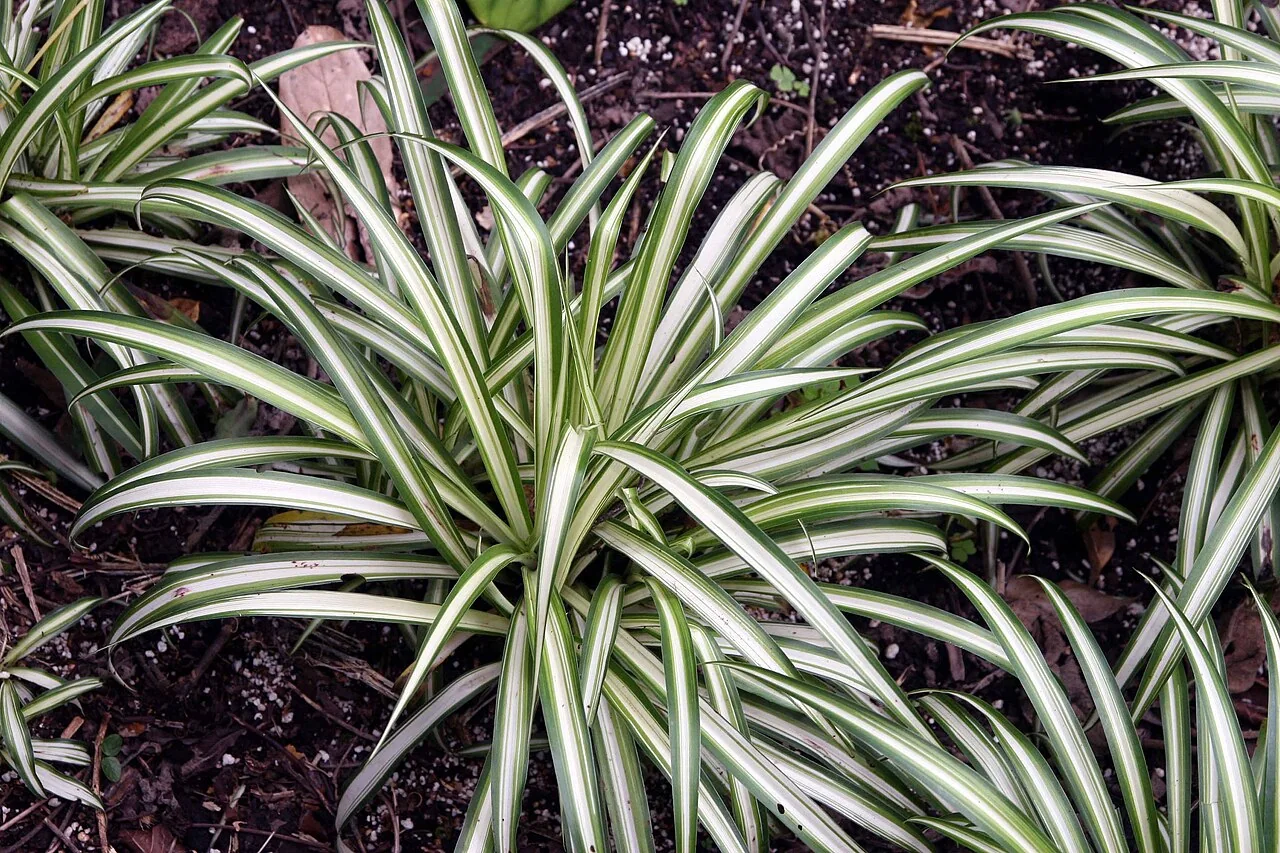
Chlorophytum comosum belongs to Asparagaceae. Leaves arise together in a rosette and are narrow, arching, and often striped lengthwise. Long stems bear small flowers and plantlets. NC State lists a typical foliage mound about one to one-and-a-half feet tall, with additional space needed for its cascading growth. NC State Extension: Chlorophytum comosum
Do not confuse a young plant with a permanently miniature one. At purchase, look beneath the foliage for emerging runners and examine how the leaves spread when they are no longer held by a shipping sleeve. A hanging basket photographed straight on can conceal how broad the plant becomes. Check both the center and the margins of the leaves when comparing named selections; the direction of the stripe is more informative than the word variegated.
A useful identity photograph includes the whole rosette, a representative leaf, and at least one plantlet stem when present. That combination prevents an attractive but ambiguous image of generic strap-shaped foliage from becoming the basis for a plant label or a care decision.
Allow room for a display that expands in two directions
Spider plant spreads its main leaves outward while its long stems carry small plants away from the central pot. Plan horizontal clearance as well as hanging space. A narrow shelf can hold the container yet still force most leaves against a wall. A ceiling hook can provide a graceful drop while making the root zone unreachable. Try the intended watering movement before committing to either arrangement.
If you prefer a compact display, decide how you will manage runners as they develop. You can keep selected plantlets for propagation without retaining every stem as part of the main plant. Choose a place where those small pots can sit securely while you work; a row balanced on the edge of a sink is a temporary working arrangement, not a finished growing site.
The useful question is how much plant you want to live with. Someone who enjoys growing starts for friends may welcome the cascading runners. Someone with one bright windowsill may prefer to keep a single rosette and remove unwanted expansion. Neither goal requires buying a bigger hanging basket immediately.
Let the roots inform the watering routine
Spider plant's fleshy roots store water, but the plant still benefits from slight drying between thorough waterings. Wisconsin Extension also notes that crowded roots can make repotting necessary. Water storage is a buffer against an occasional missed check, not a reason to keep the plant either permanently wet or repeatedly wilted. Wisconsin Extension: Spider plant
Learn the pot's behavior at its actual display height. Check the accessible mix, then lift the pot if practical. When watering, observe whether water enters the root ball or immediately runs around its edge. If a previously manageable plant needs much more frequent attention, inspect the roots before assuming the room has become drier. A growing mass of roots and a change in placement can occur at the same time.
Make the return to the display a separate step. Let excess water drain and empty the saucer or outer pot. With a hanging plant, look for trapped runoff before reconnecting the hanger. Use the watering access guide if the hardware or height is preventing an honest inspection of the growing medium.
Read brown tips as evidence with several possible causes
Iowa State identifies low humidity, inconsistent watering, fertilizer salt buildup, and water quality as potential contributors to brown leaf tips. Trimming improves appearance but does not correct the underlying cause. The symptom is therefore not a reliable instruction to buy one particular treatment. Iowa State Extension: Brown leaf tips and edges
First decide whether the damage is old and stable or still appearing. Photograph several leaves and note which are newest. Review the last few waterings and feeds, including fertilizer already present in the potting mix. If the plant is beside a vent, record that detail as well. These observations let you choose a plausible correction while keeping a reference against which to judge it.
Do not remove so much foliage that you lose the ability to compare old and new damage. A modest cosmetic trim can wait until after you have documented the pattern. When the plant continues to produce acceptable new leaves, a few historical brown ends need not trigger a complete repot. When the whole rosette is deteriorating, broaden the inspection beyond the tips.
Separate water-source questions from plantlet production
UF/IFAS describes spider plant as sensitive to fluoridated irrigation water and suggests rainwater or distilled water where this is a problem. Its current page also carries an explicit Florida invasiveness notice. Those are separate issues: indoor leaf quality concerns water used in the pot, while outdoor spread concerns what you plant or discard. UF/IFAS Gardening Solutions: Spider plant
If you suspect water quality, first identify the water you use. Tap water, softened water, bottled drinking water, and a filtered supply are not interchangeable descriptions. Find out what a filter actually removes rather than assuming the word filtered answers the plant's problem. For a comparison, keep the plant in the same location and document the source change. Changing the pot, feed, water, and window together makes the outcome harder to interpret.
The brown-tips and offsets guide separates correction of damage from propagation decisions. A small plantlet is not automatically a clean restart for a poorly understood problem, and a lack of plantlets does not prove that a healthy leafy plant needs more fertilizer.
Root the plantlets you have a use for
Choose the strongest, most manageable plantlets and prepare small draining pots before detaching a batch. Look for the base of each rosette and any root beginnings. Place labels with the pots now if you are growing more than one selection. A finished plant needs a place with adequate light, so count those future positions before filling every available container with starts.
Wisconsin describes the plant's small rosettes forming along the flowering stems and notes that excessive feeding can reduce plantlet production. The reproductive display should be understood as part of the plant's growth, not forced by repeated extra applications of fertilizer. Wisconsin Extension: Spider plant
Choose whether to keep a plantlet attached while it roots into a nearby pot or to handle it separately after detaching. The first arrangement requires a stable place for both containers and a runner that will not be tugged. The second is easier to move independently but needs close attention during establishment. Whichever route you choose, keep the rosette visible and avoid burying foliage simply to make the small plant stand upright.
Repot for function and buy for the unresolved task
Colorado State notes that spider plant's fleshy roots can crowd the container strongly enough to lift the plant or damage plastic pots. It recommends checking the plant's condition and watering response rather than relying on a single universal interval. Colorado State PlantTalk: Spider plant
Use that inspection to choose among a slightly larger container, division, or keeping the current setup. If the only problem is a decorative basket that hides the drainage pot, replace the outer arrangement first. If you want fewer plants, division need not become a propagation project you keep indefinitely. Plan where the surplus will go before you begin separating the clump.
An indoor temperature and humidity monitor can be useful when your actual question is whether a nearby vent or seasonal room change coincides with new damage. The catalog's Govee H5075 is a relevant option for observing conditions, but the measurement should guide a decision rather than become a target to chase. A larger pot, humidifier, or premium mix should each have a clear job before it reaches the shopping list.
Sources and scope
Research-based guidance informed by institutional references. Cultivar, region and growing conditions can change the advice. Product inclusion does not imply hands-on testing of every model.