Decide whether the problem is active
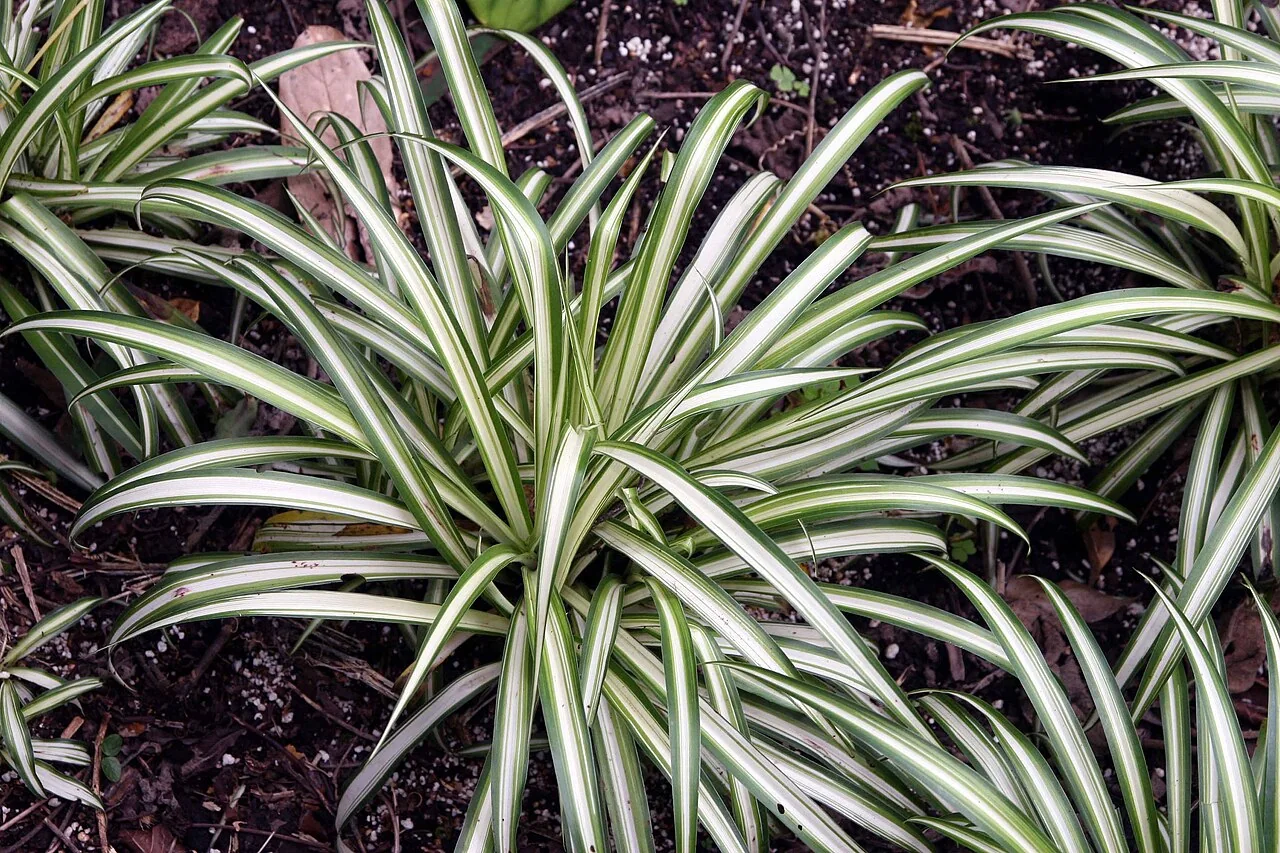
A spider plant can carry brown ends from an earlier episode while producing acceptable new foliage. Before changing care, choose several leaves you can recognize and photograph their tips. Include a view of the central rosette so you can compare the newest leaves later. Record whether the brown area is spreading along the leaf, appearing on new leaves, or simply remaining on older ones.
Iowa State distinguishes cosmetic trimming from correction of the cause: cutting away a brown tip can improve the appearance, but new damage may recur while the underlying condition remains. Iowa State Extension: Brown leaf tips and edges
This distinction changes the project. Stable historical damage may call for modest grooming and continued observation. Continuing tip burn calls for a review of conditions. A collapsing whole rosette calls for a broader plant inspection. Do not let the word brown erase those differences. Keeping a record before trimming preserves evidence that can prevent a series of unnecessary changes.
Reconstruct the moisture history at the plant's real location
Ask how the last few waterings happened. Was the basket brought to the sink and allowed to drain, or was a little water poured through the leaves while it remained overhead? Did a holiday create a long dry interval? Did a new cover pot trap runoff? These specific events are easier to evaluate than the general statement that the plant is watered regularly.
Colorado State notes that spider plant watering frequency changes with growth, environment, container, and mix; it advises checking the soil and watering thoroughly when needed. Its list of tip-browning contributors includes both excessive and inadequate watering, along with dry air and drafts. Colorado State PlantTalk: Spider plant
Check the pot where it actually lives. A nearby heat outlet or an awkward hanger may explain why this plant receives different care from a similar one elsewhere. If you cannot reach the mix to inspect it, change the display or access method first. You need a reliable way to observe the root zone before you can evaluate whether a revised routine is helping.
Review feed and water source as separate inputs
University of Maryland explains that dissolved fertilizer salts can accumulate in potting media and interfere with water uptake. Draining runoff away matters because leaving the pot in that water undermines the purpose of flushing it through. University of Maryland Extension: Watering indoor plants
Read the fertilizer label and check what the potting mix already contains. Write down the actual product and dilution used rather than estimating that you feed lightly. A recent repot into charged medium plus continued liquid feeding can be relevant information for a diagnostic conversation. Do not respond to pale or damaged tips by adding another product before reconstructing these inputs.
UF/IFAS identifies spider plant's sensitivity to fluoridated water and suggests an alternative such as distilled water where that source is causing trouble. UF/IFAS Gardening Solutions: Spider plant
Find out what your water supply or filter actually provides. The words bottled, filtered, and softened describe different processes and do not, by themselves, establish suitability. If you change the source, retain the same location and document later foliage so that the comparison answers a specific question.
Use the leaf pattern to direct a wider inspection
Tips are only part of the evidence. Look at the center of the plant, the bases of older leaves, and the roots if the entire plant is deteriorating. Note whether damage is concentrated on the side nearest a vent or window, distributed through all leaves, or restricted to the oldest outer foliage. A physical pattern can help you identify which conditions deserve attention first.
Iowa State's environmental-problem guidance emphasizes that several factors can act together and that wilting can result from either overly dry conditions or damaged roots in overly wet conditions. A drooping plant is therefore not sufficient evidence for another watering. Iowa State Extension: Environmental houseplant problems
Choose the most plausible, observable correction and define what would count as improvement. For example, you may want new leaves to remain sound after access to the pot is improved. Avoid comparing only the freshly trimmed silhouette, since trimming itself makes that photograph look better. If the evidence is unclear or deterioration continues, take a whole-plant and root-zone record to local extension rather than choosing a treatment from a tip photograph alone.
Keep plantlet production separate from a damage remedy
NC State notes that spider plant stolons and plantlets respond to light duration, including long uninterrupted nights, and cautions that excess fertilizer can reduce plantlet formation. The absence of dangling babies is not a dependable sign that the plant needs more food. NC State Extension: Chlorophytum comosum
Decide whether you actually want more plants. A healthy foliage mound can be the finished display. If you do want plantlets, start by observing whether runners are present and whether their small rosettes are developing. Keep the normal day and night environment in your notes, especially if the plant sits beneath a room light used late into the night. Do not introduce a complicated lighting schedule merely to meet an arbitrary production target.
A plantlet is also not an automatic reset for a parent plant with an unexplained problem. Inspect the parent and prospective starts before distributing them. If the issue appears environmental, correct that environment before placing all the offspring in the same conditions. If pests or disease are suspected, resolve the concern before multiplying and sharing material.
Choose attached rooting or a separate small pot
An attached plantlet can rest in a nearby pot while remaining connected to the parent. That arrangement is convenient only when both containers can sit securely and the runner will not be pulled each time you move one. Decide where watering will happen before setting up a chain of pots. A connected display that must be carried down from a hook for every check can be less practical than a separate small start.
A detached plantlet is easier to label and move independently. Select a rosette whose base you can identify and position it so that base contacts the rooting medium while the leaves remain visible. Avoid pushing foliage deep into the mix to compensate for an unstable container. Prepare only the number of starts you can inspect and eventually place in adequate light.
Iowa State's low-maintenance houseplant guide identifies spider plant plantlets as a straightforward source of additional plants. The practical choice is which healthy starts fit your space and care routine, rather than whether every available one must be saved. Iowa State Extension: Low-maintenance houseplants
Inspect crowded roots before choosing a much larger basket
If the parent dries unusually quickly or is being pushed upward, inspect the root ball. Compare the amount of root material with the usable space inside the container. A pot can be crowded even when the canopy still looks compact, and an attractive outer basket can conceal a damaged nursery pot. Decide whether you want to keep the whole plant together or reduce it by division.
Repotting and plantlet propagation are different tasks. Repotting addresses the parent root zone; rooting runners creates additional plants. Doing both together can be reasonable, but prepare distinct receiving pots and labels so you can follow each group's progress. A tray full of unidentified sections makes it harder to know which care adjustment belongs to which plant.
Use houseplant repotting signs for the broader decision and hanging-basket watering access for the display hardware. Changing the container will be most useful when you can explain the observed limitation: root crowding, failing drainage, poor stability, or inaccessible watering.
Make a restrained purchase and review the next foliage
A temperature and humidity monitor is useful when the missing information is what happens beside the plant during the day and night. The catalog's Govee H5075 is one option. Place it where it can represent the plant's environment, then connect observations to actual events such as heating or ventilation. A reading is evidence to interpret alongside watering and leaf condition, not an instruction to buy a humidifier immediately.
Keep an existing pair of clean scissors for cosmetic trimming if it gives a controlled cut. A premium pruner, large propagation station, or oversized basket is unnecessary for many tip-browning investigations. Spend first on the item that makes a confirmed problem easier to correct, such as a draining replacement pot when the current one has failed.
Return to the original photographs after enough new foliage develops to make a comparison. Record what changed and whether the chosen action helped. The spider plant profile provides the ongoing care reference. Stop adding interventions when the new growth is acceptable, even if old leaves retain the marks of earlier conditions.
Sources & further reading
We favor university extension guidance and original product documentation. Linked sources support the specific facts cited; they do not endorse Garden Gear Atlas.
- Iowa State Extension: Brown leaf tips and edges
- Colorado State PlantTalk: Spider plant
- University of Maryland Extension: Watering indoor plants
- UF/IFAS Gardening Solutions: Spider plant
- Iowa State Extension: Environmental houseplant problems
- NC State Extension: Chlorophytum comosum
- Iowa State Extension: Low-maintenance houseplants