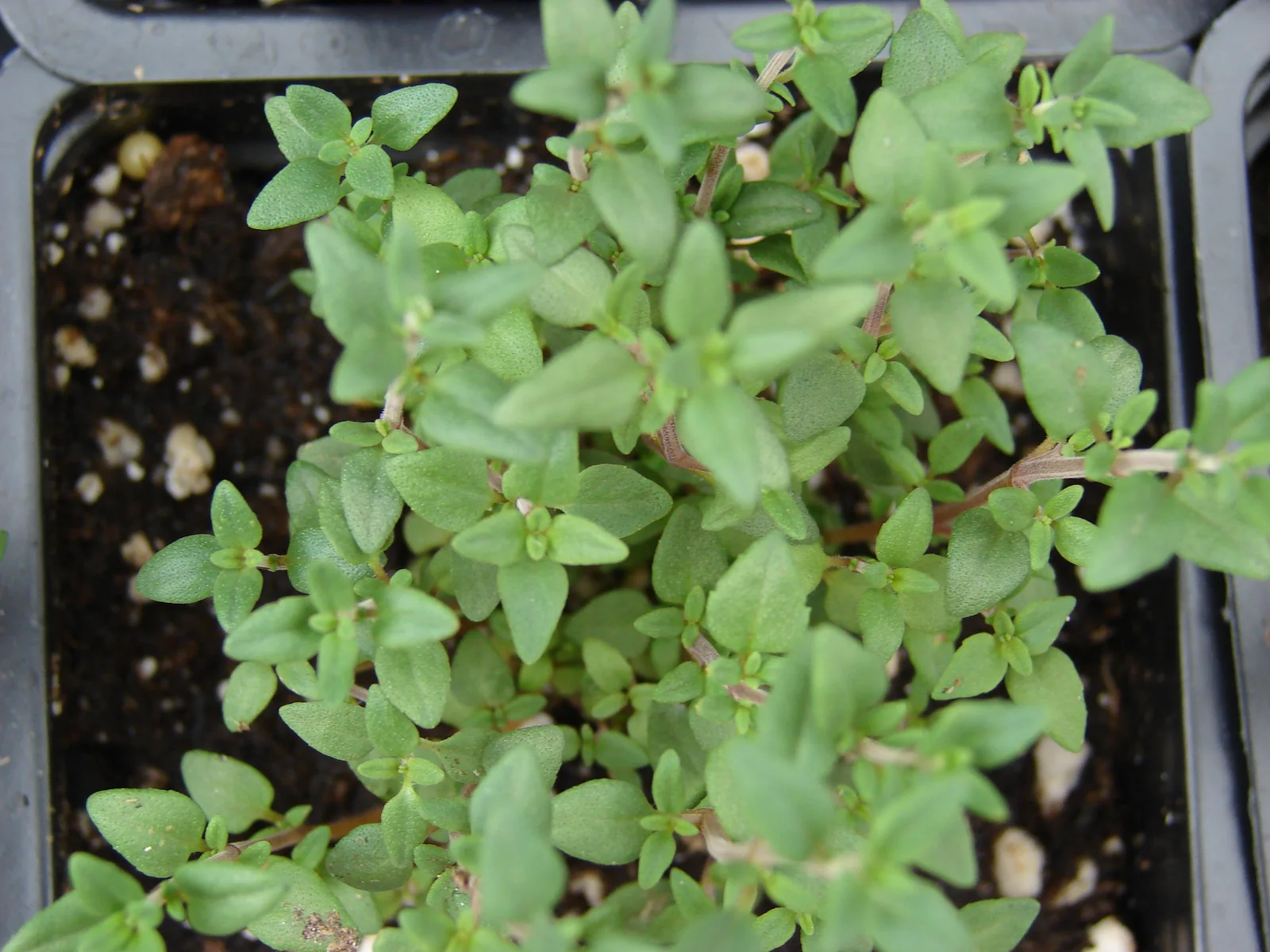
Choose culinary common thyme, then its growth habit
Common thyme is Thymus vulgaris, a small woody perennial that makes a low mound of aromatic leaves. It belongs to the mint family but does not behave like a vigorous patch of spearmint. Its compact form fits an herb bed, rock garden or container. Flowers provide food for visiting pollinators, while the leaves supply the familiar culinary seasoning. NC State common thyme profile.
Thyme labels deserve a close read. Creeping and woolly types are often chosen chiefly as groundcovers; lemon thyme offers a distinct fragrance. Those plants do not necessarily provide the same upright harvestable shoots or winter performance as common thyme. Decide whether the main purpose is cooking, a flower display or a low carpet, and choose accordingly. For a kitchen crop, a manageable leafy mound near an accessible edge is usually more useful than a plant squeezed between paving stones that must withstand frequent footsteps.
Prioritize a root zone that dries after rain
Thyme needs a warm sunny position and freely draining soil. The RHS suggests a container or raised bed where ground remains heavy or damp, especially in winter. Plant at the previous growing depth rather than burying the woody base. Keep neighboring growth from shading and smothering the small canopy, and clear fallen leaves that settle over it. RHS thyme growing guide.
A pot can make moisture management easier, but only if water actually leaves it. Use suitable potting mix, unobstructed drainage holes and a position that does not collect runoff. Check moisture during establishment and hot, dry weather; drought tolerance belongs to a well-rooted plant, not to a newly transplanted plug. Allow a useful drying period instead of maintaining the wet conditions preferred by many leafy crops. The thyme and oregano comparison provides a deeper look at choosing a site and managing these compact culinary herbs.
Establish plants with room for future renewal
Common thyme can be started from seed, cuttings or divisions. Maryland Extension recommends renewing plants every few years and gives spacing of 8–12 inches as a starting point. Check the selected cultivar's spread as well: the purpose of spacing is to preserve light and access around the eventual mound, not to create a permanently fixed grid regardless of growth. A healthy nursery plant is a useful route when you want to begin with an established root ball. Maryland thyme profile.
Plan access for harvesting and later replacement before filling every gap around a young plant. A thyme crowded against a large perennial can gradually lose the conditions that made the position suitable. Leave its crown visible after planting so you can assess growth and drainage. When renewing the crop, work with healthy material and an appropriate planting environment. Putting a replacement into the same persistently wet depression without fixing the site is unlikely to change the outcome simply because the new foliage initially looks better.
Harvest leafy shoots and preserve the woody framework
Thyme stems can be harvested through the growing season, with a useful larger harvest just before flowering. Illinois Extension describes drying small bunches in a warm, dark, well-ventilated location and stripping the leaves after they are dry. The flavor holds up well in slow-cooked dishes, so dried thyme can be a practical product from the garden as well as a way to handle surplus. Illinois thyme guidance.
Use young leafy growth for regular kitchen cuts and retain enough foliage for the plant to continue. Harvesting is easiest when the plant is maintained as a compact mound rather than allowed to become a tangle of long bare stems. If you want flowers, take selected shoots and leave others to bloom. An old plant with a sparse woody center needs a renewal decision, not simply more frequent cutting. Keep clean harvested stems separate from yellow or damaged material so the preserved crop starts with sound leaves.
Set indoor expectations by light and growth
A container of thyme can move into a sunny indoor setting, but a window that seems bright to a person may supply too little light for steady replacement growth. Iowa State identifies light as the main limit for indoor herbs and recommends supplemental lighting where necessary. It also recommends growing different herbs in separate containers so their growing conditions can be managed individually. Iowa State indoor herb guide.
Thyme benefits from that separation when nearby herbs need more constant moisture. Choose a pot appropriate to the root ball rather than surrounding a small plant with a large volume of wet mix. Adjust harvest to the new shoots actually being produced, and reduce picking if growth becomes thin or slow. The grow-light selection guide covers the equipment decision, while the indoor culinary herb guide helps distinguish a few useful sprigs from an expectation of a large winter crop. The plant's outdoor perennial status does not guarantee a productive indoor season.
Separate woody aging from root trouble or pests
Older thyme can become open and woody in the middle even without a pest. Iowa State distinguishes this aging pattern from root disease associated with wet soil and notes that spider mites or aphids can occasionally occur. Look at where the decline starts and what changed: long bare stems, a persistently wet root zone and fine leaf damage in hot dry weather do not point to the same response. Iowa State thyme care and problems.
Review drainage before trying to revive a yellowing plant with extra water. If the plant is merely aging but has healthy shoots, light maintenance and replacement from healthy material may be appropriate. If foliage is stippled or insects are visible, inspect with a hand lens and use the spider-mite differential before treating. Winter damage also depends on cultivar and site; survival in a previous mild year is not proof of reliable hardiness. Make the next planting decision from the actual cause, rather than assuming all thyme decline is normal age.
Sources and scope
Research-based guidance informed by institutional references. Cultivar, region and growing conditions can change the advice. Product inclusion does not imply hands-on testing of every model.
.jpg)