
Describe the job in one sentence
Before comparing products, complete this sentence: “I mostly use a hose to ___, and the thing that bothers me most is ___.” Watering containers while carrying a hose upstairs is a handling problem. Feeding a distant sprinkler is a flow-and-distance problem. Watering a planted strip while doing other chores may be a distribution problem better solved by drip or a soaker hose.
Separate regular jobs from rare ones. Buying a very long hose for one annual task can make every ordinary watering session more cumbersome. Two deliberately chosen lengths may suit you better, provided their connections and combined length remain appropriate for the job.
This is a decision framework, not a ranking based on tests. None of the products discussed here was personally tested for this guide.
Measure the route you can actually use
Measure from the faucet around obstacles to the farthest place you regularly water. Do not measure a straight line through a hedge, across a vegetable bed or over furniture. Add enough slack for movement so the hose does not pull hard against the faucet or nozzle.
RainPoint's hose-selection guidance similarly starts with the faucet-to-farthest-point distance and allows for corners and obstacles. Use that method rather than assuming that all small gardens need the same length. RainPoint length guidance.
Consider where the hose will live between uses. A hose that technically reaches but has no sensible storage position is an unfinished purchase. Check your reel's capacity for the actual diameter and length, including any leader hose and fittings.
Understand inside diameter before comparing flow
The hose's inside diameter describes the water passage, not the thread on the ends. Wider hose generally suits higher-flow tasks; narrower hose can be easier to handle for low-volume work. Flexon places 1/2-inch hoses toward light watering, 5/8-inch toward mixed household jobs and 3/4-inch toward more demanding flow applications. Treat these as starting categories, not guaranteed gallons per minute. Flexon diameter guidance.
Do not expect a narrow hose to fix an inadequate supply. Length, fittings, elevation and the attached tool all affect results. If a sprinkler needs a particular flow and pressure, check the complete installation. A pressure-washer inlet also has manufacturer requirements: the ordinary garden hose is only the supply hose, never a substitute for the machine's high-pressure outlet hose.
Match handling to how often you move it
For a cluster of containers, consider a slim product such as Water Right's 7/16-inch Everyday 400 Series. The manufacturer lists about three pounds for 50 feet, which is a useful dry-weight comparison. Its smaller passage is a tradeoff to consider when moving from gentle hand-watering to a demanding sprinkler. Water Right Everyday hose.
For mixed garden work, Flexzilla offers a 5/8-inch option using its Flexible Hybrid Polymer construction. Its standard and SwivelGrip fittings are different selections; check which version a listing actually sells. “Flexible” and “kink-resistant” are manufacturer descriptions, not a promise that careless routing cannot interrupt flow. Flexzilla product specifications.
Think beyond empty weight. You will move some water as well as the hose, and dragging across a rough path feels different from carrying a dry coil. A useful personal check is whether you can comfortably lift, turn and store the selected length without pulling against plants or fittings.
Read pressure ratings correctly
A maximum working-pressure rating describes the pressure a hose is designed to tolerate under stated conditions; it is not pressure the hose generates. Burst pressure is not a normal operating setting. Always use the working limit and temperature conditions, and remember that a connected timer, nozzle or adapter may have a lower limit.
For example, Flexzilla specifies 150 psi maximum working pressure at 70°F. That number does not guarantee a stronger spray than another hose on the same faucet. It also does not make an ordinary hose suitable for every permanent plumbing use. Flexzilla working-pressure specification.
Before leaving a hose connected to an automatic arrangement, check whether the maker permits continuous pressure. ELEY explicitly says its polyurethane garden hose is not intended for continuous-pressure or suction applications. A high pressure rating alone does not answer that question. ELEY use limitations.
Give the fittings a separate inspection
Look for clearly specified connection threads, a serviceable seal and enough grip for comfortable attachment. Do not assume that two fittings described with the same nominal size belong to the same thread system. Avoid forcing parts together when they begin to bind.
Also check whether replacement seals are standard or proprietary. A small leak is easier to deal with when the correct washer can be identified before purchase. A shutoff at the nozzle is convenient, but it does not remove the need to turn off and depressurize equipment as the maker directs.
Keep accessories deliberate: a quick connector, splitter and swivel can each be useful, but every extra part adds another fit, seal and flow restriction to evaluate. Compare the whole working setup rather than the hose body in isolation.
Know when you want a soaker instead
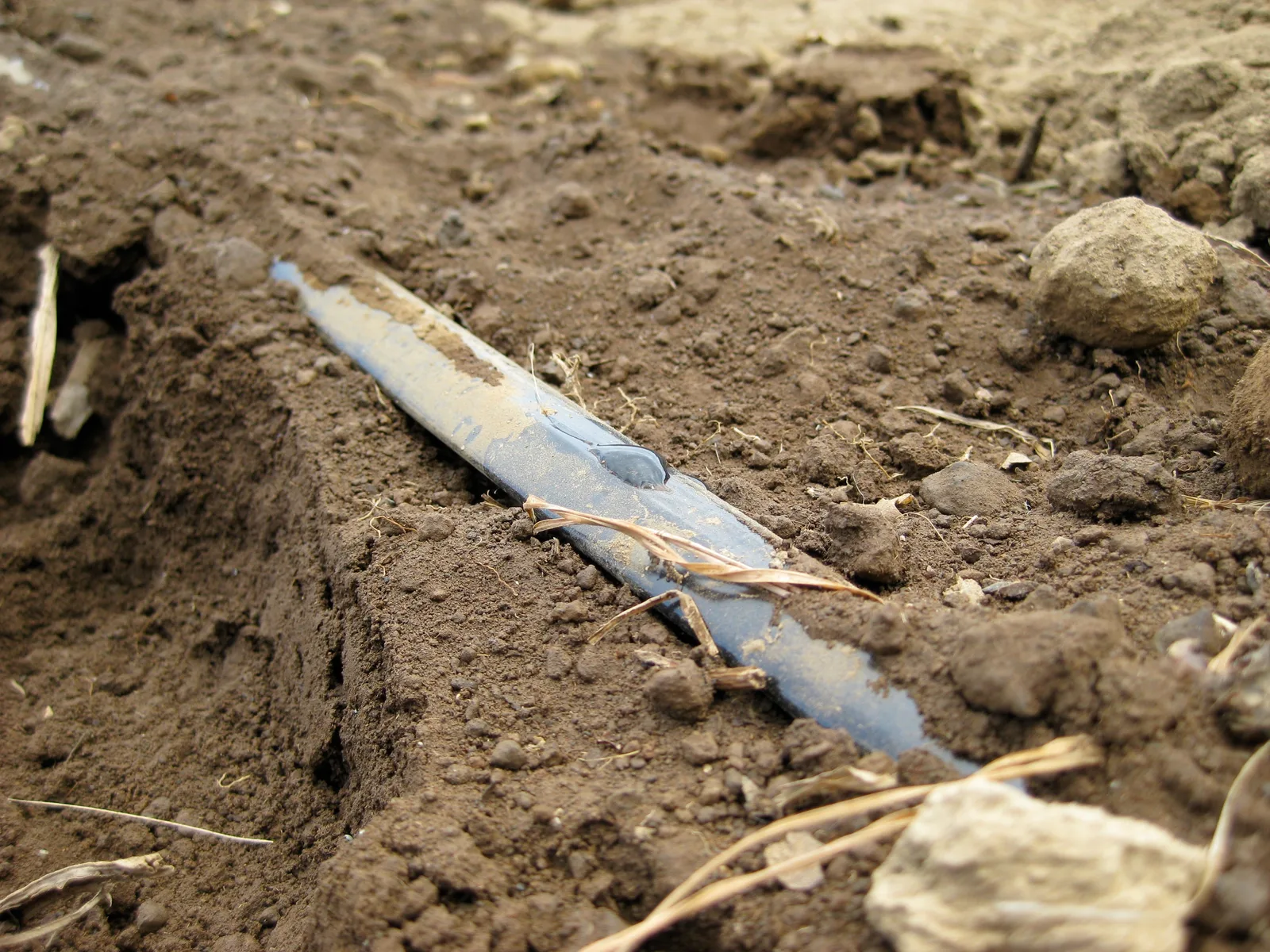
A soaker hose releases water along a planted area rather than transporting all of it to a spray nozzle. Water Right's 700 Series, for example, is sold in both finished and unfinished versions; choose the version with the fittings and end cap you need. Water Right soaker hose.
The important test is the soil's wetting pattern along the run. Positioning a hose near plants does not establish that every root zone receives the same amount. For measured delivery to separated plants or repeatable rows, compare a proper drip-emitter system as well.
Buy for an easy routine
Plan to inspect connections, drain the hose when appropriate, and store it without tight bends or trip hazards. Cold-weather flexibility is not permission to leave water inside to freeze. Direct water near the soil when hand-watering; Minnesota Extension recommends early watering in hot weather and applying water close to the soil surface. UMN hot-weather watering.
Your final checklist is short: measured reach, suitable flow, manageable handling, correct fittings and a realistic storage spot. A hose that fits those five things is more useful than one that simply carries the loudest durability claim.
Sources & further reading
We favor university extension guidance and original product documentation. Linked sources support the specific facts cited; they do not endorse Garden Gear Atlas.
- RainPoint length guidance
- Flexon diameter guidance
- Water Right Everyday hose
- Flexzilla product specifications
- ELEY use limitations
- Water Right soaker hose
- UMN hot-weather watering