Choose what to grow
Compare plants.
Put the light, root space and seasonal needs beside one another before choosing a place in your garden or home.
1 of 3 plants selected — add another to compare.
| Care decision | 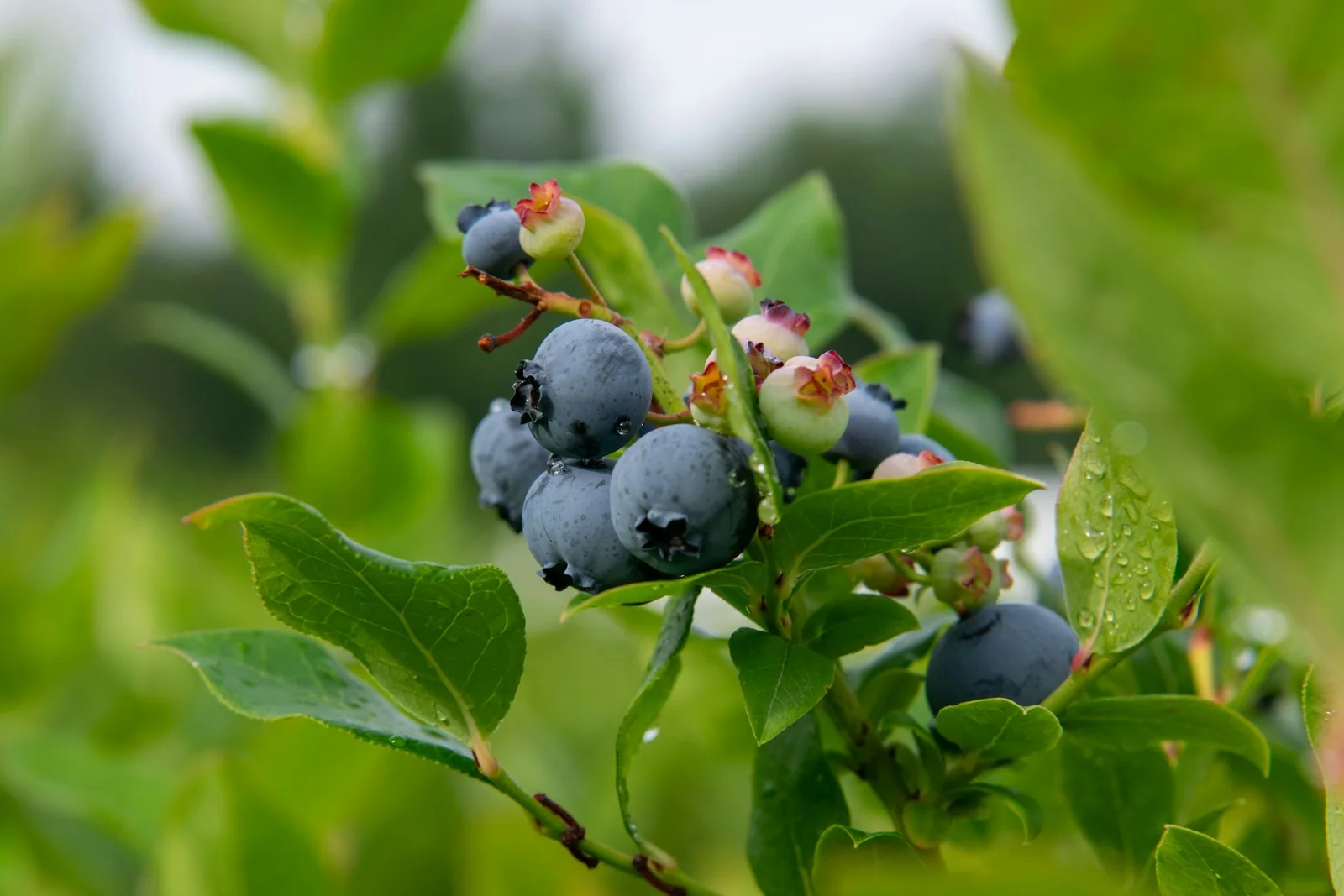 |
|---|---|
| Light | Full sun for reliable flowering and fruit production. |
| Water | Keep the shallow root zone moist and aerated; check beneath mulch and adjust irrigation to rain, heat, soil and plant size. |
| Soil & growing mix | Acidic, organic, well-drained soil; a pH of about 4.5–5.5 is a common highbush target, refined by local soil-test advice. |
| Mature size | Standard highbush shrubs commonly reach about 5–8 feet tall; cultivar habit and pruning change the space needed. |
| Growing season | Perennial shrub; spring flowers and a cultivar-dependent summer harvest. Low-chill southern hybrids can flower considerably earlier. |
| Winter & climate | Northern and southern highbush differ in winter hardiness and chilling requirements. Match the named cultivar to local winter lows and bloom-frost risk. |
| Container fit | Container choice matters. Check mature size and root-space guidance in the reference. |
| Place & variety | This profile includes northern highbush and southern highbush hybrids. Rabbiteye is a separate blueberry type, while cold-region half-high hybrids also require their own cultivar guidance; none is interchangeable solely because the fruit looks similar. |
| Equipment to consider | |
| Evidence & next steps |
|
These facts help compare choices. They do not establish that plants can share a pot, watering circuit or outdoor site. Check the full reference and local suitability before planting.
Open this comparison as a bookmarkable page
Give your choice enough room.
Use inside bed or pot measurements to plan mix quantities and working space.