Choose a plant and a realistic number of copies
Start by identifying the parent to species and, where possible, cultivar. A successful method for a trailing houseplant does not establish a method for a woody shrub with similar-looking leaves. Check the plant's propagation instructions and any restrictions before taking material. If the label identifies a protected cultivar, settle the propagation permission first; the method-choice guide explains the US plant-patent issue.
Decide where the new plants will live after they root. Four small cuttings may eventually require four pots, additional light and a suitable winter location. Sketch that final arrangement before filling an entire tray. The goal is a manageable group of useful plants, rather than a large number of stems for which you have no growing space.
Iowa State's houseplant guide identifies pothos, coleus and Tradescantia among approachable propagation subjects, and shows that methods differ by species. It lists stem cuttings for pothos and coleus, but division for plants such as peace lily and cast iron plant. Iowa State University Extension: Propagating Houseplants
Read the stem's stage instead of copying a month
“Herbaceous” describes cutting material from nonwoody plants. “Softwood” describes tender new growth on a woody plant as it begins to mature. NC State treats these separately from partially mature semi-hardwood and dormant hardwood. Its examples of herbaceous subjects include coleus, chrysanthemum and dahlia; suitable softwood can snap when bent and carries leaves at different stages of expansion. NC State Extension Gardener Handbook: Propagation
That distinction changes what you collect. A lush tip on a houseplant remains herbaceous material; it does not become a woody-shrub cutting because both stems feel soft. Conversely, an old brown branch left after pruning is not interchangeable with the new growth described in a softwood method. Write the intended stage alongside the species before going outside with pruners.
NC State's table lists softwood for lilac and deciduous azaleas, but semi-hardwood for evergreen azaleas. Even plants sharing the common name “azalea” require a closer match. NC State Extension Gardener Handbook: Propagation
Use local seasonal guidance as a prompt to inspect the plant. For a coleus batch, collect suitable nonwoody stems; for a documented lilac softwood method, wait for the appropriate new growth. If the material is unavailable, postpone or choose a documented alternative. Rooting hormone cannot substitute for that initial match.
Set up the rooting place before cutting
Prepare clean containers with drainage, labels, a place for the cover if needed, and the rooting medium before removing stems. Position the setup where you can inspect it without moving several other plants. Leave access for watering and for lifting the cover. A beautiful sealed container on a high shelf becomes inconvenient when you need to remove one deteriorating leaf promptly.
Virginia Cooperative Extension explains the balance in rooting media: the cut surface needs moisture while developing roots also need oxygen. It recommends low fertility and describes both moisture-retentive blends and coarse perlite for some cactus-type cuttings. It also cautions that water-rooted plants can respond differently when transferred to a solid medium. Virginia Cooperative Extension: Propagation by Cuttings, Layering and Division
For a first leafy-cutting batch, use a commercial propagation medium appropriate to the species and moisten it evenly. Keep its identity consistent through the batch. If you choose to root an easy species in water, call that a separate method and plan its move to potting mix. Comparing it with a soil-rooted batch is useful only if you record the difference.
Prepare each cutting with its nodes and leaves in mind
NC State explains that a stem's nodes and buds matter, and that most plants cannot produce an entire new plant from an isolated leaf. In its herbaceous method, lower leaves are removed before the stem enters the medium. A leaf with a petiole but no required stem node may remain attractive without producing the new shoot you wanted. NC State Extension Gardener Handbook: Propagation
Lay out the first stem and identify the base, growing tip, nodes and leaves before cutting it into pieces. Preserve its orientation. Make only as many pieces as you can label and insert immediately. Avoid automatically maximizing the number of pieces from a short stem; an easily handled cutting is more useful to a beginner than several tiny fragments with uncertain identity.
RHS guidance favors nonflowering material collected early in the day and protected from wilting. For typical nodal softwood cuttings, it describes trimming below a node, removing lower leaves and making a planting hole before insertion. Royal Horticultural Society: Softwood Cuttings
Set the prepared stem firmly enough to stay upright without compacting the entire pot. Keep retained leaves above the surface. If hormone is prescribed, follow that product's directions for the plant and cutting type rather than applying an improvised stronger dose.
Manage leaf water loss separately from wet medium
A clear cover can reduce water loss from a suitable leafy cutting, but it also changes the small space around it. Check the leaves, rooting medium and temperature as separate observations. A wilted cutting in already wet medium is not a sound reason to add another soaking. Ask whether the cutting overheated, dried before insertion, or lacks the conditions recommended for that species.
Virginia Extension recommends bright light without direct sun and some ventilation for a simple covered home propagator. The purpose is to support the cutting while roots form without creating persistently stagnant, overly wet conditions. Virginia Cooperative Extension: Propagation by Cuttings, Layering and Division
Keep the cover off the foliage and make it removable without pulling the stems. Observe the setup during the warmest part of the day, especially near glass. Do not assume a location that felt comfortable in the morning will behave the same way in afternoon sunshine. If a species has a succulent-cutting protocol, follow that instead of placing it automatically inside the same humid enclosure as a tender leafy shrub cutting.
Check progress without repeatedly pulling plants apart
Label each batch with the plant, date, cutting stage and medium. Check whether stems remain firm and leaves retain a reasonable appearance. Look for roots at the container edge or drainage holes where possible. Repeatedly extracting every cutting to inspect its base makes the observation itself a source of disturbance. Choose one accessible sample if closer inspection is necessary.
RHS advises removing deteriorating material and gradually increasing ventilation once softwood cuttings root. Its rooting time is a guide, not a deadline that applies to every species or household setup. Royal Horticultural Society: Softwood Cuttings
Separate failure patterns in your notes. If only one stem declines, review its initial condition and preparation. If the whole batch wilts together, review the shared environment. If stems decay where they enter persistently wet medium, inspect drainage and watering. These observations narrow the next trial without pretending that every failed cutting has the same disease or needs the same treatment.
Do not count a fresh leaf alone as a fully established root system. Wait for meaningful rooting evidence before giving the plant a larger pot or an exposed outdoor position.
Plan the transition into an ordinary growing plant
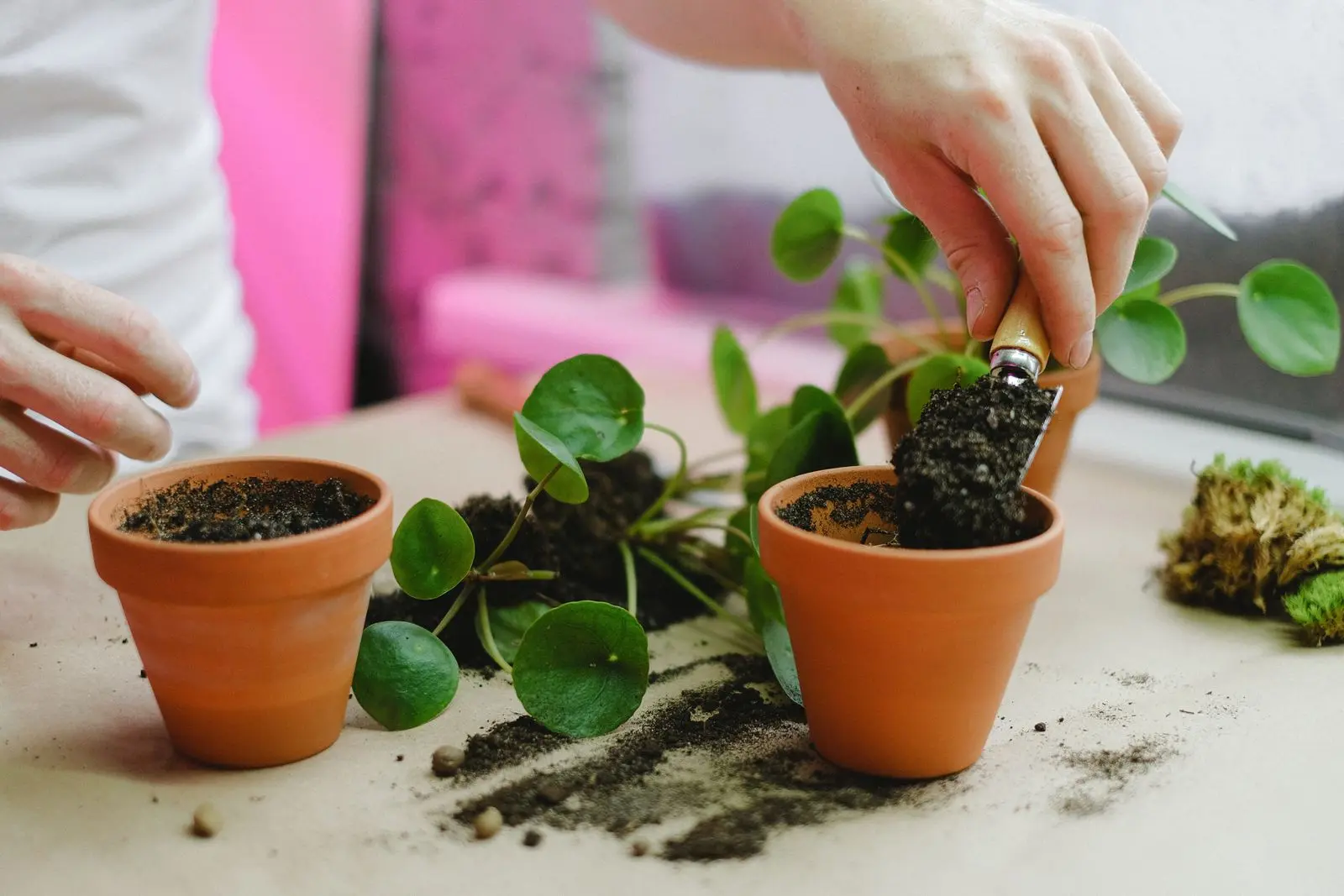
Set aside suitable small pots before the batch is ready. Pot each cutting when its roots can support the move, using the growing medium and light appropriate to the species. The destination is a normal plant-care routine, so write that routine next to the propagation notes. A plant that rooted in a sheltered enclosure still has to adapt to its next location.
Increase exposure gradually, observing whether the leaves remain steady as the cover stays open longer. After potting, make sure watering reaches the new root zone rather than only the surrounding mix. Avoid rushing immediately from propagation to a large decorative container, particularly when the root system is still easy to inspect in a small nursery pot.
Count established plants after this transition, not simply stems showing initial roots. That is the useful measure for the next batch. If six cuttings produced three good plants and you need only two, the method may already meet your needs. Repeat the successful combination before adding equipment or pursuing a more difficult species. Good records make modest success repeatable and make genuine problems easier to investigate.
Sources & further reading
We favor university extension guidance and original product documentation. Linked sources support the specific facts cited; they do not endorse Garden Gear Atlas.
- NC State Extension Gardener Handbook: Propagation
- Virginia Cooperative Extension: Propagation by Cuttings, Layering and Division
- Royal Horticultural Society: Softwood Cuttings
- Iowa State University Extension: Propagating Houseplants