Compare a specific tomato with a specific pepper
Start with the fruit you want and the space you can give one plant for its full crop. Small fruit does not supply the missing information about plant height or spread. Request the mature habit, recommended production environment, and support guidance for the exact cultivar. Keep the tomato profile and sweet pepper profile beside that shortlist for the underlying plant differences.
Alabama Extension describes commercial greenhouse tomatoes as commonly indeterminate plants trained vertically, with continued growth after fruit set. That production model is a substantial space commitment. Alabama Extension: Greenhouse Tomato Production Treat it as one model to evaluate, rather than the default for every tomato sold for a home hydroponic kit.
Create two candidate records with the same questions: final canopy, intended fruit stage, training method, occupied time, and source of growing instructions. If a seller only supplies a photograph and planting-hole count, leave those fields unresolved. An incomplete candidate is a reason to keep researching the plant, not to begin modifying a working greens system.
Measure the usable volume above and beside the roots
Measure from the actual planting surface to the highest light position allowed by its mounting arrangement. Subtract the fixture's required plant clearance. Then map the room needed around the eventual canopy, including a path to the reservoir and access to both sides for inspection. A tall open corner can still be unsuitable if mature branches block the only service route.
Use cardboard markers outside the wet area to visualize the proposed canopy. Mark where a door opens, where a person will stand, and where fruit can be removed without leaning over the whole plant. This inexpensive rehearsal exposes conflicts before you buy a larger reservoir or a brighter light.
For peppers, resist solving a crowded space by removing large amounts of foliage. Minnesota Extension notes that exposed pepper fruits can suffer sunscald when protective leaf cover is inadequate. University of Minnesota: Growing peppers Choose a plant and layout that allow routine access with a useful canopy retained. A plant needing constant emergency reshaping is not a good fit for the available space.
Design the support independently of the planting cup
Make a support sketch before choosing the holder. Show where the load travels from stems and branches to a structure intended to carry it. Include access for future adjustments and the path for removing the plant when its crop ends. A small cup can hold a transplant in place without being the complete support plan for a fruiting plant.
Alabama Extension warns against loading a greenhouse frame with tomato trellises unless the structure was designed for that weight. Its tomato systems combine root support with deliberate overhead or freestanding support. Alabama Extension: Greenhouse Tomato Production
At home, ask the same load question of shelf frames, light hangers, reservoir lids, and decorative plant stands. Do not assume a fixture support is also a fruiting-crop support. If the proposed system relies on overhead training, establish a suitable structure before planting. For a smaller crop, evaluate the cultivar's stated support needs and the exact holder assembly. A garden cage intended to be driven into soil is not automatically secured by resting it beside a reservoir.
Choose the root system you can service through fruiting
List the jobs that must remain possible with a mature plant attached to its support: inspect the roots or substrate, see delivery points, sample solution, remove spent water, and reach returns or drains. Compare candidate systems using that list. A unit that opens easily with lettuce plugs may become difficult to move once stems are tied into a frame.
Substrate-based systems are common in greenhouse tomato production, including buckets, bags, and slabs managed with irrigation and drainage. These arrangements do not all use the same water-delivery routine. Alabama Extension: Greenhouse Tomato Production Ask a supplier for the exact method, the required medium, and the crop instructions before treating a bucket as an upgrade.
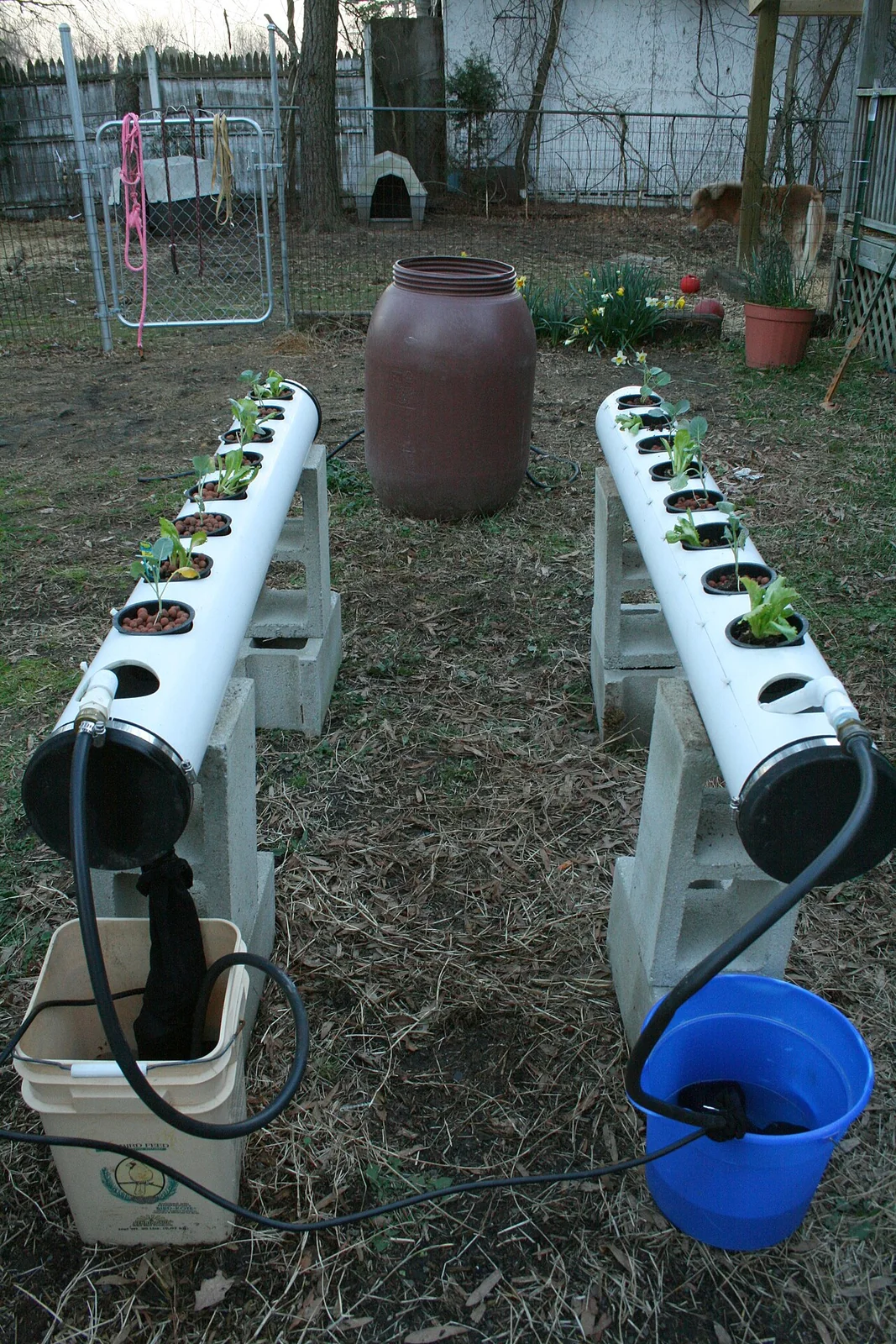
For a recirculating-channel proposal, inspect the channel dimensions and removal route against the crop's expected occupation. Read the root-space planning guide and system comparison. Choose a design documented for the intended fruiting crop; do not compensate for an uncertain fit by planning frequent root trimming or a larger nutrient dose.
Give fruiting crops their own nutrition decision
Minnesota Extension advises keeping lettuce and tomatoes in separate containers because their nutrient requirements differ. University of Minnesota: Small-scale hydroponics This is a useful starting choice for an upgrade: retain the greens unit and evaluate a separate fruiting unit. You can then service and compare each crop without forcing its instructions onto the other.
Build a crop-program card that names the water source, nutrient products, growth stage, system method, and measurement units. Identify which instructions cover establishment and which cover flowering or fruiting. If the program changes with crop stage, make the trigger explicit before that stage arrives. A bottle called bloom is not itself an operating plan.
Use the nutrient-label guide to check what each product contributes and what other components its program requires. Keep the existing meter routine if it fits the required measurements. The pH and EC shortlist supports those checks, but readings cannot identify individual nutrient shortages or establish that all equipment and products form a compatible system.
Add flower and fruit observations to the routine
Lettuce can provide a harvest before flowering becomes desirable. A tomato or pepper project needs a separate record of flowering, visible fruit set, and fruit development. Photograph selected flower clusters or branches at consistent intervals so you can distinguish no flowers, flowers that drop, and small fruit that stops developing. Those are different observations.
Tomato flowers can self-pollinate, but greenhouse production still includes pollination management; Alabama describes mechanical methods that move the flowers to release pollen. Temperature and humidity also influence success. Alabama Extension: Greenhouse Tomato Production Obtain a method appropriate to the size and environment of your planting before assuming an enclosed room provides everything the flower needs.
For pepper setbacks, use the flowers-but-no-fruit guide to organize observations. Record environmental changes and water-delivery interruptions alongside flower loss. Avoid treating every missing fruit as a request for stronger fertilizer. The next step should follow the evidence you can document, with local extension help for persistent or unclear problems.
Budget for training and the fruit stage you actually want
Tomato and sweet-pepper training are different jobs. Oklahoma State presents separate pruning approaches for indeterminate tomatoes and long-cycle hydroponic sweet peppers. Its commercial examples should not be applied automatically to every compact cultivar. Oklahoma State: Pruning Hydroponic Crops
Ask how your specific plant is to be maintained, then put that work into a normal week. Include checking ties and supports, observing new flowers, reaching developing fruit, and eventually removing the entire plant. If several busy weeks would make these tasks unrealistic, keep the greens setup running while you revise the upgrade.
Decide what counts as a finished pepper harvest. Minnesota notes that many peppers can be used at mature size while still green or at their later ripe color, depending on type. University of Minnesota: Growing peppers Record your intended stage before comparing maturity estimates or results. Wanting colored ripe fruit can mean holding the plant through a different harvest decision than taking suitable green fruit. Neither outcome should be promised from the number of sites on a lid.
Make one trial answer a defined upgrade question
Choose one candidate crop for the first fruiting trial and write down what success would mean. Useful questions include whether you can reach every service point, maintain the intended support, and obtain fruit of a usable quality in that location. Keep the trial small enough that a change in direction does not require abandoning the rest of your growing area.
Estimate operating cost with the actual equipment input ratings, your chosen schedules, and your electricity tariff. The grow-light running-cost tool can compare a proposed fixture with the one you use now. It estimates electricity use; it cannot determine the light needed for fruiting or predict a harvest. Add other running equipment separately when considering the whole setup.
At the end, compare the written plan with the completed crop: which jobs took longer, which space proved inadequate, and whether the harvest justified the occupation. Expand only after those answers are useful. Keeping a reliable lettuce system and choosing a separate modest fruiting trial is a complete option; replacing all your greens is not a prerequisite for learning the new crop.
Sources & further reading
We favor university extension guidance and original product documentation. Linked sources support the specific facts cited; they do not endorse Garden Gear Atlas.
- Alabama Extension: Greenhouse Tomato Production
- University of Minnesota: Growing peppers
- University of Minnesota: Small-scale hydroponics
- Oklahoma State: Pruning Hydroponic Crops